
July 2013. Kali Hardig was 12 years old when she went swimming at Willow Springs water park, on the outskirts of Little Rock, Arkansas. What no one knew was that the water concealed Naegleria fowleri, a microscopic amoeba capable of destroying the human brain. The amoeba entered through her nose, traveled along the olfactory nerve, and began consuming nerve cells. First came an intense headache. Then her eyes started rolling back. When her parents took her to the hospital, the doctors had already seen enough: they gave her a one percent chance of surviving the night.
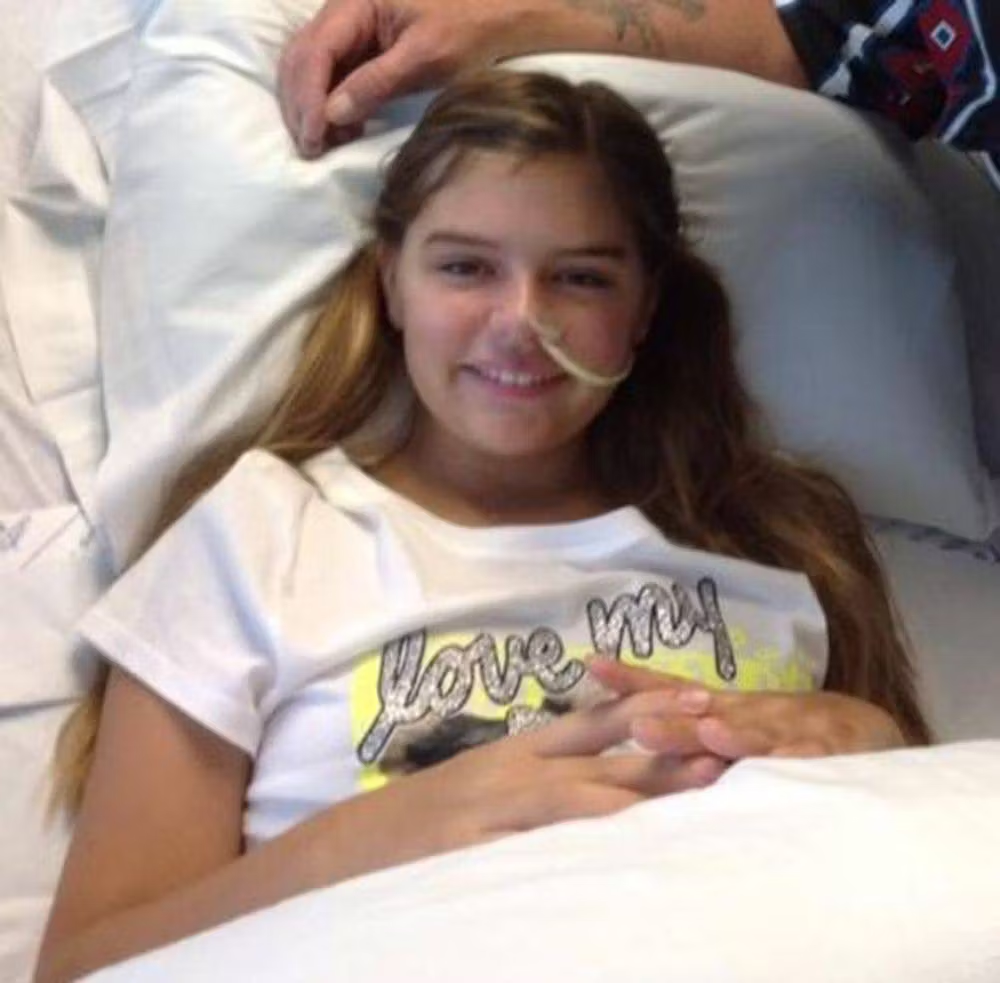
In the previous fifty years, out of 128 documented cases worldwide, only two patients had managed to come out alive. The doctors contacted the Centers for Disease Control, which sent from Germany an experimental drug called miltefosine, designed for another type of infection. The shipment was lost on the way. When it finally arrived, it was administered directly into Kali’s brain through a port implanted by surgery. For weeks she remained unconscious, connected to a ventilator in intensive care, unable to breathe on her own.
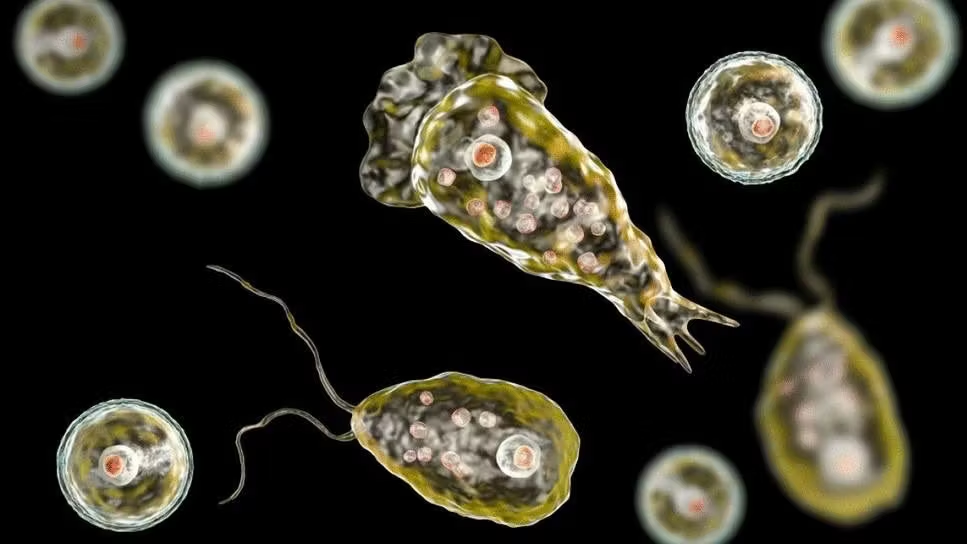
Then, slowly, her body responded. The tests stopped detecting traces of the amoeba. With intense cognitive and physical therapy, Kali regained her functions. In less than a year, she got back into a swimming pool. Ten years later, she described it with the precision of someone who had thought about it many times: “They called it a death sentence as soon as they saw those tiny amoebas in my fluid”. Today she uses her story to promote water safety. She remains one of the rarest people on the planet: someone who faced Naegleria fowleri and won.