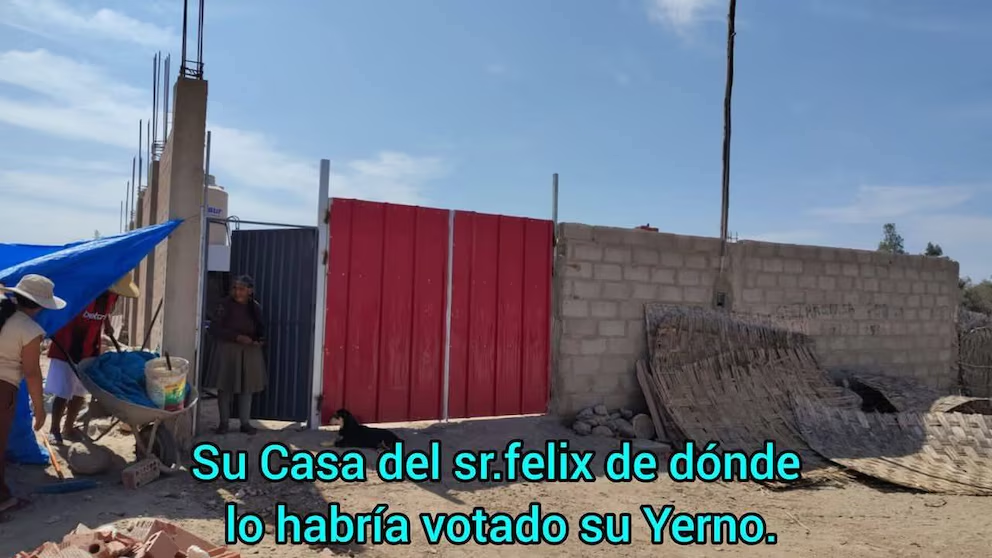
Félix Flores Quispe had spent nearly two months sleeping on his wife’s niche at the Santa María de la Colina Cemetery, in the district of Majes, Arequipa. It was not a visit. It was his home: an improvised tent, cardboard on the ground, a thin mattress, and some blankets against the early-morning cold. He was 64 years old, with visible signs of malnutrition and untreated wounds.
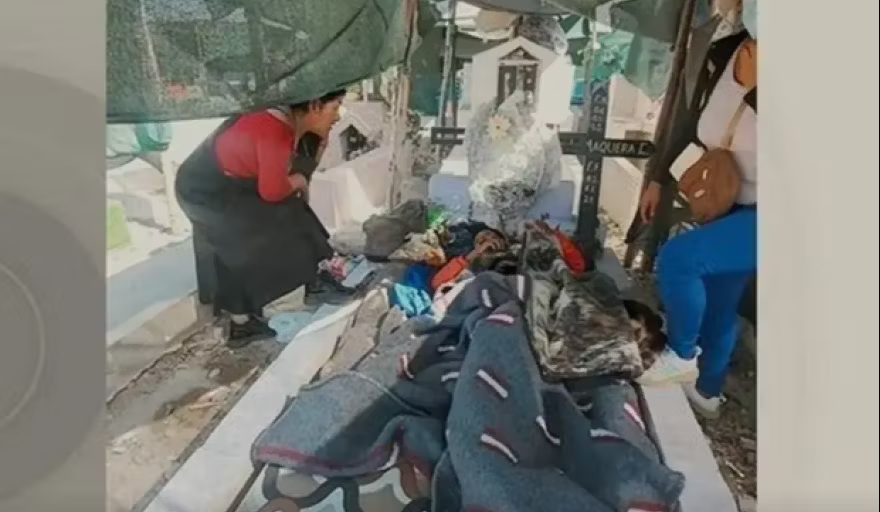
According to his own testimony, it was his son-in-law who threw him out of the home. His children, Jeny and Juan Flores Maquera, worked near the cemetery and gave a different version: that Félix would run away from home and spend the money on alcohol. District councilor Nataly Paz Pola recorded a video denouncing the case in March 2025 and warned of something that sums up the institutional failure: the district of Majes had no shelter for people in situations of abandonment. Félix was transferred to a mental health center, but he could not be treated due to a lack of specialists.
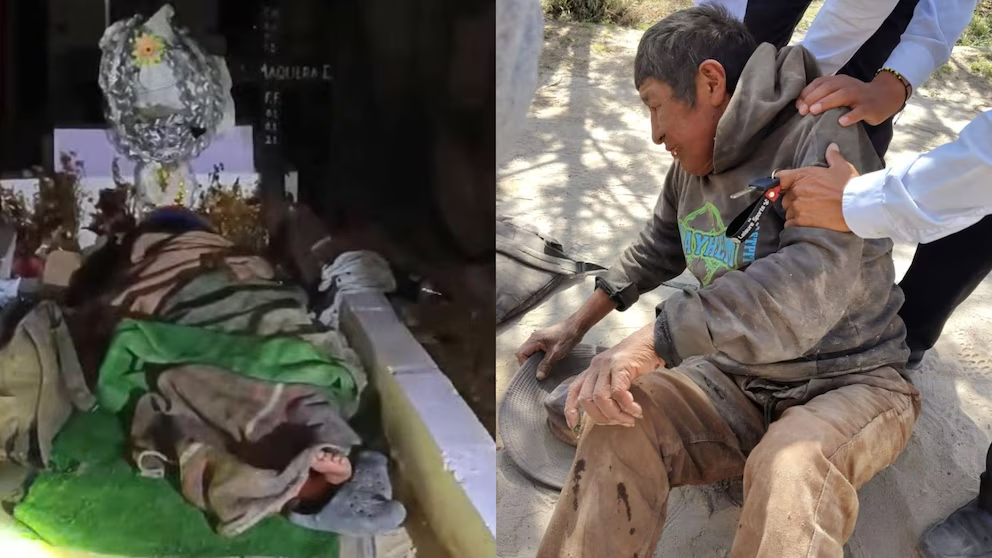
A year later, on March 21, 2026, Félix was found dead in the Majes forest, meters from the same cemetery. His last wish was clear: to be buried next to his wife. With no relatives confirmed at the scene, there is a real risk that he will end up in a mass grave. The question that no one in Majes knew how to answer still stands: how many elderly people are dying alone while the system looks the other way?