Around 30-year-old Andrew McDougall was driving through Dundee, Scotland, when he felt a sneeze coming on.
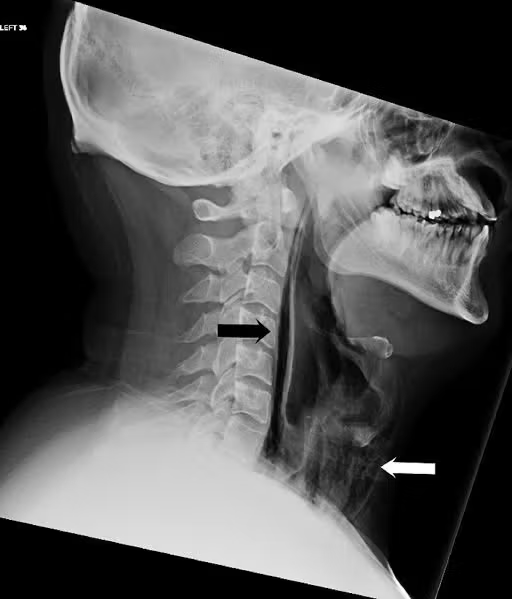
He did what almost everyone does at some point: he pinched his nose, closed his mouth and held it in. Seconds later, he felt a sharp pain in his neck. At Ninewells Hospital, doctors examined him and, when they touched his throat, heard something that should not be heard: a crack beneath the skin. The images confirmed what the sound had announced: a 2-millimeter tear in his trachea.

According to the University of Dundee team, which documented the case in BMJ Case Reports, closing the nose and mouth during a sneeze can multiply the pressure in the airways by up to 20 times, enough to burst an eardrum, break a rib or, as in this case, perforate the throat from the inside. The patient, who already had a history of allergies, did not need surgery and was kept under observation for 48 hours, with anti-inflammatory drugs and antihistamines. Five weeks later, the tear had closed completely.
Dr. Rasads Misirovs, the study’s lead author, was direct: sneezing is a natural defense mechanism of the body and should be allowed to happen, covering your mouth with your elbow, never sealing your nose and mouth at the same time.