
What seemed like a simple misunderstanding ended up revealing a much harsher reality: at his home, finding out about a school closure can depend on whether a neighbor has a phone.
The boy lives in Tres Esquinas, in the Argentine province of San Juan, with his mother and siblings. That morning, they got up as they would on any other day, got ready, and walked to Carlos Doncel School, where he also receives lunch in addition to attending classes.
The problem was that the Ministry of Education had suspended classes across the province because of the Zonda wind. His mother never received the notice because she has no cell phone or other device that would let her quickly keep up with school communications.
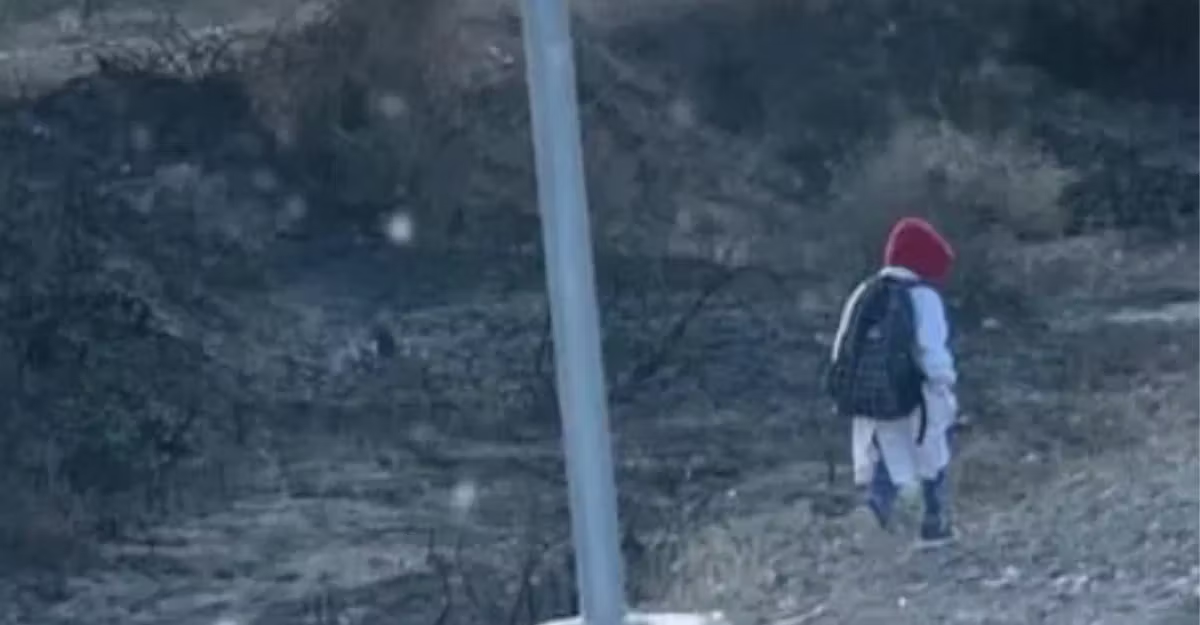
Only when they arrived did they find the school empty, with no students, no vehicles, and the doors closed. He had to walk back home through the wind and dust, and it was along the way that someone photographed him, unaware that hours later his story would spread across social media.
His mother said this was not the first time something like this had happened. On other occasions, too, they had made it to the school without knowing that schedules had changed or activities had been canceled. In their area, news often comes through a family member, a neighbor, or someone who does have a phone.
Adriana supports her three children on her own and works temporarily on farms whenever an opportunity comes up. At home, they have an old cell phone that barely works, and she tries to use it as little as possible to preserve it in case she needs to get in touch with a daughter who lives far away.
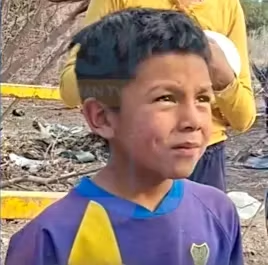
While thousands of people commented on the scene on social media, he did not even know he had gone viral. To him, it had simply been a day when he walked to school and had to go back because no one could let him know in time.