Brielle Jackson weighed less than a kilogram and was slowly fading away.
She had been born in Worcester, Massachusetts, in October 1995, alongside her twin Kyrie, twelve weeks early. As protocol required, they were separated into different incubators. Kyrie grew strong. Brielle did not. Her heart raced uncontrollably, she struggled to breathe, and nothing the doctors tried could stabilize her.
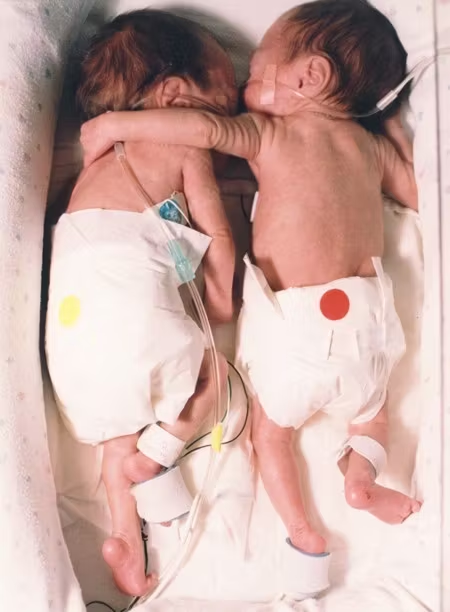
Nurse Gayle Kasparian made a decision that was uncommon in any hospital in the United States: she placed the two sisters in the same incubator. Kyrie, without anyone teaching her, extended an arm and wrapped it around her sister. That was when Brielle’s breathing steadied, her temperature returned to normal, and her heart found a stable rhythm.

No one can say with scientific certainty that the embrace was the whole reason. But from that day on, neonatal wards in different countries began to rethink how to care for twins who arrive early.