
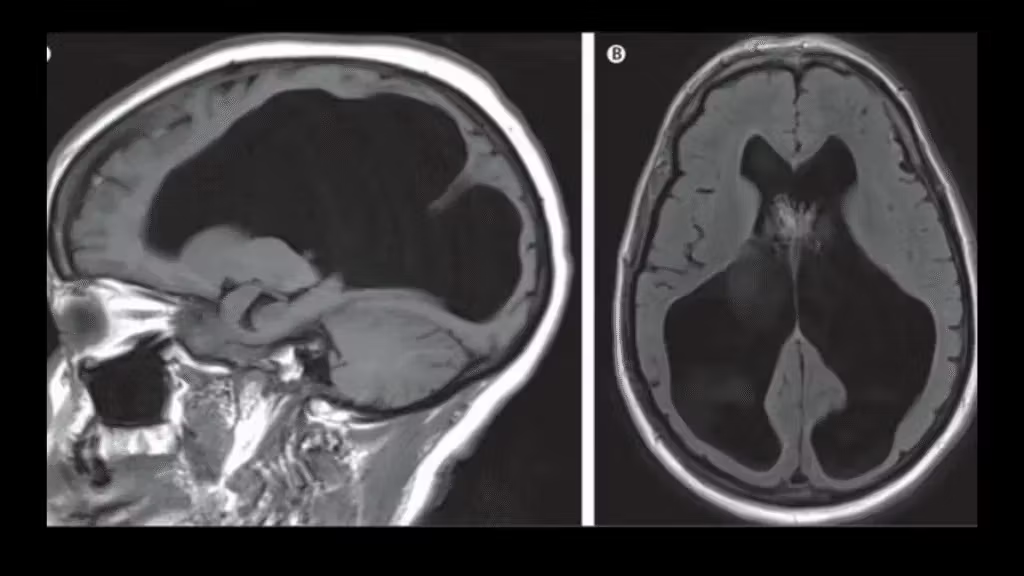
That young man’s skull from Sheffield contained, instead of brain matter, almost exclusively cerebrospinal fluid. Where normal brain tissue measures 4.5 centimeters between the ventricles and the cortex, he had approximately 1 millimeter. And yet he had graduated with honors in mathematics and his IQ was 126.
It was the British neurologist John Lorber, from the University of Sheffield, who documented this case in the 1980s and later expanded the research to dozens of patients with severe hydrocephalus. The results were equally bewildering: in the most severe group, where 95% of the skull was occupied by ventricular enlargement, half of the patients had an IQ above 100. Lorber concluded that the human brain—with its 86 billion neurons—possesses a capacity for reserve and redundancy that science still does not fully know how to explain.
What these cases call into question is no small matter: if someone can think, learn, and function with a minimal fraction of brain tissue, what exactly is the rest of the brain that you and I carry inside us doing?