
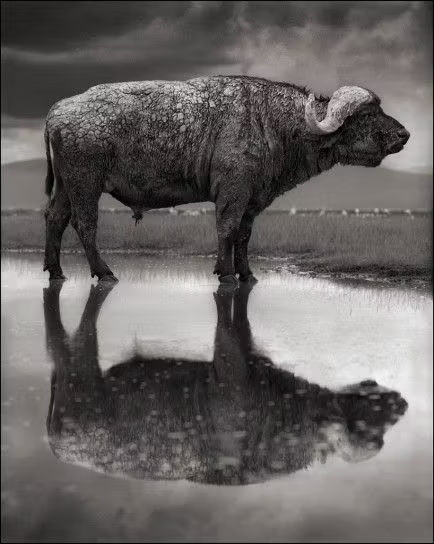
Lake Natron, in northern Tanzania, has a pH of up to 10.5, comparable to ammonia, a temperature that approaches 60 °C according to NASA records, and a depth that rarely exceeds half a meter. Its waters, reddish in color because of the cyanobacteria that thrive in them, do not flow into any river or the sea: the system is endorheic, which concentrates year after year the same cocktail of sodium carbonate and calcium that descend from the Ol Doinyo Lengai volcano through hot springs.
Sodium carbonate is not an unknown substance. It is exactly the same compound that the ancient Egyptians called natron and used to embalm their pharaohs. When a bird or a bat dies on the shores of the lake, that mineral permeates the tissue and calcifies it. Photographer Nick Brandt documented the phenomenon in 2013 for his book ‘Across the Ravaged Land,’ and the images went around the world: birds with their wings spread, bats clinging to branches, all turned into white sculptures. No one knows for certain how they die.
The most bewildering paradox is this: that same lethal lake is home to the world’s main breeding ground for the lesser flamingo. 75 % of the species’ entire global population hatches here, between 1.5 and 2.5 million birds in East Africa alone. The reason is brutal in its logic: no predator dares to enter. A place that kills almost everything it touches turns out to be, for whatever can tolerate it, the safest refuge on the planet.