For 90 years, the Navier–Stokes equations had been a wall blocking the brightest minds in mathematics.
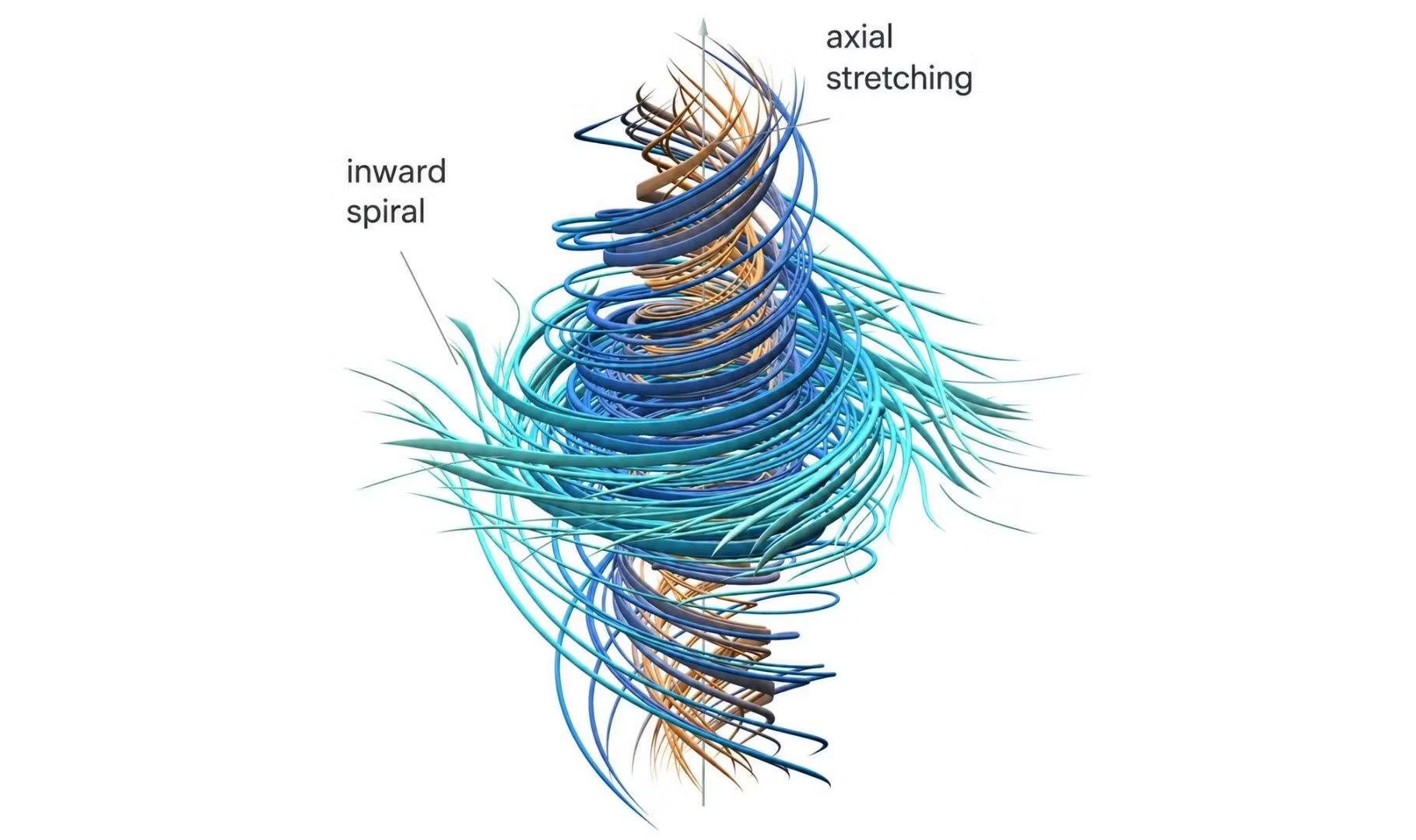
This problem explains how air and water move, and it is key to designing airplanes, predicting the weather, and understanding the flow of blood through the human body. It was among the seven ‘Millennium Problems’ of the Clay Mathematics Institute, those that have been waiting decades for a solution. An OpenAI model took on the challenge and, after 88 hours of continuous work and millions of dollars in computing power, delivered an answer: it proved that these equations can fail over time, just as the original problem required.
The announcement did not come without controversy. Hours earlier, two researchers, Tristan Buckmaster of New York University and Levent Alpoge of Anthropic, had published their own advances on related equations using AI. Buckmaster accused OpenAI of taking up the problem right after learning about his work. The company denied it and said it had offered to share the credit. What no one disputes is the timing: what took entire generations, a machine solved in less than four days.