
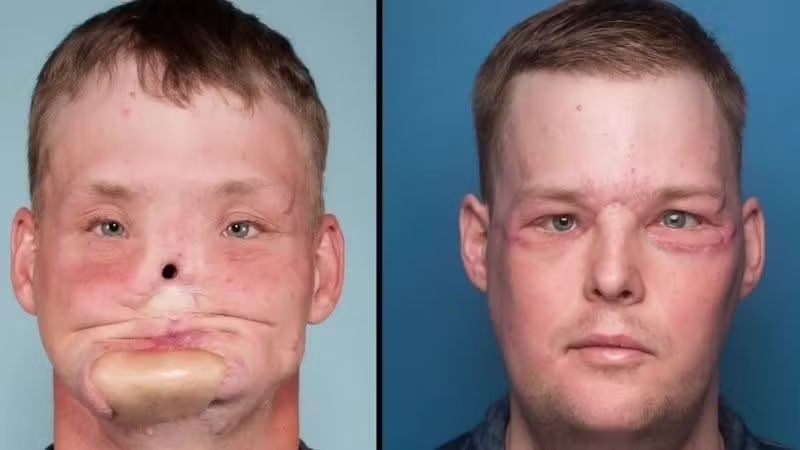
Andy Sandness was 21 when, in 2006, he tried to take his own life with a firearm. He survived, but his face was left almost completely disfigured. For years he told everyone he had had a hunting accident.
Calen Ross was also 21 when, in June 2016, he did not survive the same type of wound. He left behind Lily, his pregnant wife, who, still devastated, decided to honor her husband’s wish to donate his organs. Five months later, Andy entered an operating room at the Mayo Clinic in Rochester: 60 doctors, 56 hours of surgery. When he looked in the mirror three weeks later, he could not speak. He took a piece of paper and wrote: ‘It far exceeded my expectations’.
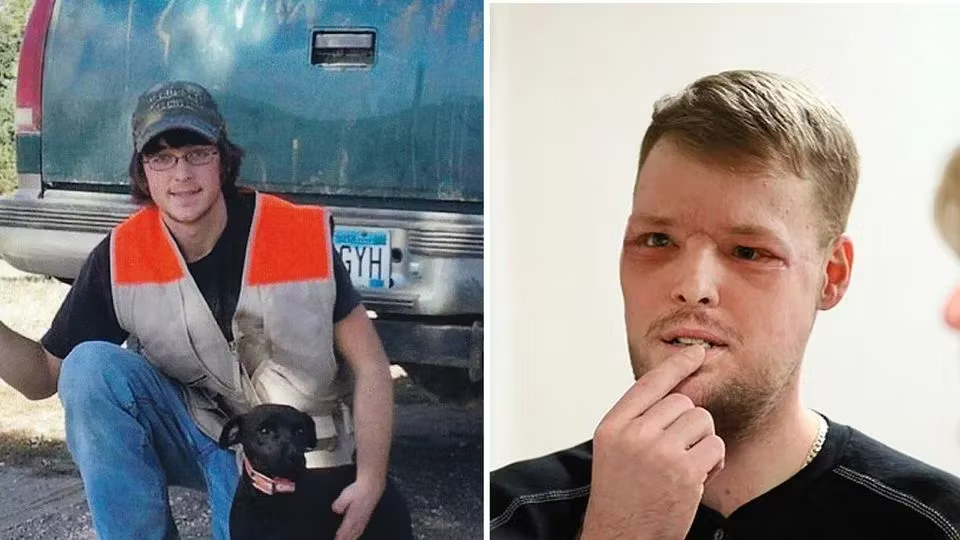
Andy and Lily have never met. But he sent her a letter. He promised her that her husband would go on loving hunting, fishing, and dogs. ‘Thanks to me,’ he wrote.Fifty-six hours. That is how long a team of surgeons remained in the operating room to complete one of the most complex face transplants recorded in the history of medicine. It is not just skin: the procedure involves transferring muscles, nerves, blood vessels, eyelids, lips, and bone structures from a deceased donor to a recipient with severe disfigurement. Each vascular anastomosis must be completed within minutes before the tissue loses viability. The recipient’s immune system, meanwhile, will attempt to reject the tissue for the rest of their life, forcing them to take permanent immunosuppressive medication. Since the first partial face transplant in 2005, fewer than 50 procedures have been performed worldwide.