
In April 2003, Aron Ralston, a 27-year-old mechanical engineer and mountaineering enthusiast, set out alone for Bluejohn Canyon, Utah. He did not inform anyone of his itinerary and was carrying limited provisions. While descending through a narrow passage, a rock weighing approximately 800 pounds broke loose and fell onto his right arm, leaving it immobilized.
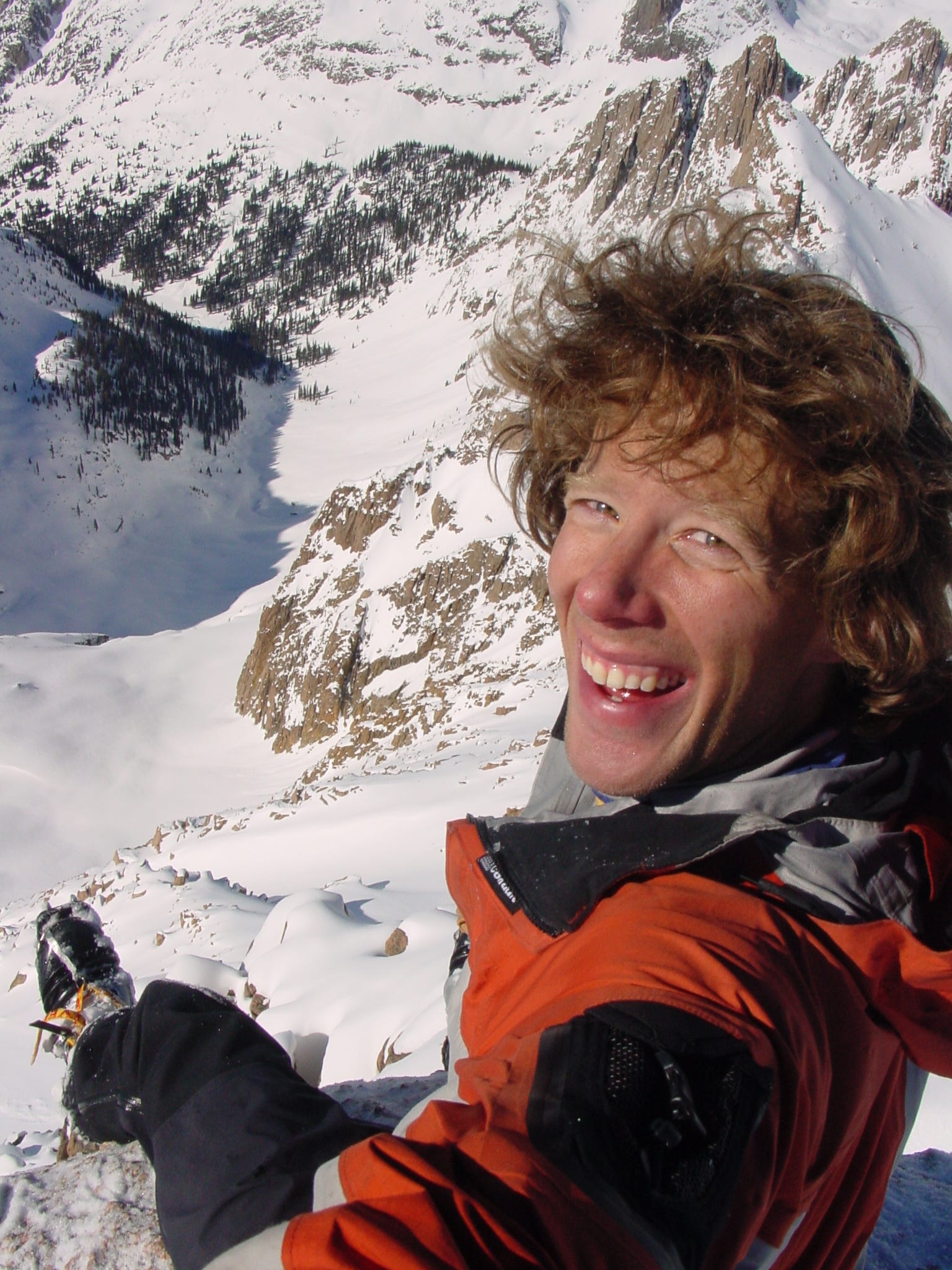
Ralston spent hours trying to move the rock and free his arm, but all his efforts were futile. As time passed, water began to run short and his physical condition deteriorated. After being trapped for several days, he recorded messages for his family on a video camera, convinced that he probably would not make it out of the canyon alive.
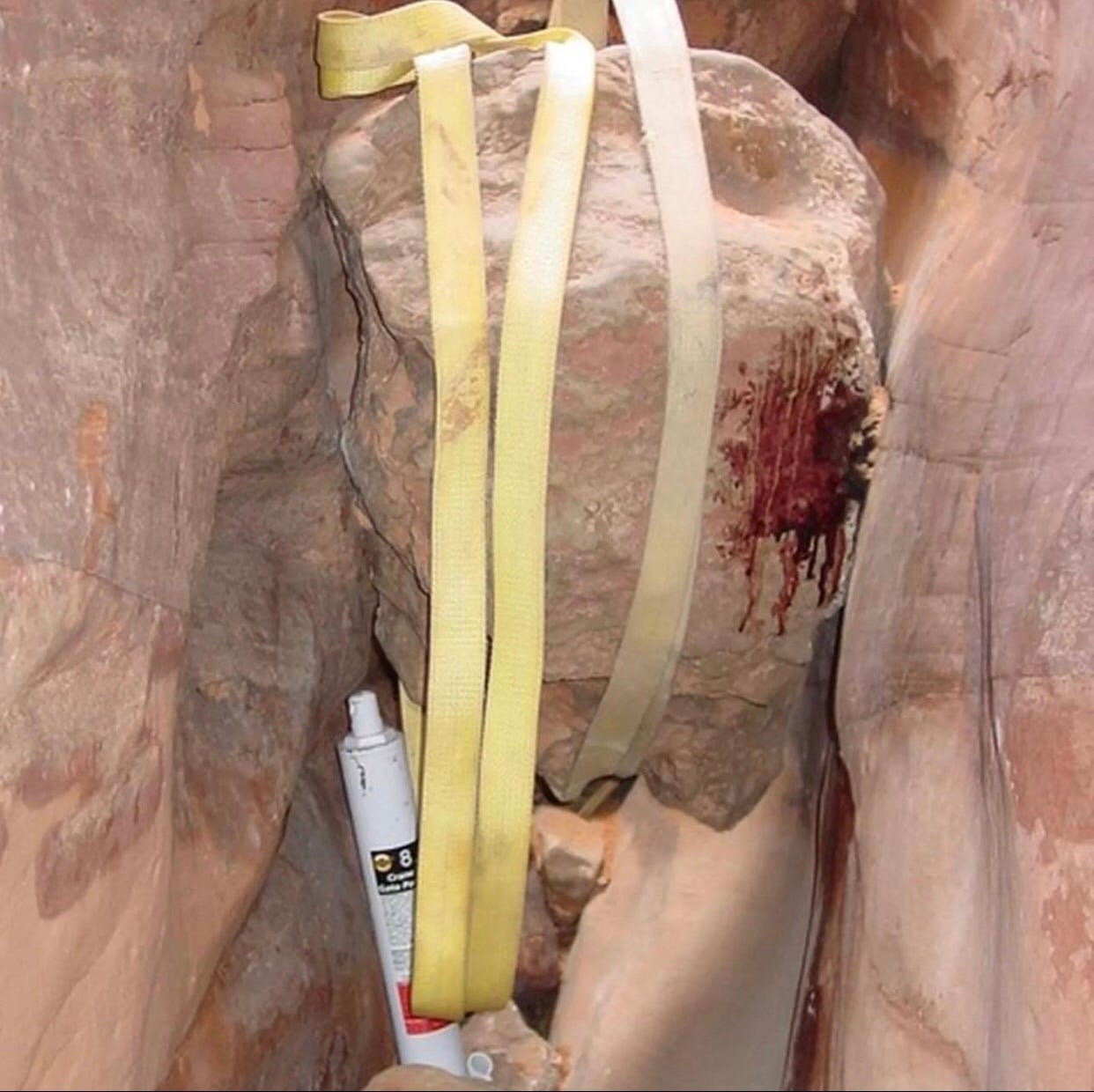
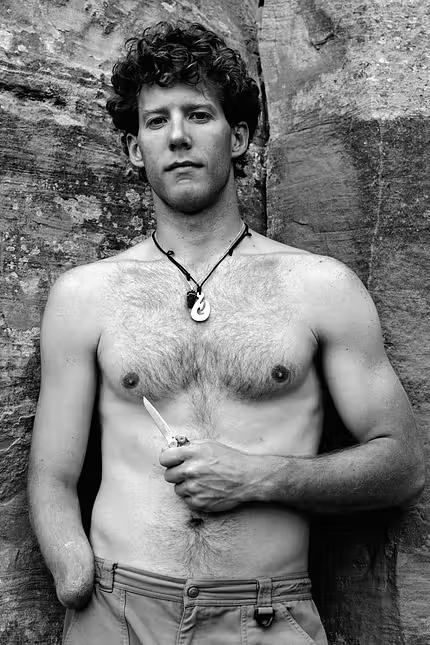
On the fifth day, he made the decision that would allow him to survive. Using a small multi-tool, he amputated the trapped arm below the elbow. The operation took him around an hour and required cutting through tissue, muscle, and bone until he managed to free himself. He then had to improvise a tourniquet to control the bleeding.
But escaping from the rock did not mean he was safe. Ralston still had to descend approximately 65 feet down a rock wall and travel several miles through the desert before finding other hikers. He finally came across a group of Dutch tourists, who alerted the authorities and enabled him to be evacuated by helicopter.
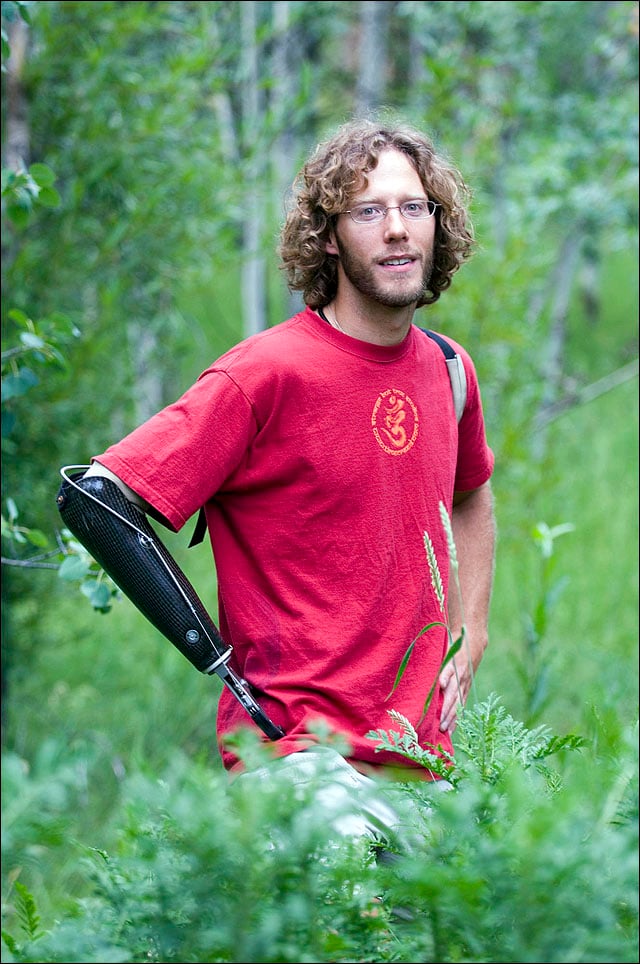
Ralston survived and continued mountaineering even after losing his arm. His story became an extraordinary example of survival and was later recounted in the book Between a Rock and a Hard Place and brought to the screen in 127 Hours, directed by Danny Boyle. What began as a solo excursion ultimately became a story about how far a person can go when the only remaining alternative is to fight to stay alive.