
In a prison in southern Brazil, some of the most attentive guards don’t wear uniforms or carry weapons. They have feathers, live by a small lake, and make enough noise to alert the entire prison.
They are the so-called “goose agents” of the São Pedro de Alcântara Penitentiary, in Santa Catarina. The birds patrol a strip of green land between the inner fence and the outer wall, one of the last obstacles an inmate attempting to escape would have to get past.
They even have a leader. His name is Piu-Piu, and he recognizes when staff call him: he hears his name and responds with his characteristic honk.
It may seem like a funny idea, but the geese are there for a very specific reason.
Previously, guard dogs performed that same role. However, the prison eventually replaced them with birds. According to director Marcos Roberto de Souza, keeping geese is less expensive, and the silence surrounding the prison, especially at night, makes any unexpected honk an alarm that’s hard to ignore.
However, there’s another, even more curious reason.
Back in 2009, the then head of security, Névio Dallagnol, told Brazilian media that the dogs were cared for by the inmates themselves and had ended up becoming familiar with them. They could react when staff arrived, but were less useful for raising the alarm about inmates they saw regularly, so the geese offered an alternative.
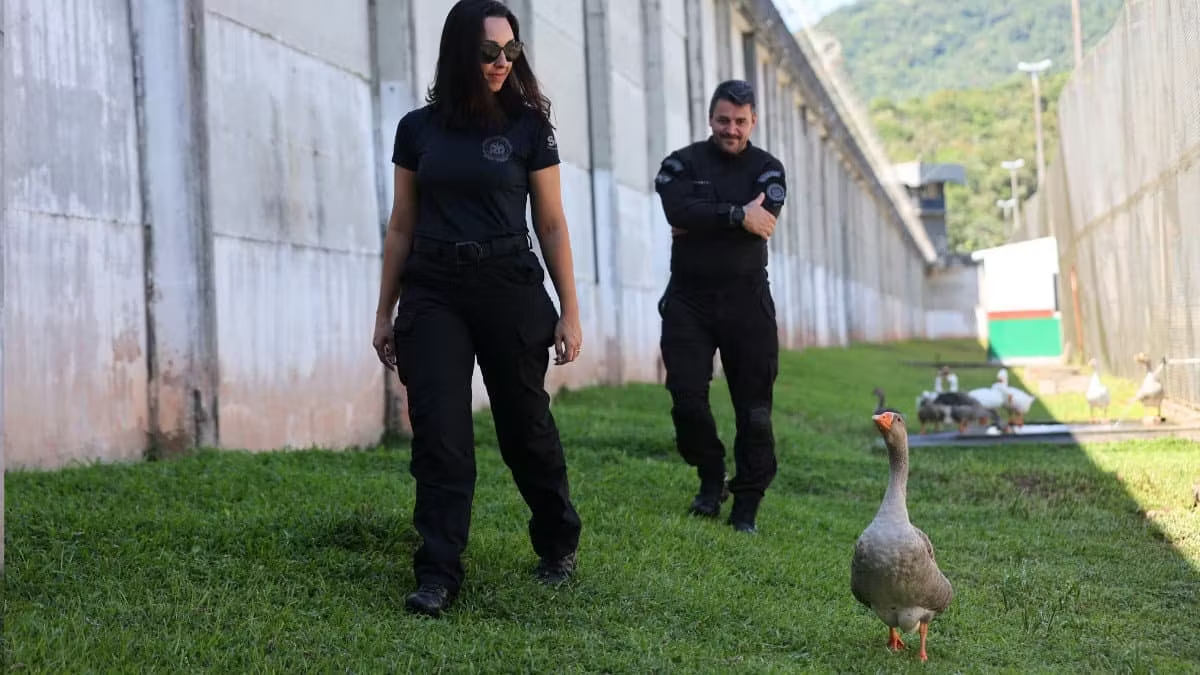
Birds are naturally vigilant and can react with loud vocalizations when they sense an unfamiliar presence or movement. Geese, for their part, are birds that are highly territorial and protective and aren’t afraid to attack anyone to defend the space they believe is theirs. In this case, though, they don’t need to chase down or confront a fugitive: their job is simply to make a racket.
The penitentiary combines electronic surveillance, prison police stationed on the wall, and, as a final layer of perimeter alert, the geese that replaced the dogs.
What’s interesting is that the experiment has stood the test of time. There are records of its use dating back to 2009, and when Reuters visited the prison in 2023, the geese were still patrolling. According to those in charge, for that specific task, they had proved even more effective than dogs.