
A family’s cat had a litter with her housemate, but every time the male cat tried to come closer, she brought out her claws.
Although the two got along excellently, fights intensified after the kittens arrived, and the owners had to intervene to keep them apart.
Her reaction may seem exaggerated to those who imagine a feline family as being like a human one, but feline parenting works very differently. In natural conditions, it is mainly the females who protect, feed, and raise the kittens, while males generally do not form a stable pair dedicated to caring for the litter.
And there is an even more unsettling reason for that distrust. Male infanticide has been documented in cats: in certain reproductive contexts, a male may kill his own or unrelated offspring so that the female will be available to mate again as soon as possible. That is why mothers may be especially protective during the first few weeks.

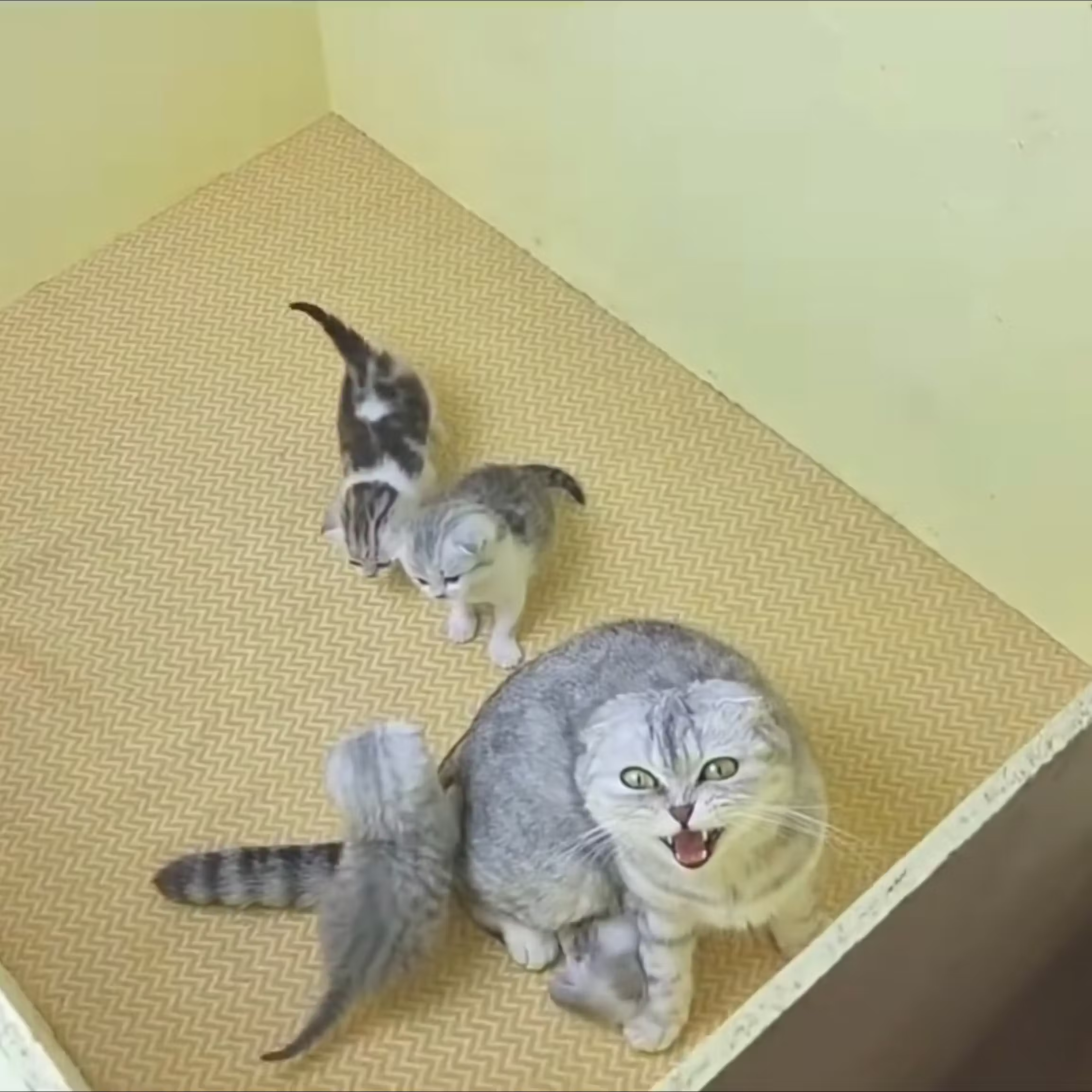
That does not mean that all males pose a danger. Among domestic cats, tolerant behavior and even care toward the kittens may also appear, especially when they are familiar with one another. Even so, the owners preferred to keep some distance between the two.


The male cat was patient. As the kittens grew and moved beyond their most vulnerable days, the mother cat began to tolerate his presence more and more.
Until what had initially seemed impossible happened.
The same cat who had previously been swatted for coming near was finally able to enter the nest. He began grooming the kittens, playing with them, and resting beside them, while the mother remained calm.
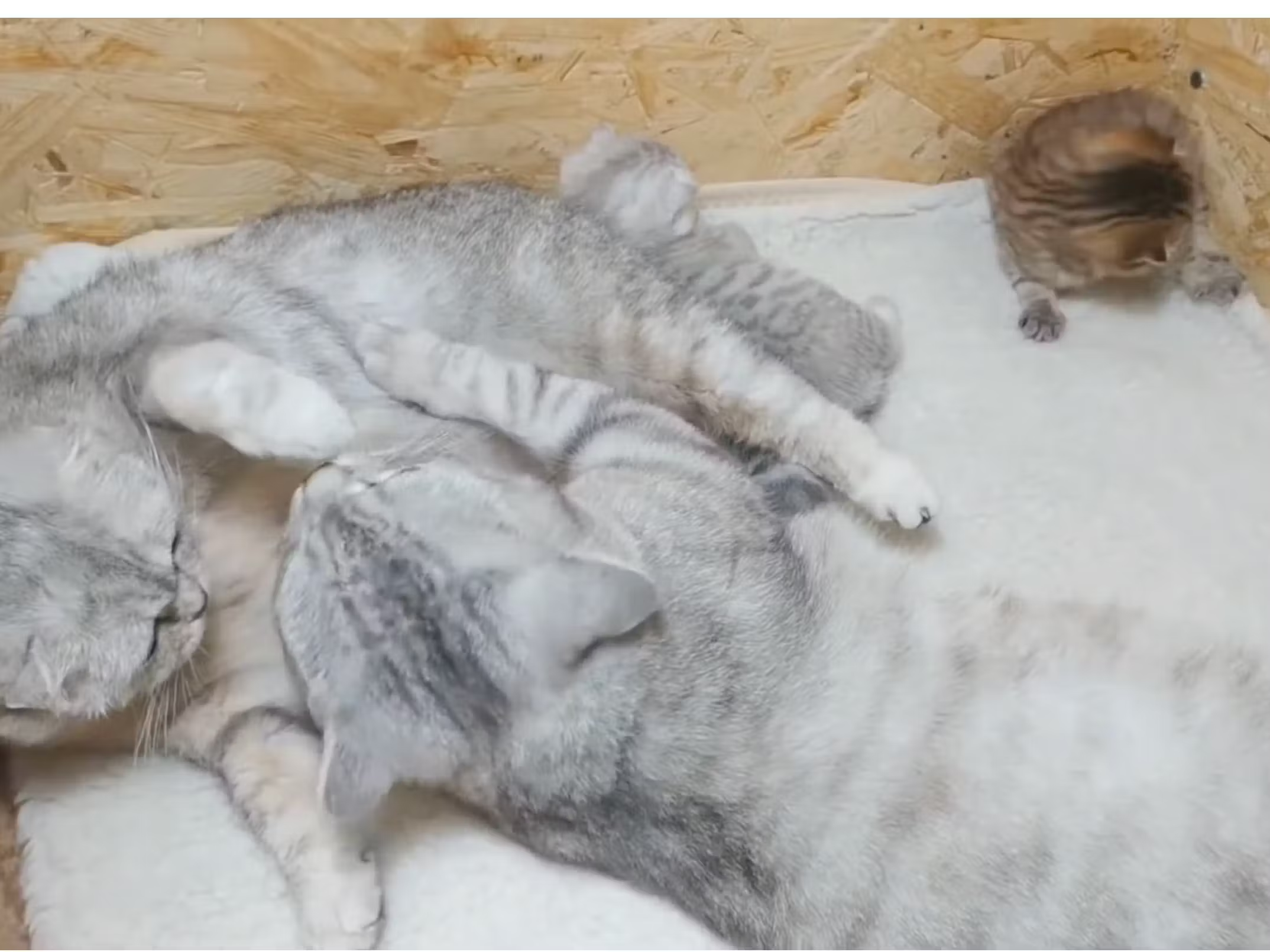
Where there had previously been growls, distrust, and paws ready to strike, games, licks, and shared naps eventually appeared. In the end, the peculiar feline family was complete.