
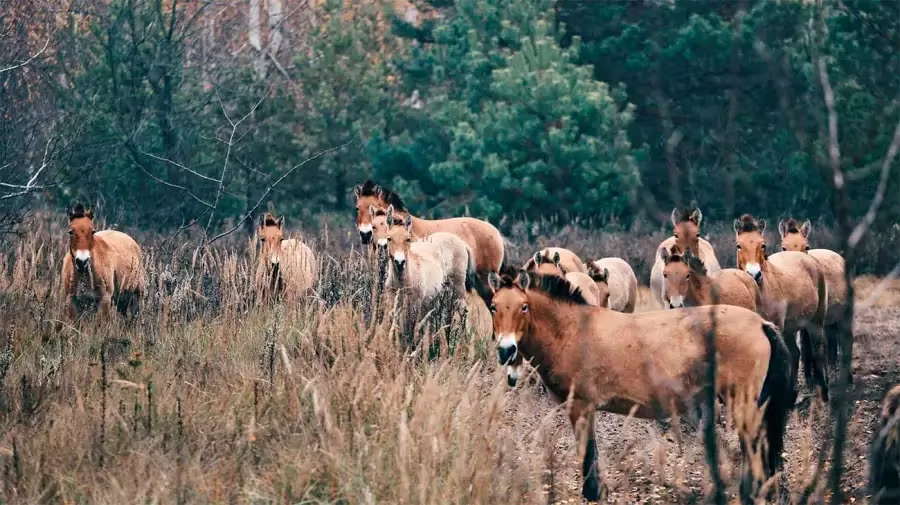
In 1969, the last free-ranging Przewalski’s horse disappeared in the Gobi Desert. The species was reduced to 12 individuals in European zoos — the narrowest margin between extinction and survival. Today, in the Ukrainian sector of the Chernobyl exclusion zone, more than 150 specimens live there.
A study published in Proceedings of the Royal Society B documented something difficult to process: camera traps captured these animals more than 1,000 times inside the radioactive zone and zero times in the unrestricted outer sectors. Ecologist Svitlana Kudrenko, from the Albert Ludwig University of Freiburg, went further: species diversity within the CEZ exceeds that of natural reserves under strict protection. The determining factor is not tolerance to radiation. It is the absence of people.
The Przewalski’s horse is not a distant relative of the domestic horse — it is something else. It has 33 pairs of chromosomes compared with the 32 of the domesticated equid, a genetic difference that confirms a completely separate evolutionary line. Between 1998 and 2004, between 31 and 36 specimens were reintroduced into the zone. The fires of 2020 and 2021 regenerated the vegetation and accelerated their expansion. What humanity declared uninhabitable turned out to be, for them, the safest place in the world.