
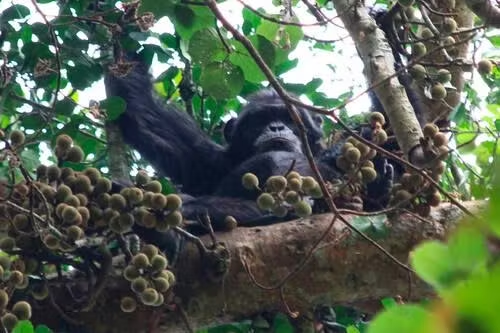
It throws the carrot to the ground, pushes the celery toward the researcher, and stares fixedly at whoever is eating grapes. That is how a chimpanzee protests when it feels the distribution is unfair. 🍇
A team from Georgia State University and the National Center for Chimpanzee Care designed an experiment unlike anything before: instead of isolating two individuals, they placed 27 chimpanzees in real groups, with their usual alliances and rivalries. The results were clear: when someone received grapes and you only had a carrot, rejection was systematic. But if the reward was an orange — acceptable though not the best — many simply accepted it. The absolute value of what they got mattered, not just the comparison. 🧪
And here comes the twist no one expected: in humans and bonobos, we tolerate injustice better if the favored one is a close friend. In chimpanzees, exactly the opposite happens. The complaints were more intense and immediate when the witness to the scene was their closest ally. For them, making sure that not even a friend accumulates too much power is a survival strategy. Who would say that social control is millions of years old? 🐒