
Western tourists paying thousands of dollars to see gorillas. Ugandan workers carrying them in their arms to cross the mud.
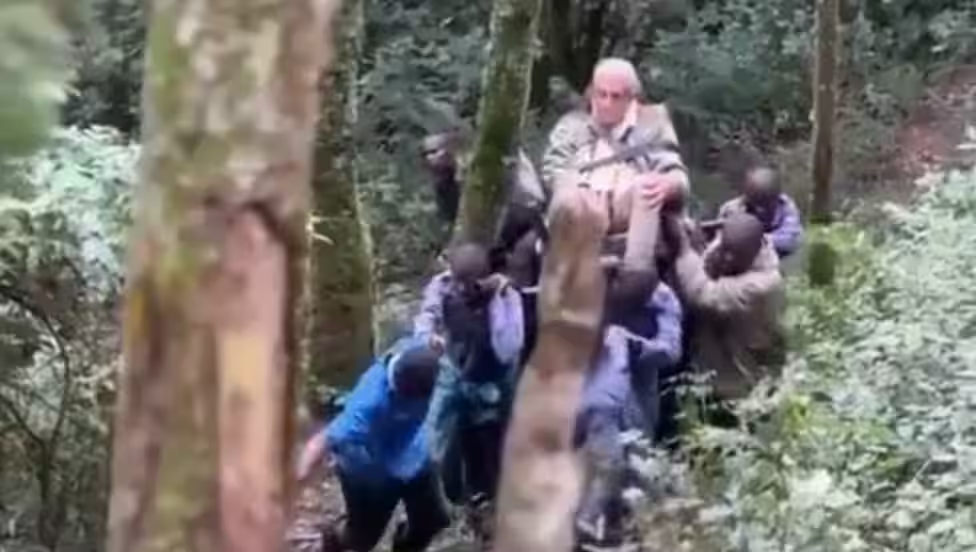
The image went viral, and the most uncomfortable comparison immediately emerged: modern forms of servitude disguised as ecotourism. But the story behind it is not that simple. Gorilla tourism in Uganda brings real money to conservation and creates jobs in communities surrounding the national parks. The problem is not that the money exists — it is where it goes.
Research into these programs has found that the profits are distributed unequally: while operators and international agencies take the largest share, those who literally carry the weight of the business receive minimum wages. Who works, who decides, and who keeps the profits are questions the image does not answer, but forces us to ask.