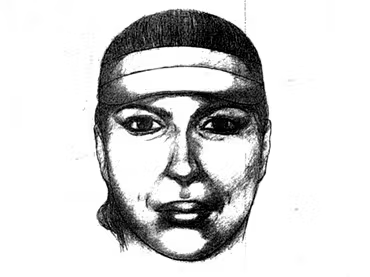
On August 28, 2013, shortly before eight in the morning, a driver on Ciudad Juárez’s route 4-A opened the door of his bus. A woman climbed the first steps and shot him. The next day, another driver on the same line was killed in the same way.
Witnesses described a woman with blond hair, dressed in black. No one had seen her before.
Days later, local media received a letter signed by “Diana, hunter of drivers”. It said: “My fellow women and I have suffered in silence, but we can no longer keep quiet”. It accused drivers on the night shift at the maquilas of sexually assaulting women workers. And it warned there would be more.
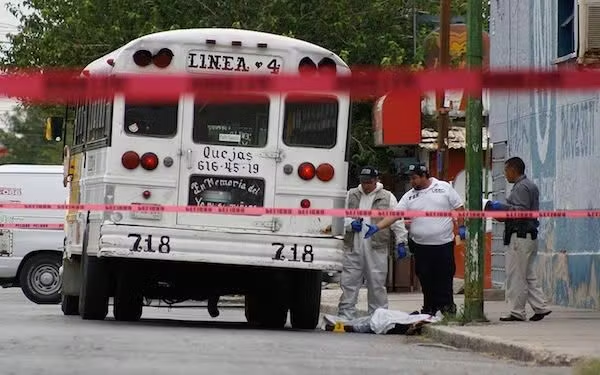
The city cowered. According to AP, of 20 drivers assigned to route 4-A, only 10 went to work. The buses ran half-empty. The men watched every stop in fear.
But there is something that weighs more than fear. Since 1993, Juárez had borne the burden of hundreds of murdered women, many of them young factory workers, found in fields and vacant lots. For them, there was almost never an entire police force searching for those responsible. For two drivers, there was.
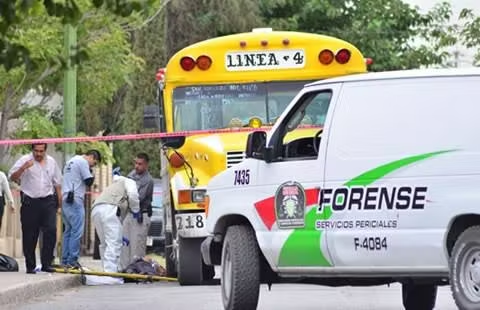
The prosecutor’s office released a composite sketch on September 3. It investigated the letter. But its spokesperson did not rule out a crime of passion. In other words, no one proved that what Diana said was true.
It was never confirmed who she was. It was never known whether the letter was hers.
The only thing certain is that, in that city, someone signed with a woman’s name what others could not say.