
It was 1816, and a French doctor was about to experience a great deal of embarrassment.
René Laënnec was practicing in Paris when a young woman arrived at his office with cardiac symptoms. The protocol of the time was simple but awkward: the doctor had to press his ear directly against the patient’s chest to listen to her heartbeat. Laënnec looked at the young woman, assessed the situation, and decided that on that day, science would have to wait until he stopped feeling social panic. “Her age and sex did not allow me to use the traditional method”, he later explained, as if confessing that he had preferred anything to coming across as a bold man.
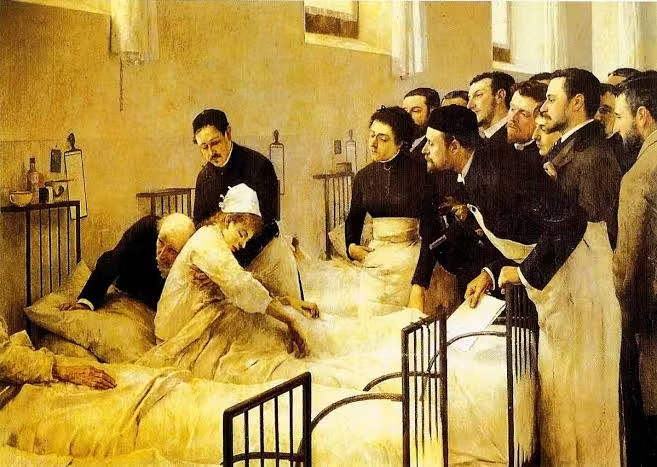
What followed was pure emergency ingenuity: he took a bundle of papers, rolled it up into a tube, and placed one end against the young woman’s chest and the other to his ear. The heartbeats sounded clearer than ever. One man’s embarrassment ended up giving medicine the stethoscope, and in the process saved entire generations of doctors from having to get too close to their patients. 🤭