In October 2009, a 74-year-old German doctor was found tied up and gagged outside a courthouse in Mulhouse, France.
The person who had sent him there was neither a police officer nor a judge. He was a retired accountant named André Bamberski.
His daughter Kalinka, a 14-year-old French girl, died in July 1982 at the home of her mother and German stepfather, doctor Dieter Krombach. He admitted that he had given her a cobalt-iron injection that night. He said it was for tanning. Prosecutors believe it was to incapacitate and sexually abuse her.
Germany closed the case. Her father did not.

Because Kalinka was French, she had the right to have France try her stepfather. In 1995, a Paris court sentenced him in absentia to 15 years. Germany did not extradite him. And the European Court of Human Rights eventually overturned that conviction on procedural grounds.
There was André, after twenty-seven years of letters, trials, and closed doors. And the feeling that his daughter had died twice.
Then he took a step that could not be undone. He had Krombach kidnapped in Germany, had him taken across the border beaten and bound, and had him left outside a French courthouse in the early hours of the morning. Bamberski was arrested on suspicion of kidnapping.
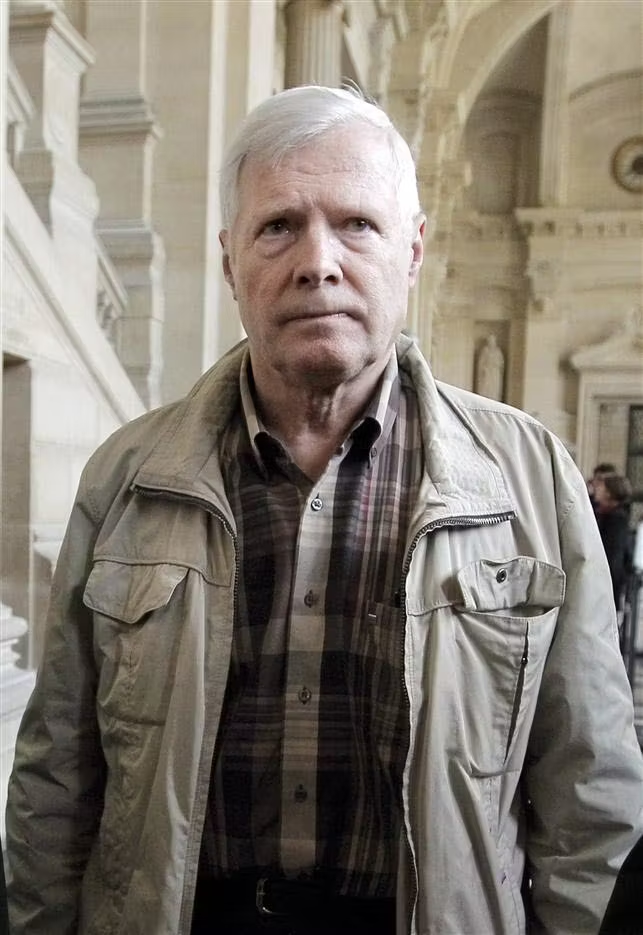

In 2011, a Paris court sentenced Krombach to 15 years in prison for intentional violence causing death without intent to kill. The sentence was upheld on appeal. Years later, the European Court of Human Rights upheld it as well.
André received a one-year suspended sentence for the kidnapping. He did not apologize for what he had done.
All he wanted was for someone, finally, to look his daughter in the eyes.