
90% of all the planet’s earthquakes occur in the same 40,000-kilometer belt. It is called the Pacific Ring of Fire, and in less than 24 hours it recorded simultaneous activity in Japan (6.9), California (5.6), the Philippines (4.9), and New Guinea (5.1). 🌏
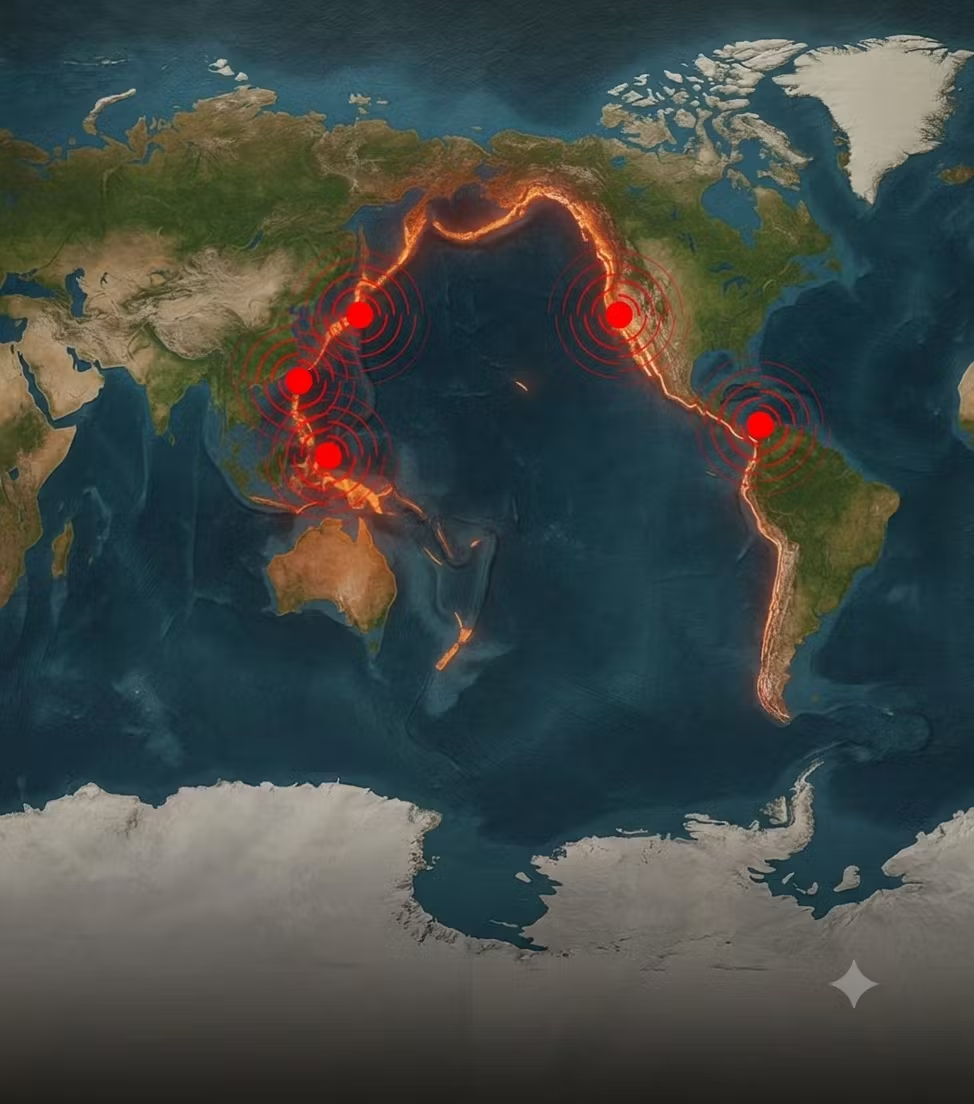
But what drew the most attention was what happened in Venezuela: two earthquakes of magnitude 7.2 and 7.5 occurred less than a minute apart, something seismologists call a “seismic doublet”.
The key to their destructive power was the depth: both occurred less than 30 kilometers below the surface, which amplified their effects in Caracas and parts of Colombia. FUNVISIS experts warned that this combination of factors multiplies the damage exponentially. 🔴
List of countries at greatest risk of suffering megaquakes:
Chile: It holds the record for the strongest earthquake recorded in modern history (magnitude 9.5 in 1960). Its coast is continuously pressured by the Nazca Plate sinking beneath the South American Plate, concentrating high tension, especially in the north and center of the country.
Japan: Located at a convergence point of four tectonic plates. Historically affected by devastating megaquakes such as the Tōhoku earthquake (2011), and with areas of high latent risk such as the Nankai Trough.
Indonesia: Located in an area of intense plate convergence that causes frequent megaquakes (such as the Sumatra earthquake in 2004, magnitude 9.1), which often generate massive tsunamis in the Indian Ocean.
United States (Alaska/Pacific Northwest): Alaska’s subduction zone has generated earthquakes greater than 9.2, such as the one in 1964. In addition, the Cascadia fault (between northern California, Oregon, Washington, and part of Canada) has the potential to generate a megaquake similar to the one in 1700.
Russia (Kamchatka Peninsula): Located off the convergent boundary of the Pacific Plate with the Eurasian Plate (through the Kuril Trench), this region has suffered megaquakes that exceeded magnitudes of 9.0 in the past.
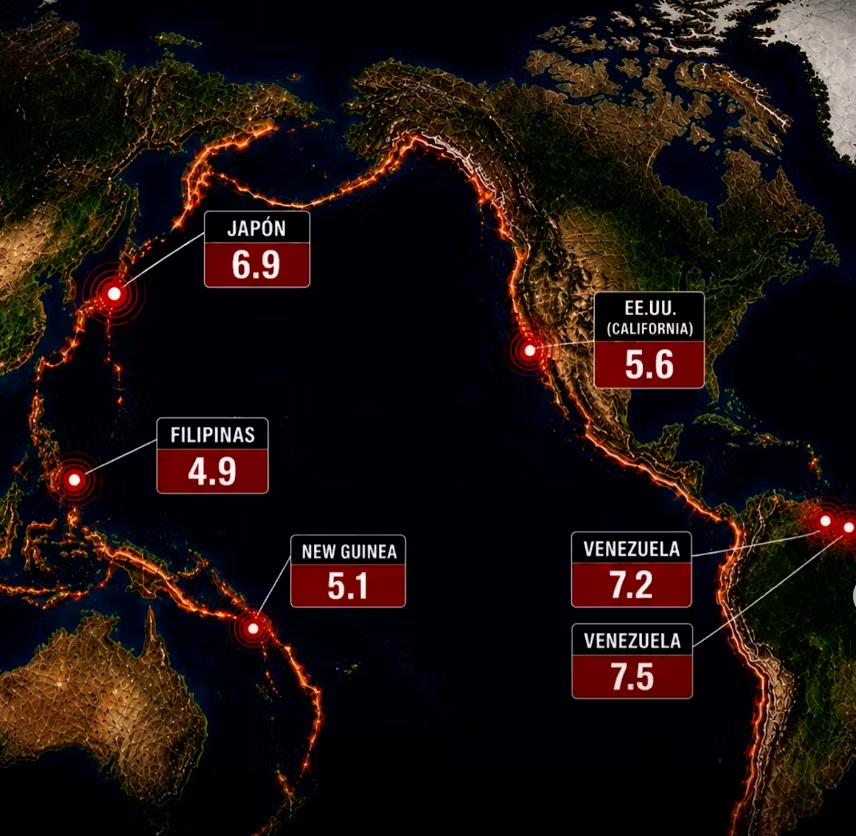
Now then, are all these tremors connected to each other? USGS scientists say there is no direct evidence of that. However, Colombia records about 2,500 tremors a month due to the simultaneous pressure of three tectonic plates, and the countries of the Ring of Fire live atop one of the most active geological structures in existence.
The question geologists cannot ignore: when is it the next one’s turn? 🌋