
Aizza Akhil was six months old when her mother looked at her face and didn’t recognize her.
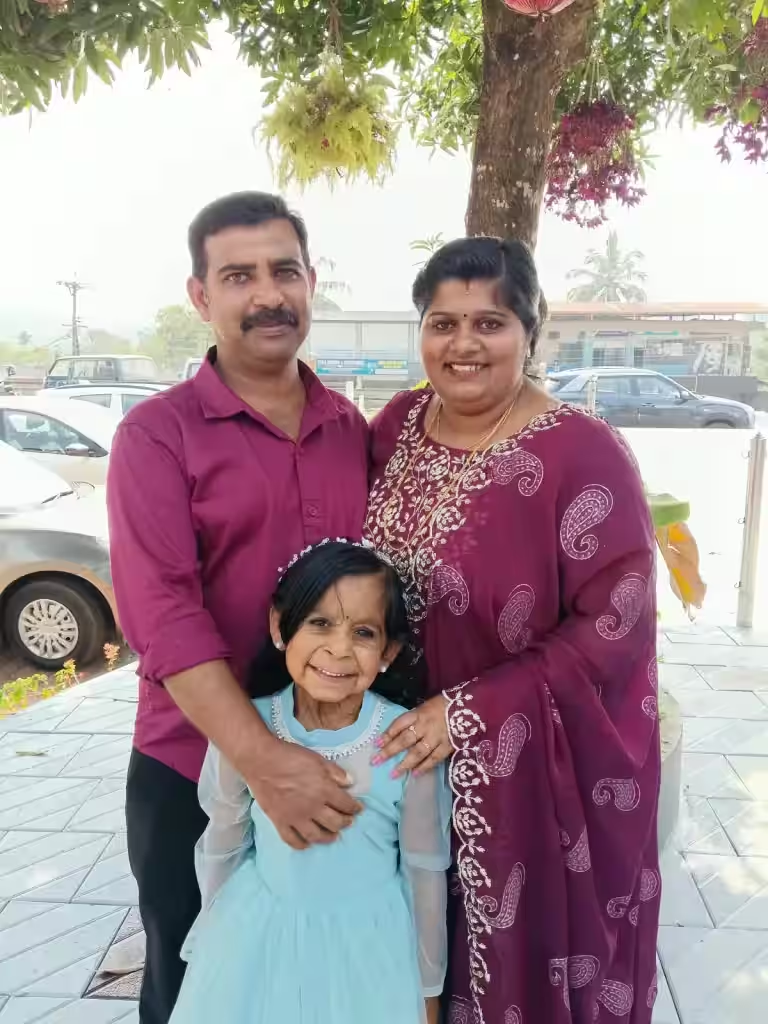
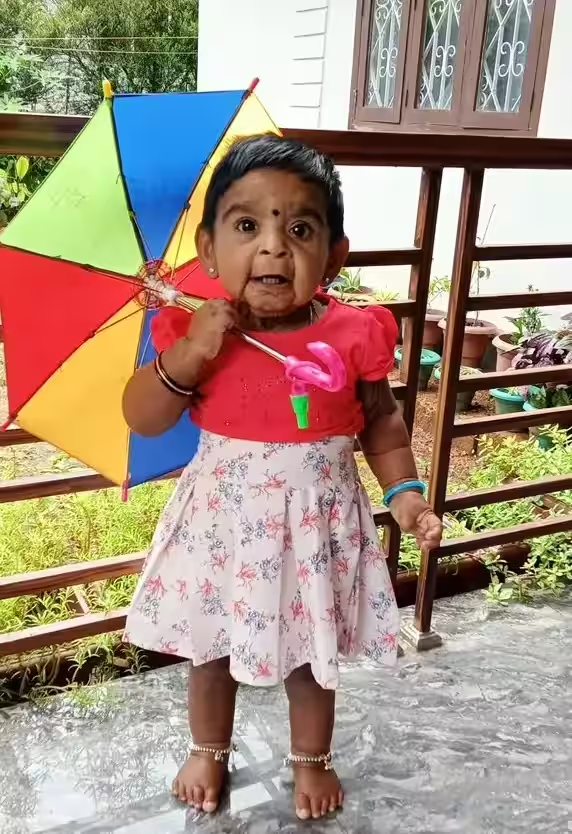
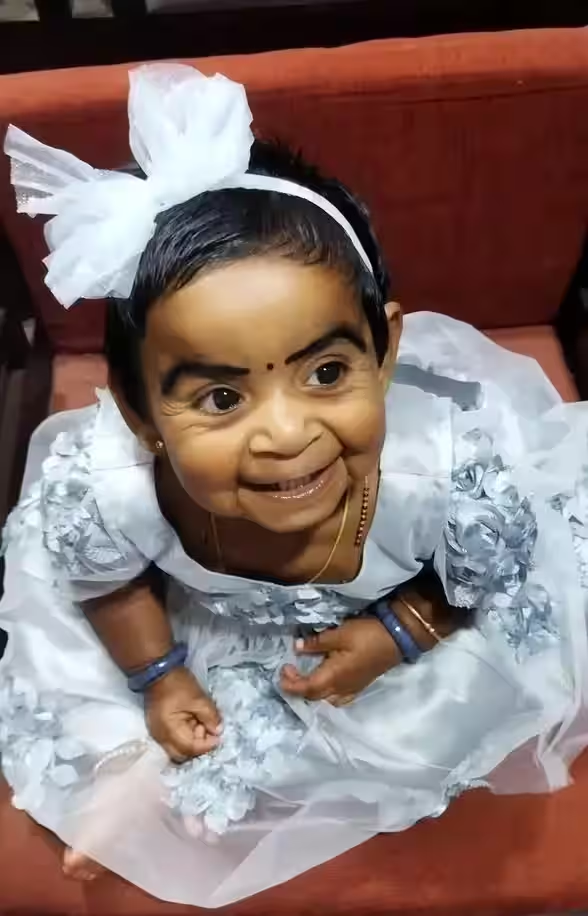
The baby’s skin had become loose and wrinkled almost overnight. Anjali, her mother, took her to more than a dozen doctors in Kerala, India, until, at nine months old, she received a diagnosis she didn’t even know how to pronounce: cutis laxa, an incurable disease that affects 1 in 4 million people. Today, there are fewer than 500 cases worldwide.
Aizza is 6 years old and is like any girl her age: she loves dancing, drawing, and playing with her friends. But at school, she had to bear something no child should have to. ““They call me Grandma. They make fun of me, saying my skin looks like an old woman’s””, she told The Sun. In July, a group of older students laughed at her, and Aizza ran away, crying inconsolably.
Her father, Akhil, is a security guard and earns the equivalent of about 150 dollars a month. His daughter’s treatment costs nearly 250 a month, and the first plastic surgery, to keep the sagging skin on her eyebrow from covering her eye, cost them almost 1.000 dollars. The doctors have already warned them that more operations are to come.
After the family met with the teachers, the school explained her condition to all the students. Little by little, her classmates got used to her appearance, and Aizza began to feel more confident.
Her parents ask for just one thing: to be able to give her a long, healthy, normal life.