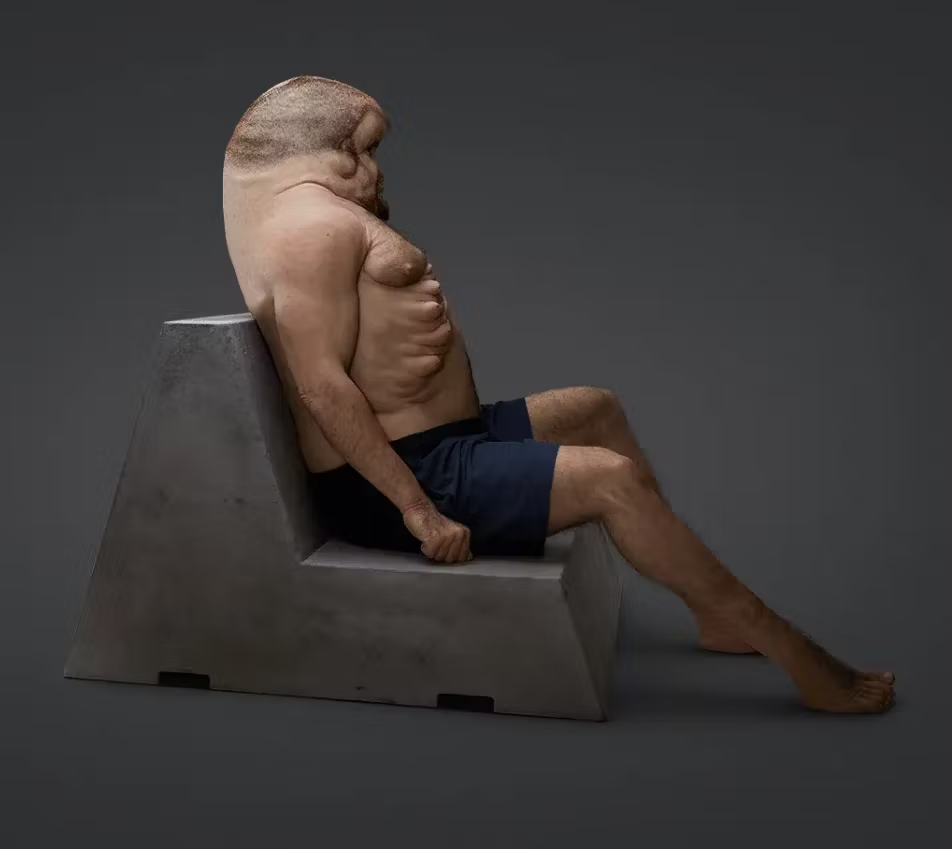
A neck as wide as a trunk, a bulging skull, extra ribs, and limbs shorter than those of any person. That is what Graham looks like, the conceptual figure created in 2016 by Australian researchers together with sculptor Patricia Piccinini to answer an uncomfortable question: what would the human body have to be like to survive a high-speed car crash?

Every one of Graham’s features has a clinical reason. The thicker neck protects the cervical spine from sudden impact. The domed skull acts like a natural helmet. The widened rib cage and the additional tissue around the vital organs absorb the kinetic energy that a normal body simply cannot handle. In short: human anatomy, as we know it, did not evolve to survive collisions at 100 kilometers per hour.

The project was born as a visual warning about road safety, but it ended up becoming one of the most unsettling concepts in applied medicine. Graham’s figure does not exist in nature because it did not need to exist until human beings invented vehicles capable of moving at speeds that the body had never accounted for in millions of years of evolution.