
The finding was made by scientists at the Swiss Spiez laboratory, who analyzed a 55-year-old man who had contracted the Andes variant of hantavirus in South America, the same one that spread on the MV Hondius cruise ship six years ago. Although the virus was no longer present in his blood, urine, or respiratory system, it was still detectable in semen samples.

Experts warned that this could open the possibility of transmission long after recovery, although so far there are no confirmed cases of infection by that route. The research led some specialists to call for reviews of health protocols and deeper studies on the virus’s behavior.
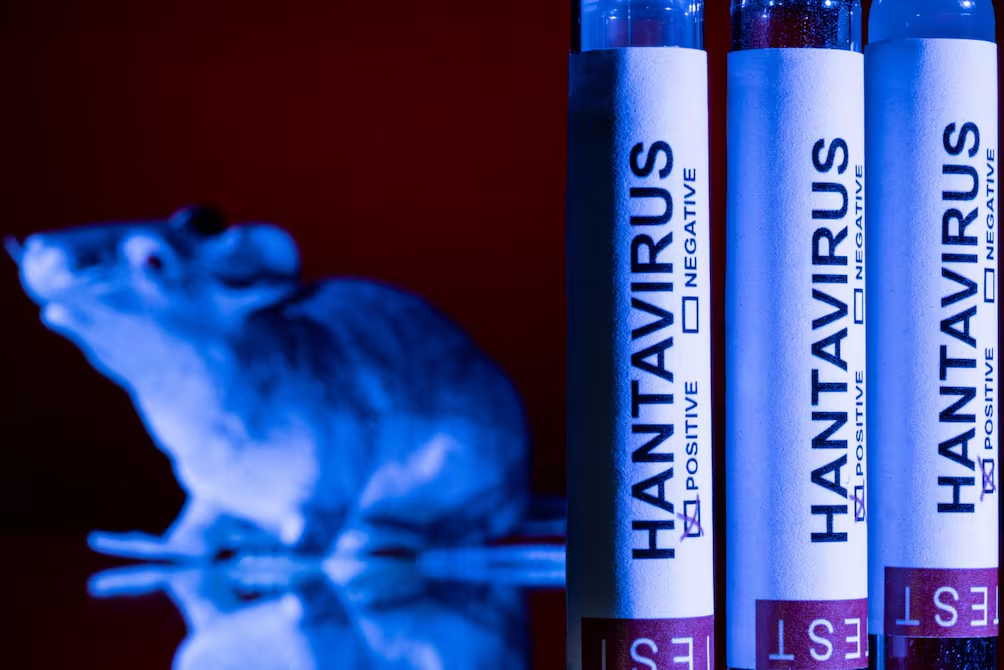
Hantavirus is usually transmitted mainly through contact with infected rodents, and only the Andes variant has shown rare cases of person-to-person transmission.