At age 12, she began building an airplane in her garage. At 14, she flew it by herself. That flight, more than any exam, was what convinced MIT to admit her while she was on the waiting list. Her name is Sabrina González Pasterski, she was born in Chicago in 1993, and she graduated in Physics with a perfect 5.0 average in just three years, the first woman to achieve it in that program in decades.

At Harvard, under the mentorship of physicist Andrew Strominger, she published research that helped open up a field called celestial holography: the idea that the three-dimensional universe we perceive could be encoded in only two dimensions, like a hologram. Stephen Hawking even cited her results in some of his final works.
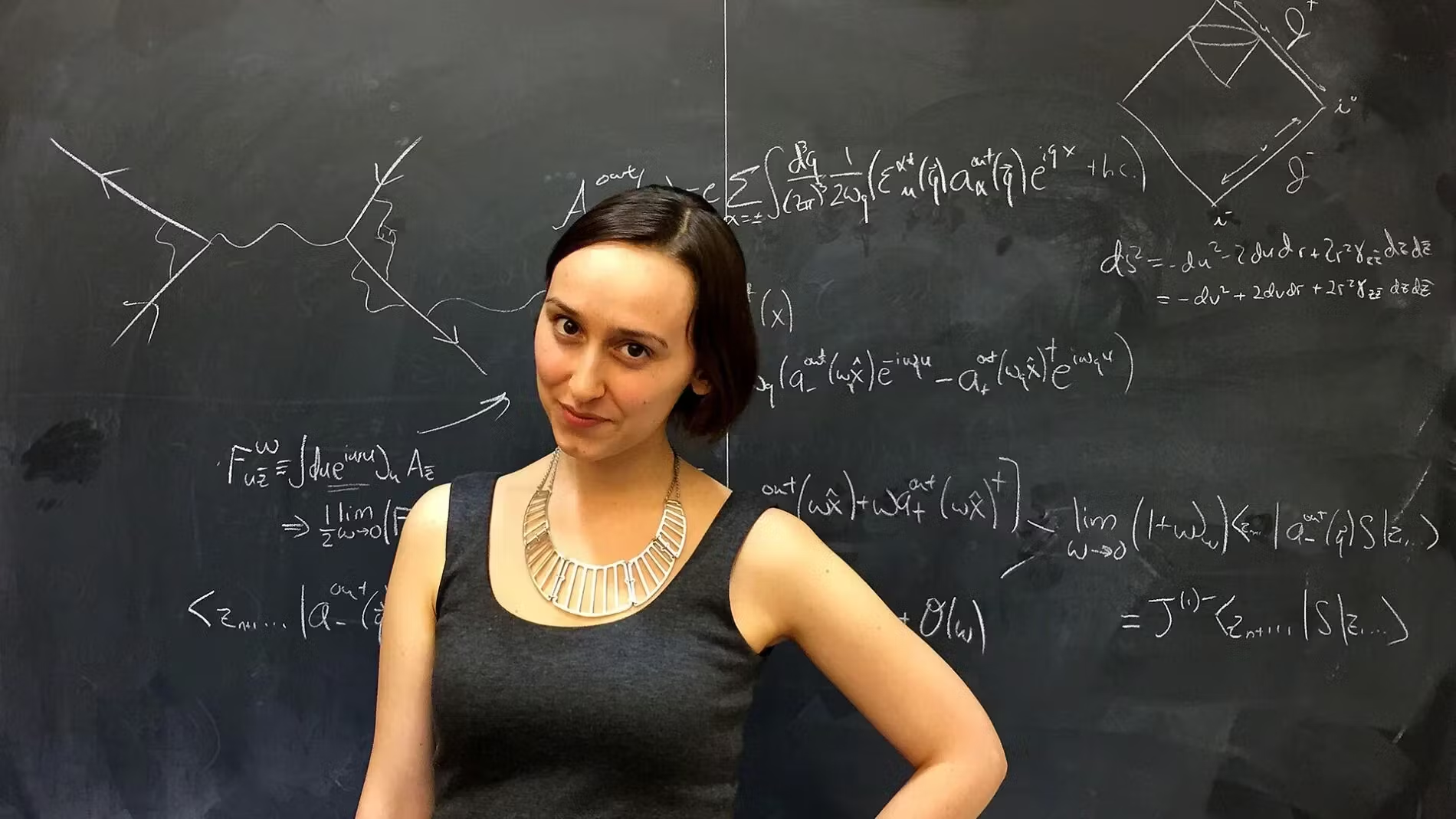
Today, at age 33, she leads the Celestial Holography Initiative at the Perimeter Institute in Canada, with $8 million in funding from the Simons Foundation. They call her “the new Einstein.” She rejects the label. She prefers to keep working quietly on a question that Einstein himself left unresolved.