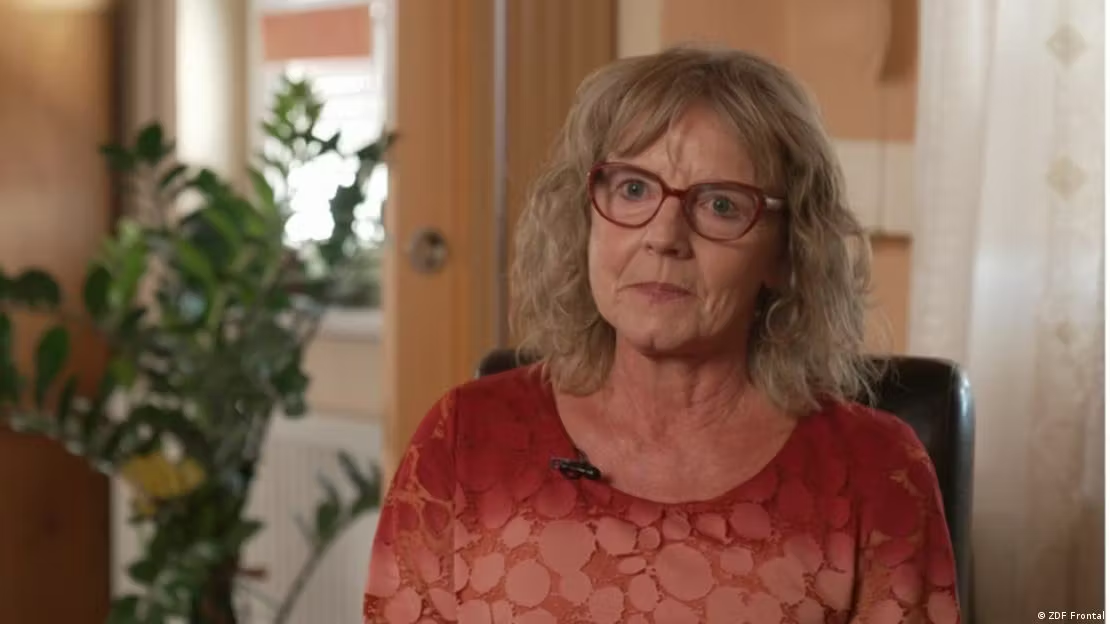
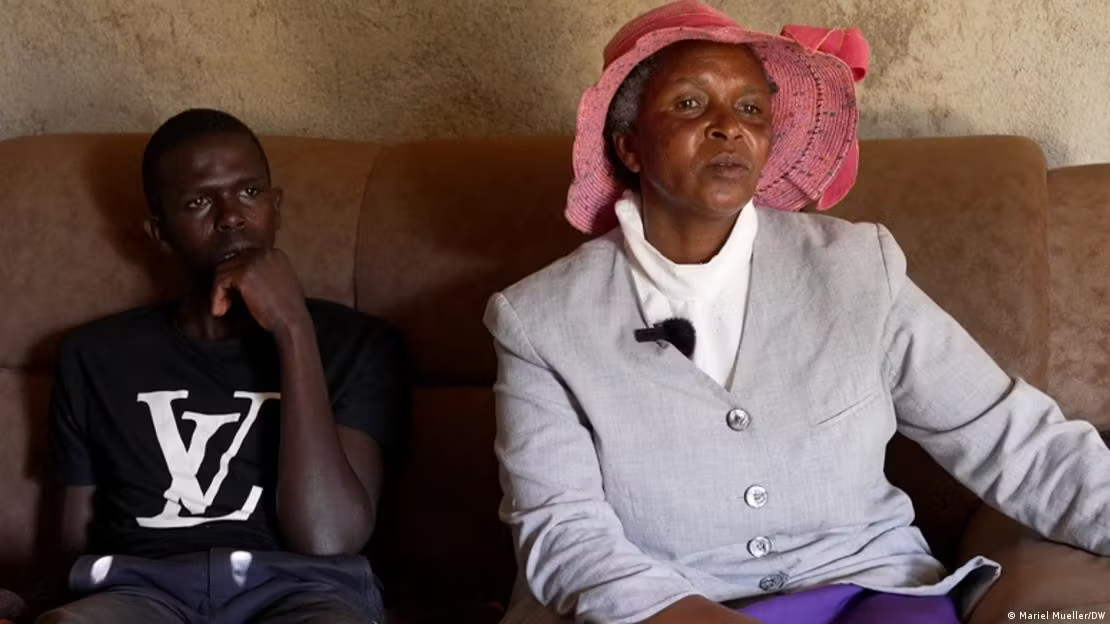
The story of Amon and Sabine exposes the harshest and most heartbreaking side of human need, where health becomes a life-or-death commodity.
At one end of the planet, in Kenya’s most vulnerable areas, a young man named Amon looked to his future without any hope. Without work, without money for daily food, and under the pressure of seeing his loved ones suffer, he felt he had exhausted every possible option to get ahead.
At the other end, in prosperous Germany, Sabine faced a silent sentence: her kidneys had stopped functioning. Day after day, her life depended on grueling dialysis sessions as she watched her body deteriorate on an endless medical waiting list that threatened to fade away before she received a call.
Two realities separated by thousands of kilometers ended up united by the scar from the same surgical operation.
Amon: The decision to sell his own flesh
For Amon, the idea was not born from a desire to buy luxuries, but from a visceral fear of poverty. When the organ black market crossed his path, the offer sounded like the only way out to pay off debts and put food on his table.
Undergoing clandestine surgery, in precarious conditions and with the constant risk of losing his life on the operating table, seemed like an acceptable price to pay just to see some money in his hands.
“When you have nothing to eat, you stop thinking about tomorrow’s risks. You only think about surviving today”, he would reflect some time later on the scar that now runs across his side.
Unfortunately, as happens in most cases of exploitation like this, the sum that reached his pockets was only a fraction of what had been promised, leaving him with one kidney, chronic pain, and the same economic vulnerability as before.
Sabine: The dilemma between morality and the desire to live
On the other side of the scalpel was Sabine. For her, turning to the international organ market was not a cold or corporate decision, but an act of desperation by someone who felt death was breathing down her neck.
Exhausted by the needles, extreme fatigue, and the prospect of leaving her loved ones behind, the woman accepted the opportunity to access an unconventional transplant outside the traditional healthcare system.
For Sabine, that kidney was not a financial transaction: it was the chance to embrace her family again, to breathe without pain, and to have a tomorrow.