
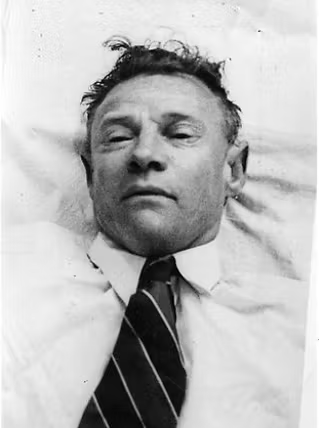
They found him on the sand at Somerton Beach, Australia, on the morning of December 1, 1948.
Dark suit. Polished shoes. Neatly knotted tie. No wallet, no documents, no name.
He was a man in his forties. No one claimed him. No one recognized him.
Investigators opened it hoping to find something. And they did: hidden in the secret hem of his trousers, a tiny piece of paper. Two words in ancient Persian: Tamam Shud.
“It is finished.”
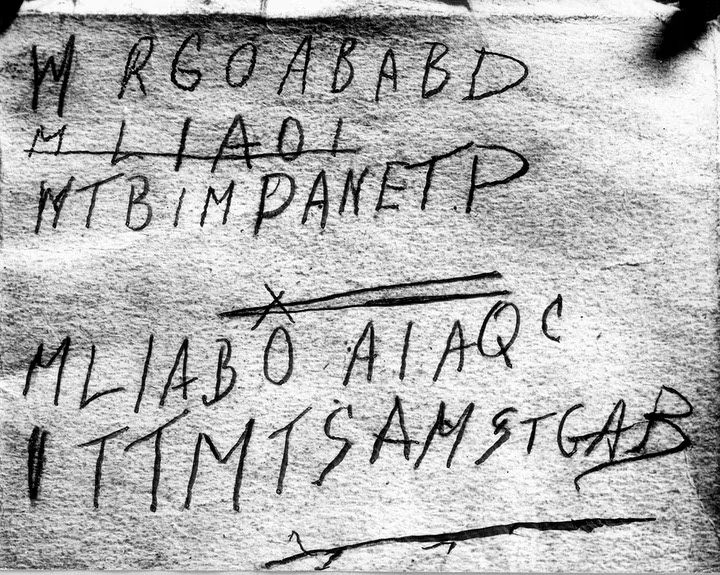
Those words belonged to the final pages of the Rubaiyat, Omar Khayyam’s book of poems. They traced the book. They found it: someone had left it on the back seat of a car, months earlier, near the same beach. On the back cover, written in pencil, was a code. Letters in no apparent order. No known cipher. No solution.
Seventy-four years of silence.
In 2022, a team from the University of Adelaide identified the man through DNA. His name was Carl “Charles” Webb. He was an electrical engineer, born in 1905. He had been married, separated. He lived more than a hundred kilometers from that beach.
Why he went there, no one knows. Why he died, no one does either. The code remains unanswered.
There are mysteries that time solves only halfway. It gives you back the name, but keeps the secret.
The Somerton man now has an identity. All he lacks is a story.