
“At one point he said he was going to eat my heart. He lay on top of me and put his head on my chest”
In 1991, Tracy Edwards ran out with a handcuff dangling from his wrist and stopped the police. He was 32 years old and had just fled Jeffrey Dahmer’s apartment. That act exposed the crimes of a man who had killed 17 young men. Dahmer would die in prison in 1994, murdered by another inmate.
Edwards was seen as a hero. However, 20 years later he would return to court as a defendant.
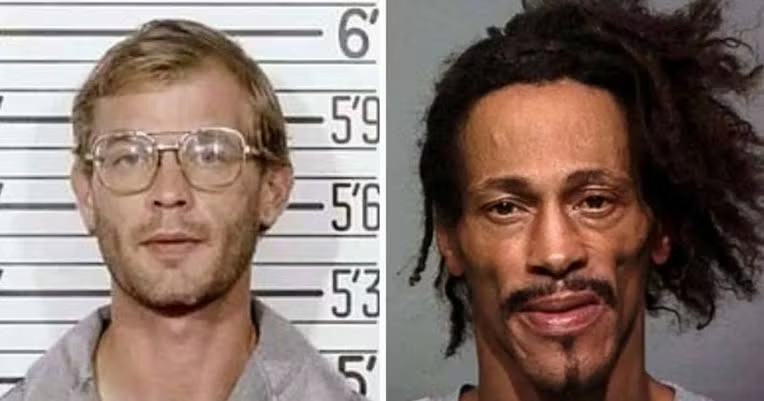
“He was no longer the same person he had been before being attacked by Dahmer; his facial structure had changed”
After the trial, Tracy fell apart. He did not seek psychological help because he was afraid of remembering what had happened, and he sank into illicit substances. He was convicted of at least three drug-related offenses in 1997, and his attorney Paul Ksicinski stated that he probably suffered from post-traumatic stress disorder due to his experience with Dahmer, but Edwards still had farther to fall.
Tracy could never forget the nauseating smell of Dahmer’s apartment; he had unknowingly been surrounded by the victims, among piled-up boxes and drums. He was the martyr; however, he would pay a price.
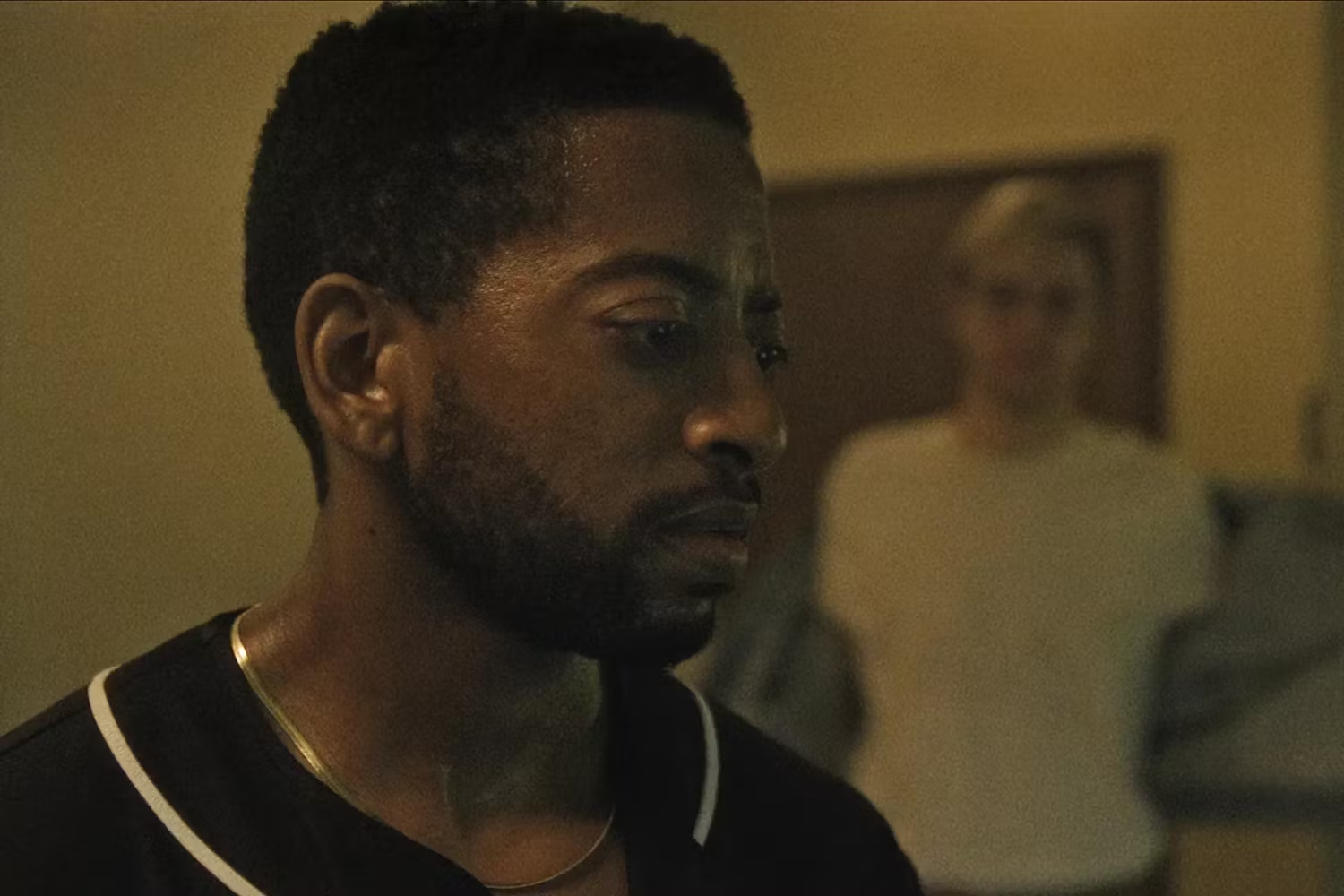
Twenty years later, on July 26, 2011, Tracy, who ended up living on the street, helped criminal Timothy Carr throw Johnny Jordan, another homeless man, into the river because of an argument on the Milwaukee bridge.
Jordan, 43, drowned.
Edwards was arrested and pleaded guilty. His lawyer said that he had never stopped carrying Dahmer with him, and now, in his words, he was going to have another ghost for the rest of his life.
Judge Rebecca Dallet gave him the maximum possible sentence: a year and a half in prison. “In your attempts to drown your sorrows”, she told him, “you turned other people into victims.”
Edwards only replied: “I should have done more that day.”