
Sophia is 24 years old, lives in Leeds, United Kingdom, and works as a waitress and content creator. She has been with her boyfriend for more than a year, whom she met one Valentine’s Day at a bar. Everything was going well, until the relationship became serious.
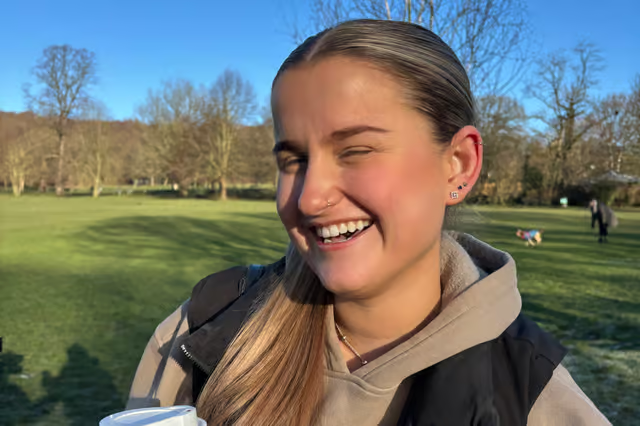
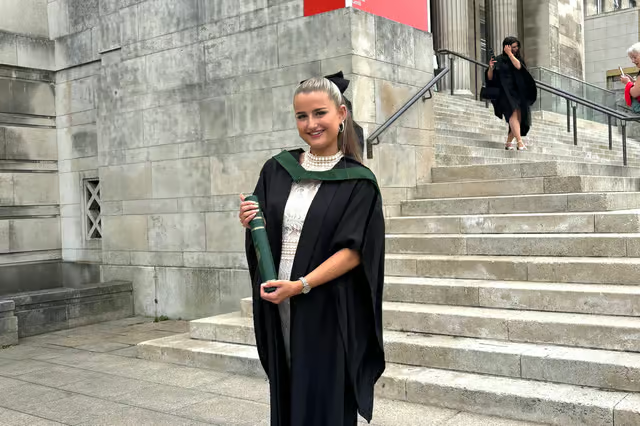
Then, something broke inside her mind. Her obsessive-compulsive disorder, which previously forced her to wash her hands up to 30 times a day out of fear of germs, changed targets: now it latched onto her partner.
The clothes he wore, how he styled his hair, any tiny detail became proof that perhaps she did not love him, that maybe she was being unfaithful without realizing it.
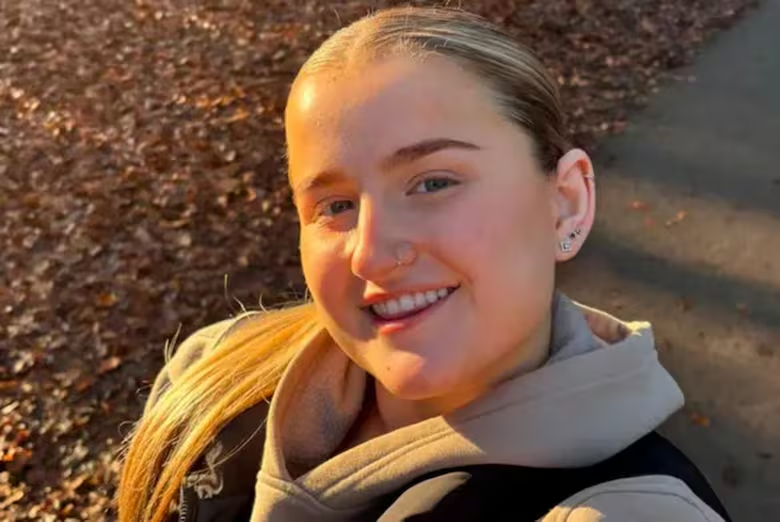
On her worst days, she could not get out of bed or go to work. She spent hours asking ChatGPT hundreds of questions, searching for certainty that never came.
Professor David Veale, a psychiatrist with the NHS in London, describes it as a disorder that devours mental energy and drives anxiety to the point of completely paralyzing the life of the person who suffers from it.
Sophia sums it up differently: she calls it mental torture.