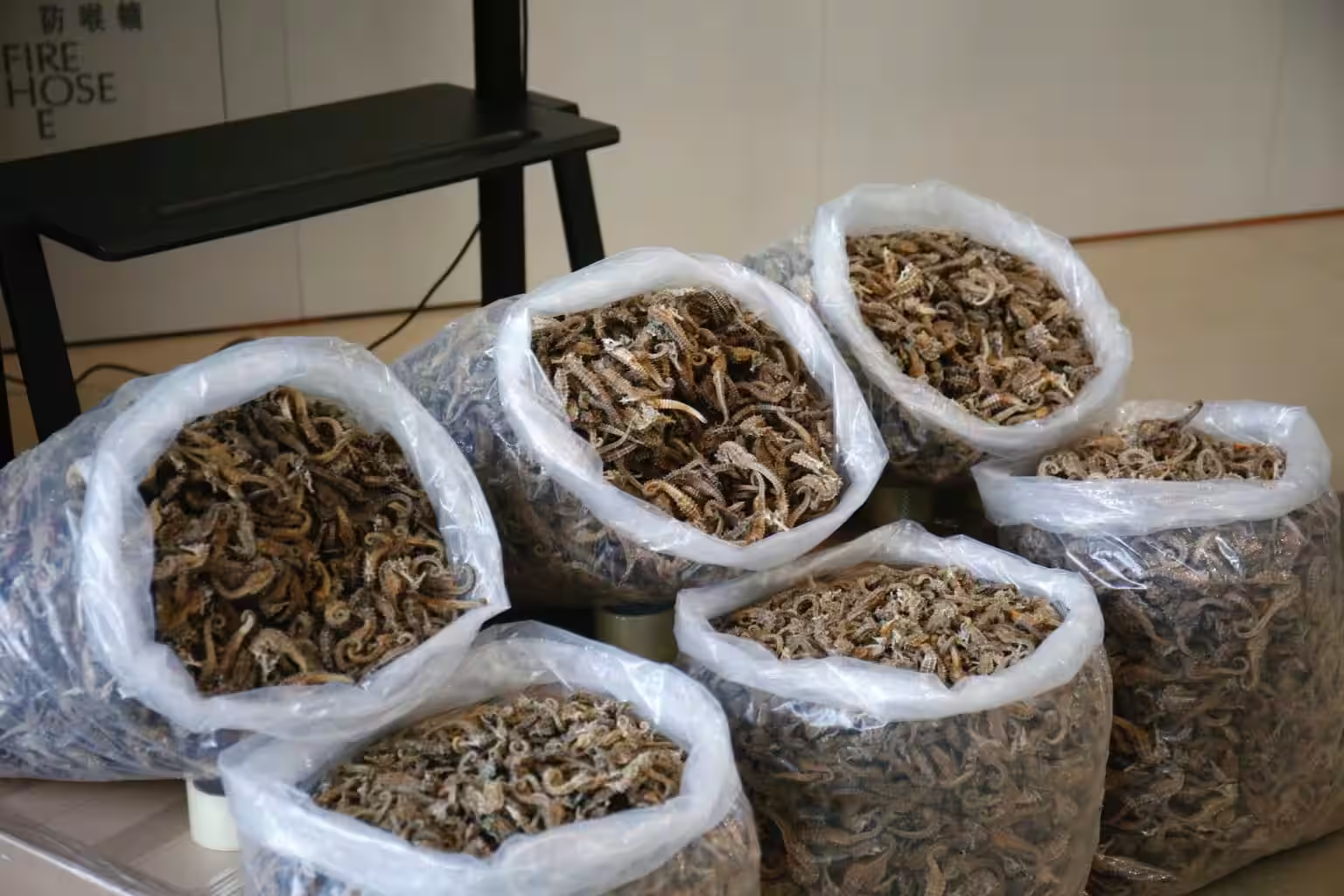
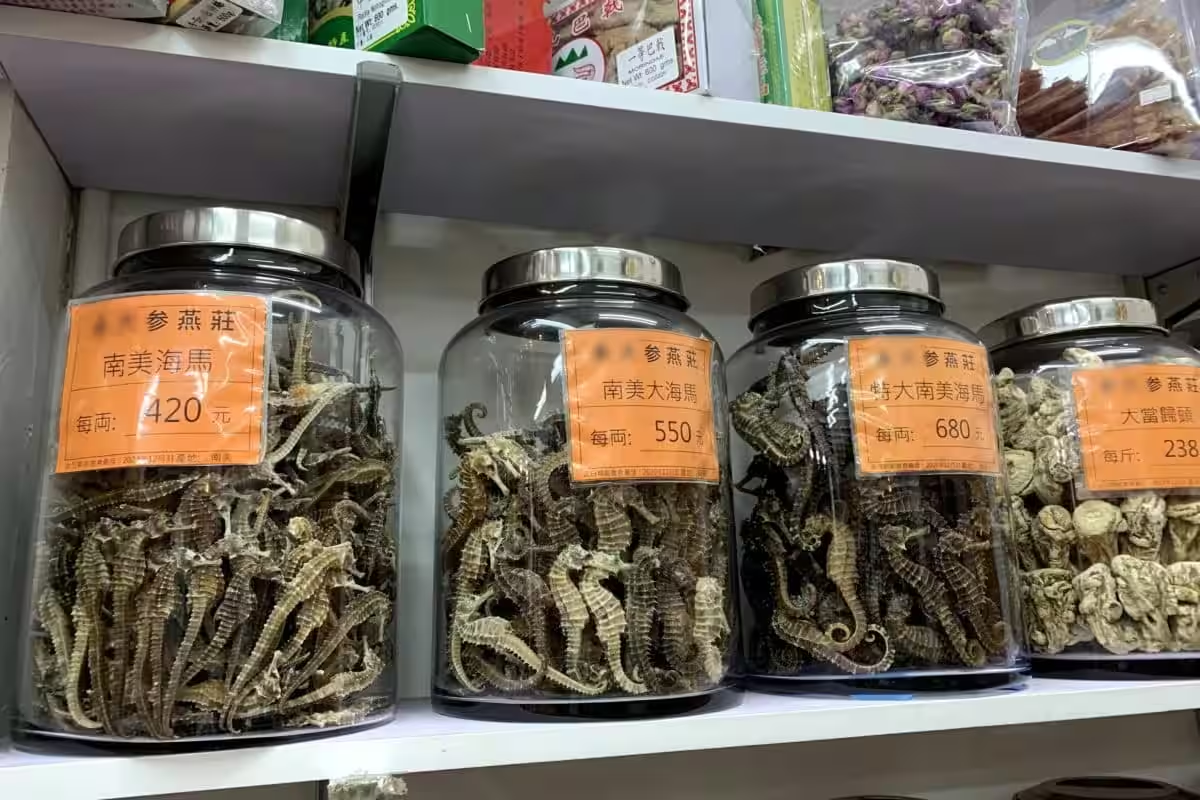
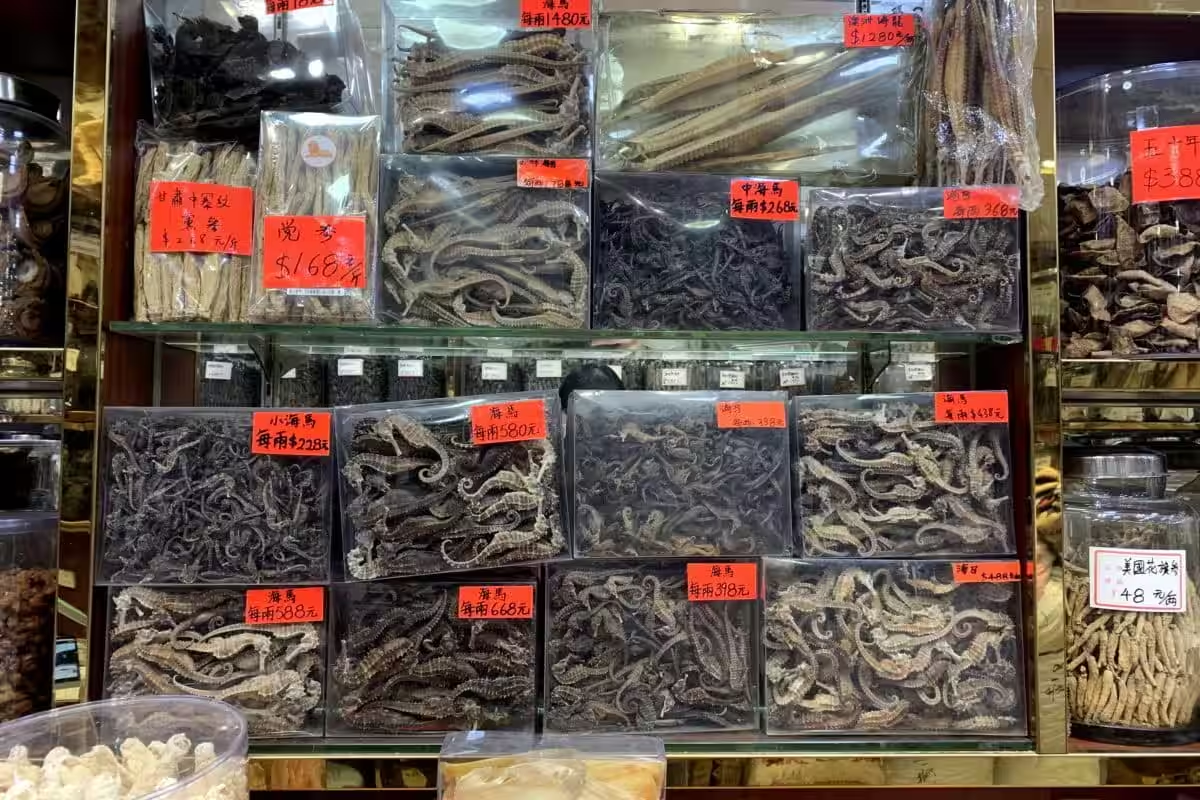
In a row of shops in Sheung Wan, Hong Kong, seahorses are stacked in glass jars like spoons, their bodies curved into an S shape. Each sells for about $5. They are bought mostly by men over 50.
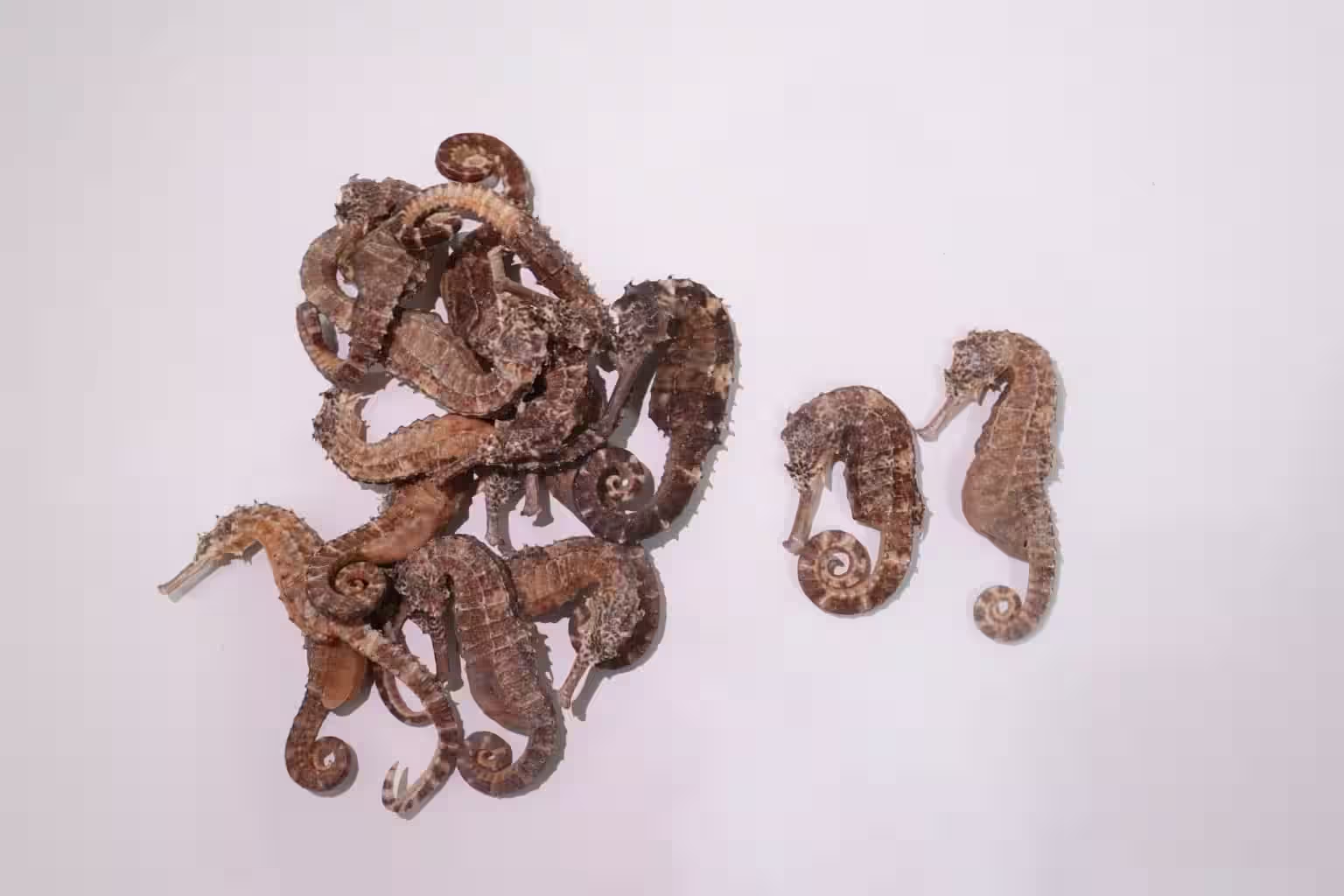
Traditional Chinese medicine has mentioned them since 700 AD and uses them to treat asthma and male sexual dysfunction, such as impotence and premature ejaculation. Lixing Lao, director of the School of Chinese Medicine at the University of Hong Kong, acknowledges that there is no scientific evidence that they work and no human clinical trials to support their use.
Meanwhile, about 37 million seahorses are caught in the wild each year, and populations of at least 11 species have declined by between 30% and 50% over the past 15 years. Hong Kong accounted for nearly two-thirds of global imports between 2004 and 2017.
The most curious part: according to biologist Sarah Foster, even if the trade disappeared tomorrow, many would still die trapped in trawl nets. Did you imagine the real problem was something else?