
In 2007, a 44-year-old French man went to the hospital because of slight weakness in his left leg. A CT scan and an MRI revealed something extraordinary: his cerebral ventricles were so enlarged by cerebrospinal fluid that they occupied much of his skull and had compressed the brain tissue until it was reduced to a very thin layer.
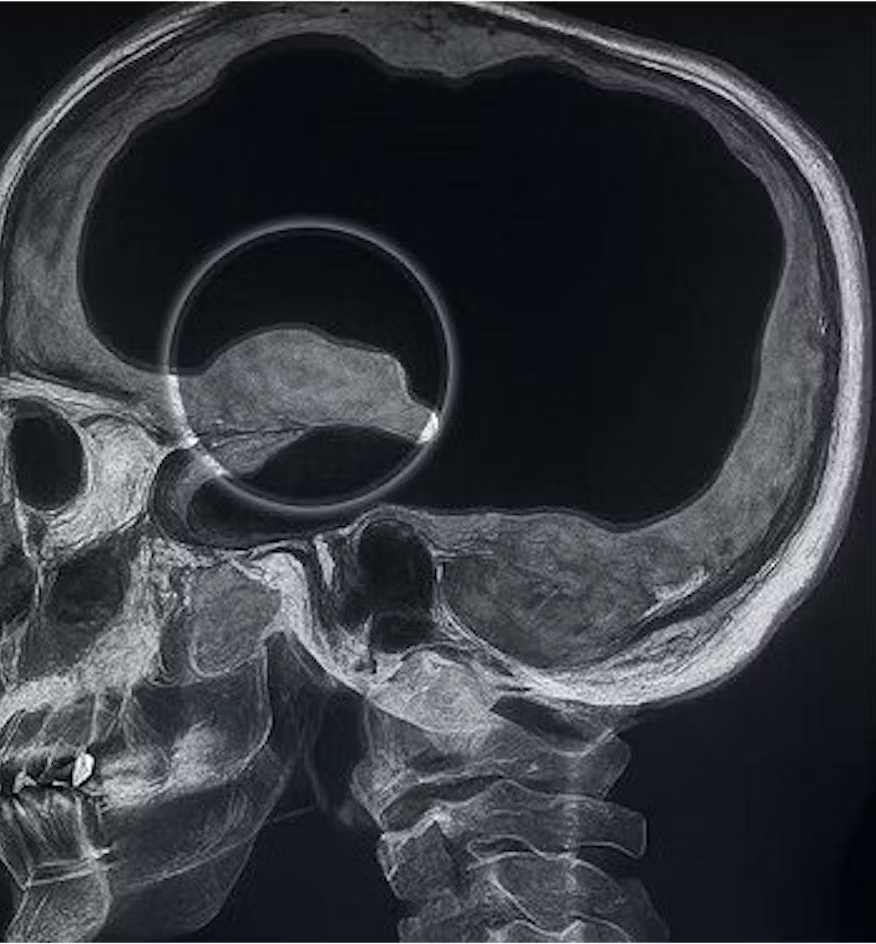
Most surprising was that he led an apparently normal life. He worked as a public servant, was married and had two children. Doctors discovered that he had suffered from hydrocephalus since childhood and had been fitted with a valve to drain excess fluid, which was removed when he was 14.
Neuropsychological tests estimated his IQ at 75. Despite the extensive abnormalities shown in his brain scans, he was able to manage in his daily life.

The case surprised specialists because the fluid had increased slowly over decades, allowing the brain to adapt to the changes. This does not mean that a person can literally live “without a brain”: much of the tissue was still there, but it was severely compressed.
The case became an extreme example of how the brain can adapt to certain changes that develop over long periods.