
In 1972, George and Molly Hunt began counting seagull nests on Santa Barbara Island, 61 kilometers off the coast of California.
Something did not add up: 10 % of the nests had six eggs, twice the normal number for this species, since it is physically impossible for them to lay more than three eggs. No one understood why, until the researchers came up with a theory: homosexuality.
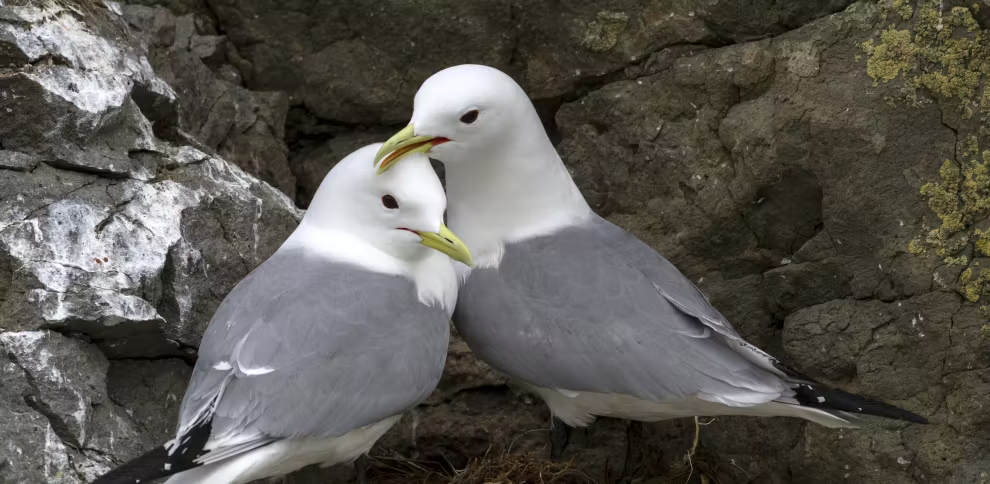

But unlike other birds, sexual dimorphism in seagulls is not very evident, meaning that male and female seagulls do not have noticeable physical differences. So, to confirm the theory, the scientists had to sacrifice one of the most fertile pairs.
Upon dissecting them, they discovered that both seagulls had ovaries. The females had found their own strategy: they mated with males to fertilize their eggs, but paired up with other females, and together they built the nest, incubated, and cared for their young.
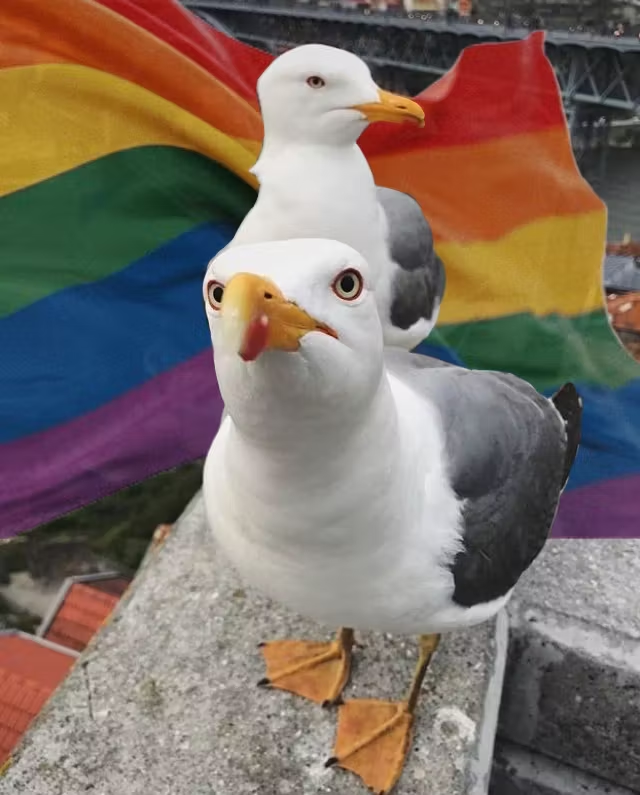
The finding was published in the journal Science in 1977 and caused such a scandal that the United States Congress tried to block the budget of the National Science Foundation, which had funded part of the study.
Perhaps the most curious thing about this story was never the seagulls, but us. While they simply kept reproducing and raising their young together, it was humans who needed to turn their behavior into a moral problem, and no matter how uncomfortable a truth may be, sooner or later it will come to light.