
At the Ngamba Island Chimpanzee Sanctuary in Uganda, researchers from the University of California, Berkeley, put something we know quite well among humans to the test: how far friendship goes when something we want for ourselves is at stake.
The experiment brought together 26 chimpanzees between the ages of 16 and 39. But before putting food in front of them, the scientists needed to know who was really friends with whom.
To find out, a researcher spent more than 800 hours observing their relationships: she recorded which chimpanzees groomed one another, which tended to sit near one another, and who spent time together while eating. With that information, they were able to identify the strongest social bonds.
Then came the temptation.
In 138 trials, the chimpanzees had the opportunity to take food that was within another chimpanzee’s reach. When the other chimpanzee wasn’t a friend, they did so on 70 % of occasions. When it was one of their close companions, the figure fell to 61 %.
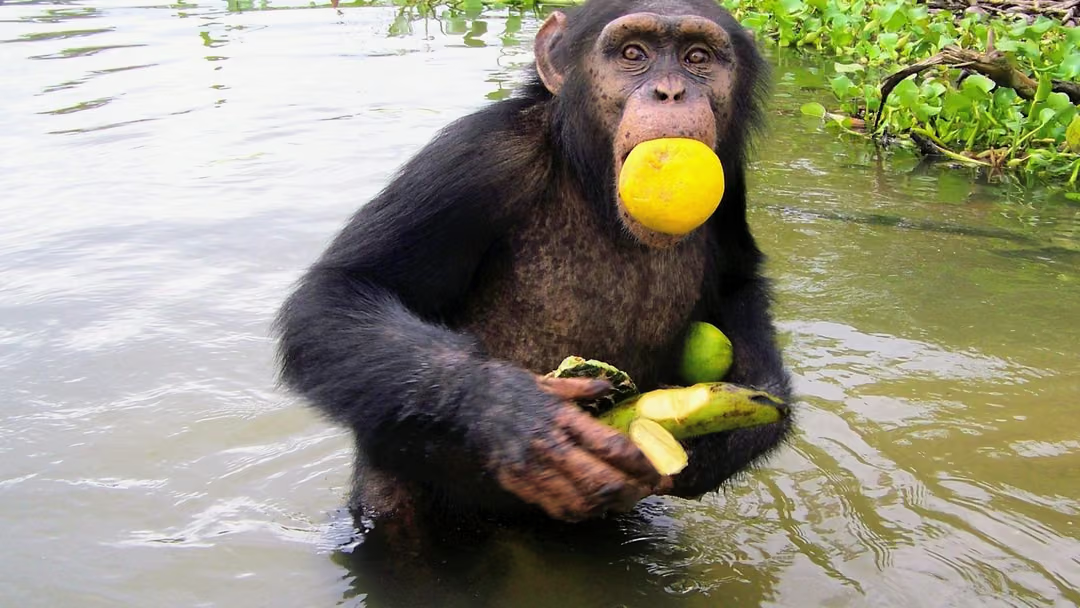
This doesn’t mean that friendship overcame hunger: they still took food from even their friends most of the time. But that small difference caught the researchers’ attention because the pattern persisted even after accounting for factors such as the animals’ social rank.
There was another clue, too. When a chimpanzee took food from someone with whom it did not have a close bond, it tended to show more expressions of negative emotion, especially screams, than when the victim was one of its friends.
For the scientists, this doesn’t mean that chimpanzees have a moral code about “theft” like ours. The interesting thing is something else: they seem to behave differently depending on their relationship with the individual they are harming.
“We expect more from our friends”, explained Jan Engelmann, one of the study’s authors.