
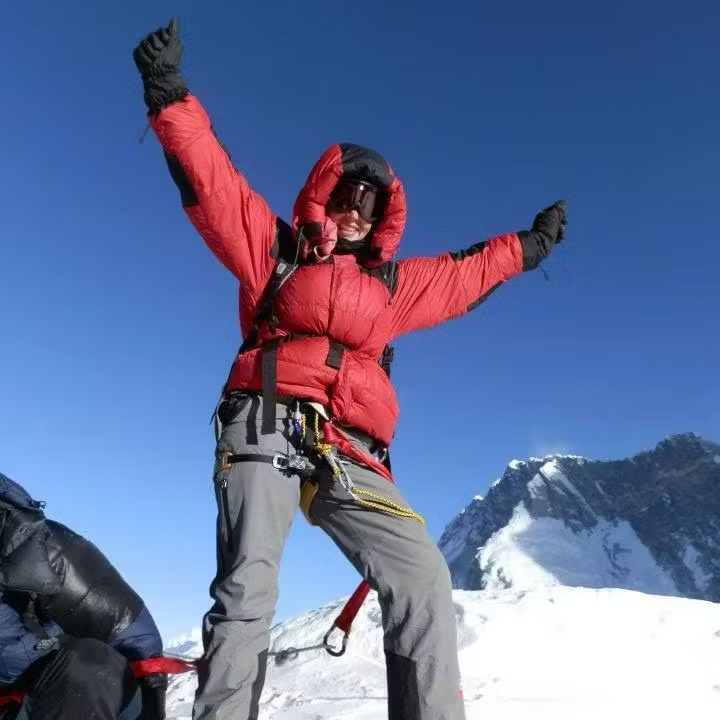
Maria Strydom was 34 years old and had a theory she wanted to test with her own body.
She was a professor at Monash University in Melbourne, had been a strict vegan for years and had already summited Denali, Ararat, and Kilimanjaro without any problems. Everest was the only one missing to complete the Seven Summits and close the argument: vegans are not weak. She climbed alongside her husband Robert Gropel, a veterinarian, despite his uncle warning them before they left that he had “a bad feeling”.

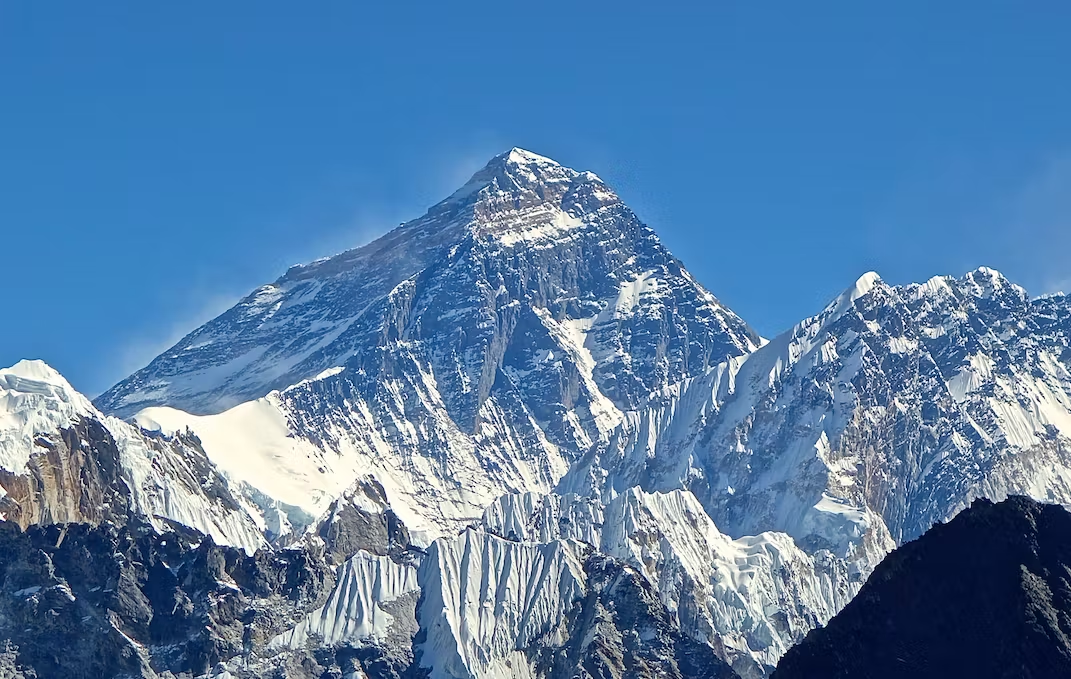
They reached the summit. On the descent, at around 8,000 meters above sea level, Maria’s body began to fail due to high-altitude cerebral edema. She died on the way between Camps 3 and 4. Robert suffered pulmonary edema and had to be taken down by sled and hospitalized in Kathmandu. Ironically, the expedition’s outcome did not prove the weakness of veganism —a diet that doctors and experts ruled out as the cause of the tragedy—, but something much more universal: that above 8,000 meters, the mountain does not judge ideologies or lifestyles; it simply forgives no mistake.