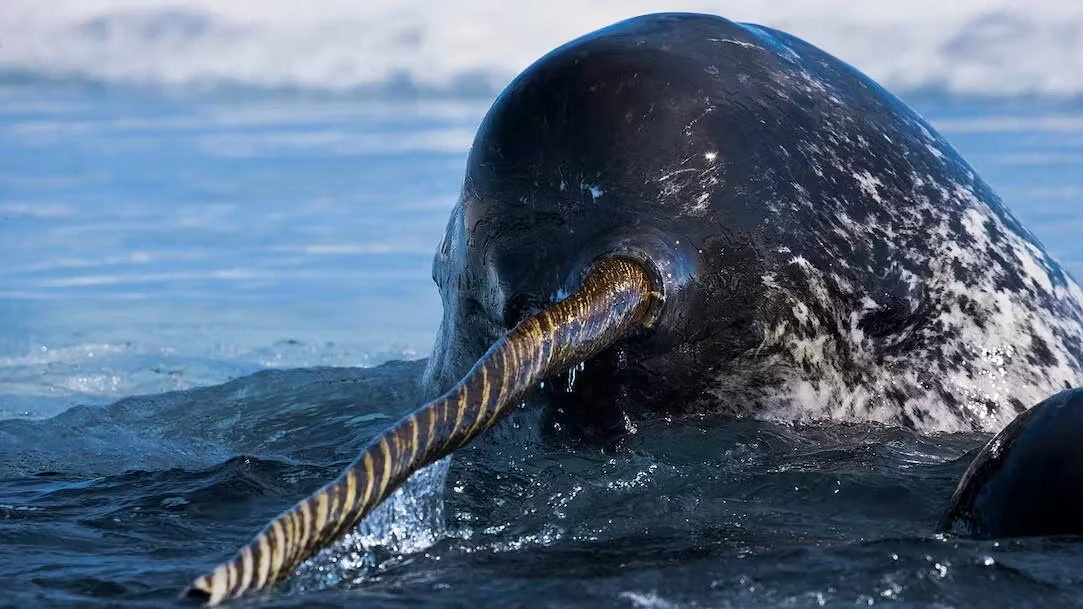
For centuries, medieval merchants sold the narwhal’s tusk as if it were the horn of a magical unicorn. The reality, now uncovered, is even stranger.
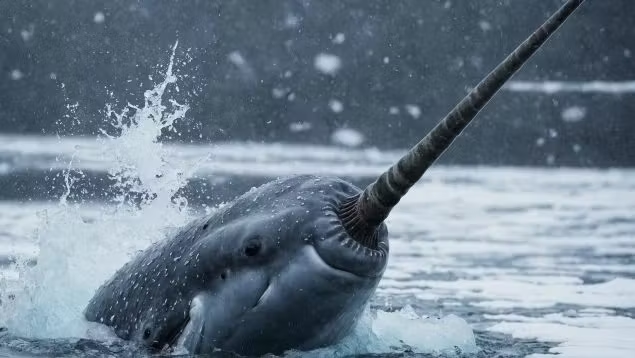
That spiraled tusk is neither a weapon nor an ornament: it is a tooth covered with millions of nerve endings. Researchers cited by evolutionary biologist Scott Travers found active neuronal markers in its dental pulp, and confirmed something astonishing: when narwhals were exposed to water with different salinity, their heart rate changed. The animal literally senses the ocean through its own tooth.

Unlike the enamel that protects human teeth, the narwhal’s is pure exposed dentin, which gives it extreme sensitivity to detect temperature, water chemistry, and even Arctic ice before colliding with it. And there’s more: another line of research suggests that this same tusk also plays a role in sexual selection among males.