
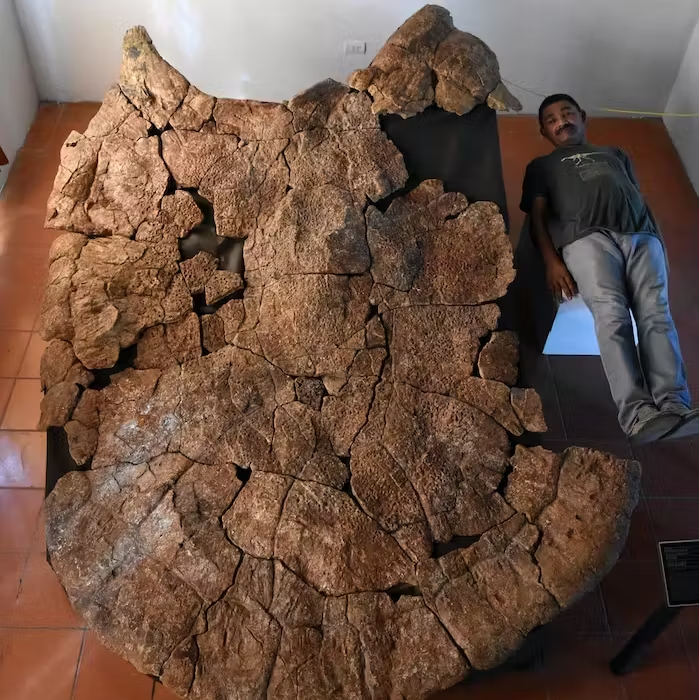
Imagine parking this in your garage: four meters long, more than a ton, and a shell with horns.
In February 2020, a team of researchers announced the discovery of fossils of Stupendemys geographicus, one of the largest turtles ever to have lived on Earth. Paleontologist Edwin Cadena, lead author of the study published in Science Advances, explained that the largest specimens were the size of a sedan if you added together the head, neck, shell, and legs. In the famous photograph of the discovery, Venezuelan paleontologist Rodolfo Sánchez is seen reclining beside the fossil to give an exact sense of its scale, the largest shell ever found, accompanied by the first known piece of its lower jaw.
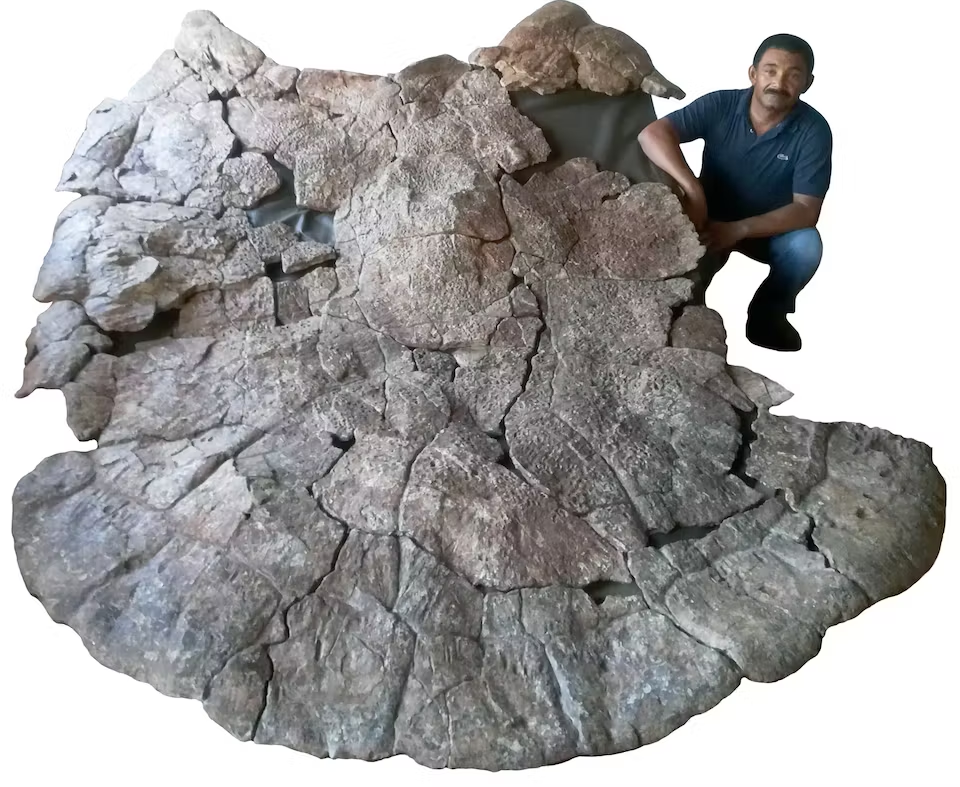
It lived between 7 and 13 million years ago in wetlands that are now part of the Amazon region, spanning Peru, Brazil, Venezuela, and Colombia. And it wasn’t exactly a peaceful life: males sported large horns at the front of their shells, probably to fight one another or defend themselves from predators. Females, by contrast, had none. According to Marcelo Sánchez, a paleobiologist at the University of Zurich, this difference in their shells confirms that there were two distinct sexes.
But even with horns and weighing a ton, it wasn’t the ruler of the swamp. It shared its home with ancestors of monstrous crocodiles such as Purussaurus, up to 11 meters long, and Gryposuchus, about 10 meters long. That’s why the shell bears bite marks: the biggest turtle in the neighborhood still had neighbors with worse tempers.