
On August 16, 1960, U.S. Air Force captain Joseph Kittinger ascended from New Mexico suspended beneath an enormous helium balloon. His destination was 19 miles above sea level, an altitude where the atmosphere is extremely thin and the sky begins to look almost black.
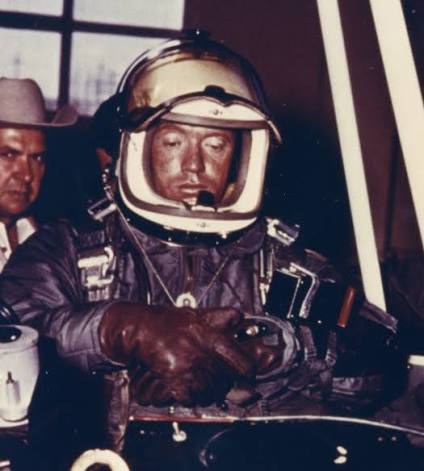
Kittinger traveled inside a small pressurized gondola as part of the Excelsior project, a U.S. Air Force program that studied parachute systems for pilots who might have to leave an aircraft at high altitude. During the ascent, he had a problem with his suit’s pressurization system that caused his right hand to swell, but he decided to continue.
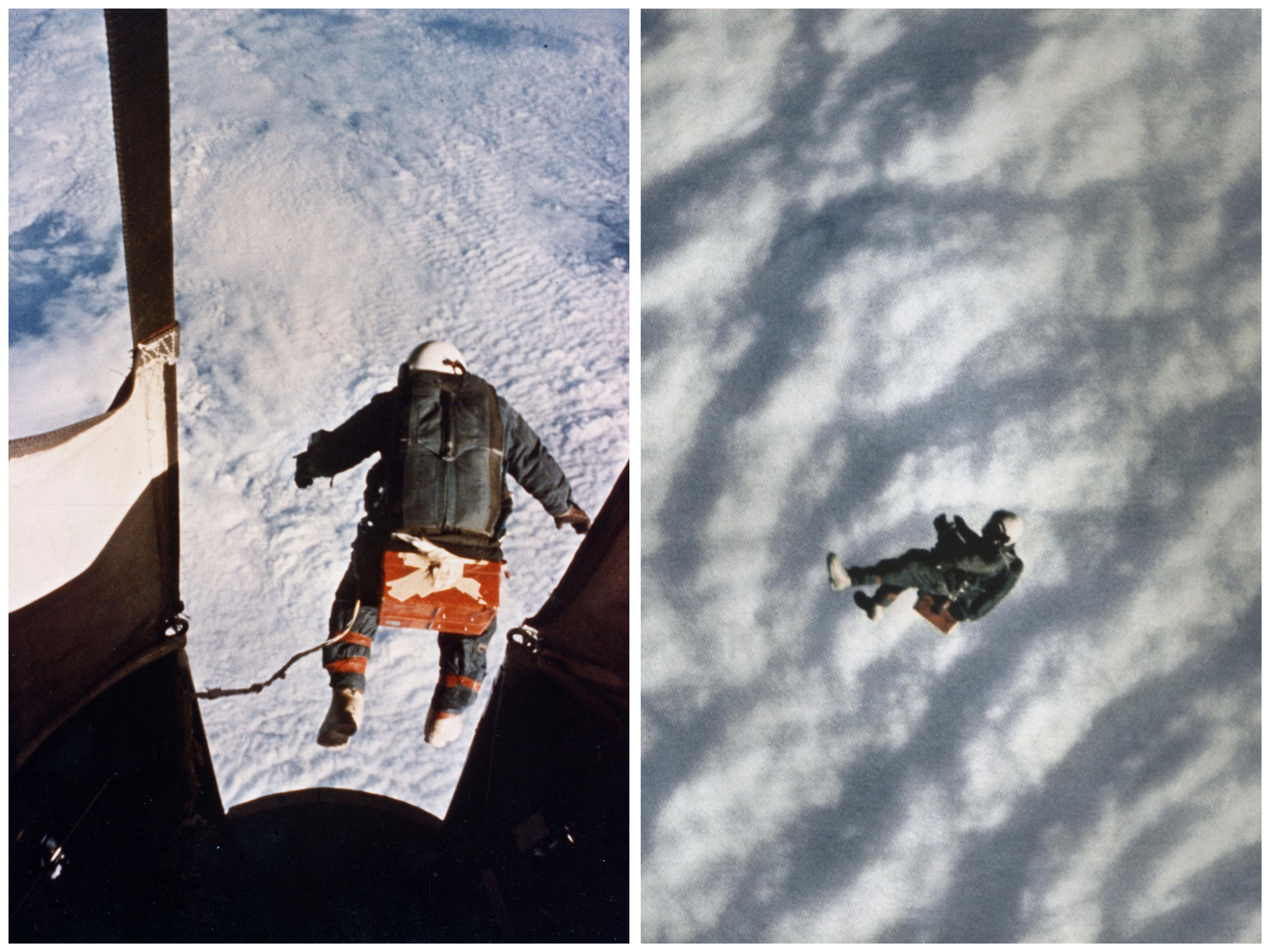
When he reached the planned altitude, he opened the capsule’s hatch and launched himself into the void. During the first part of the descent, he fell through an atmosphere so thin that it offered barely any resistance. He reached a speed of approximately 613 mph, close to the speed of sound, before entering denser layers of the atmosphere.
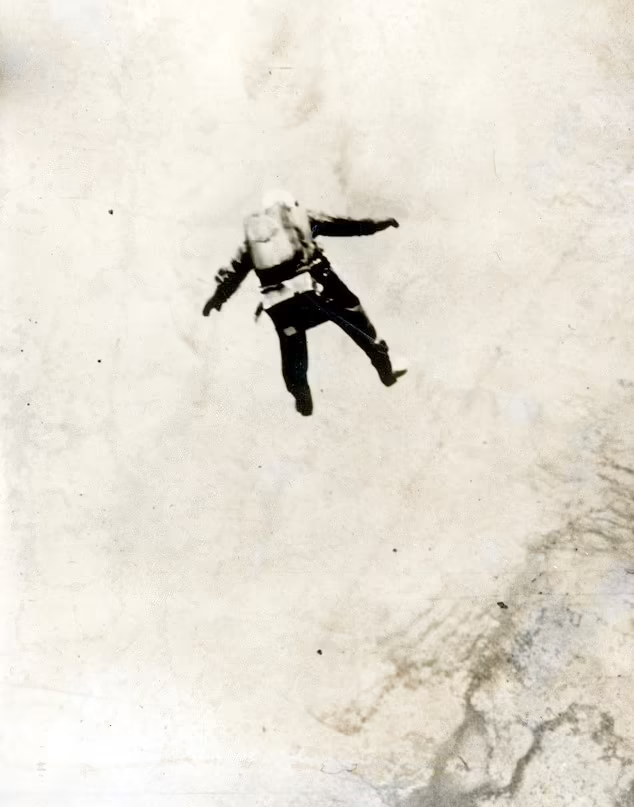
The jump also involved an enormous risk of losing control during the fall. To prevent this, Kittinger carried a small stabilizing parachute that was supposed to keep him correctly oriented. The system worked, and after several minutes of descent, he opened his main parachute at a much lower altitude.
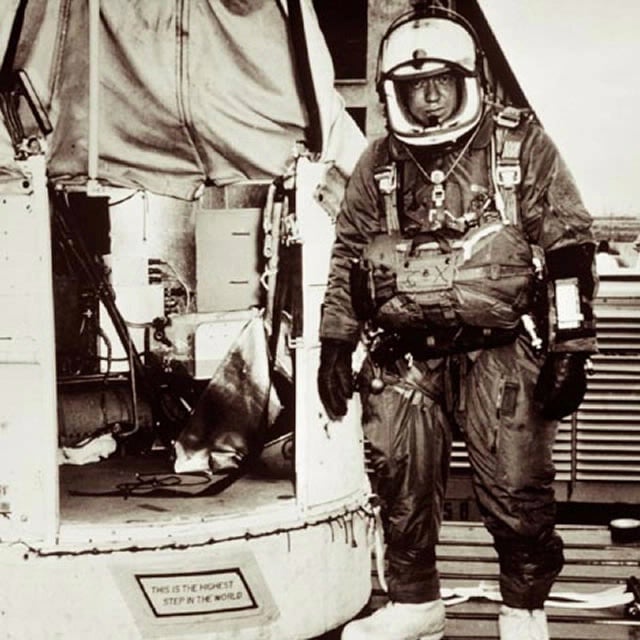
Kittinger landed in the New Mexico desert after spending more than four minutes descending from the edge of the stratosphere. That jump set three records—height, duration of free fall, and speed—that remained in place for decades.
The image of Kittinger suspended above Earth became one of the most memorable photographs of high-altitude exploration.
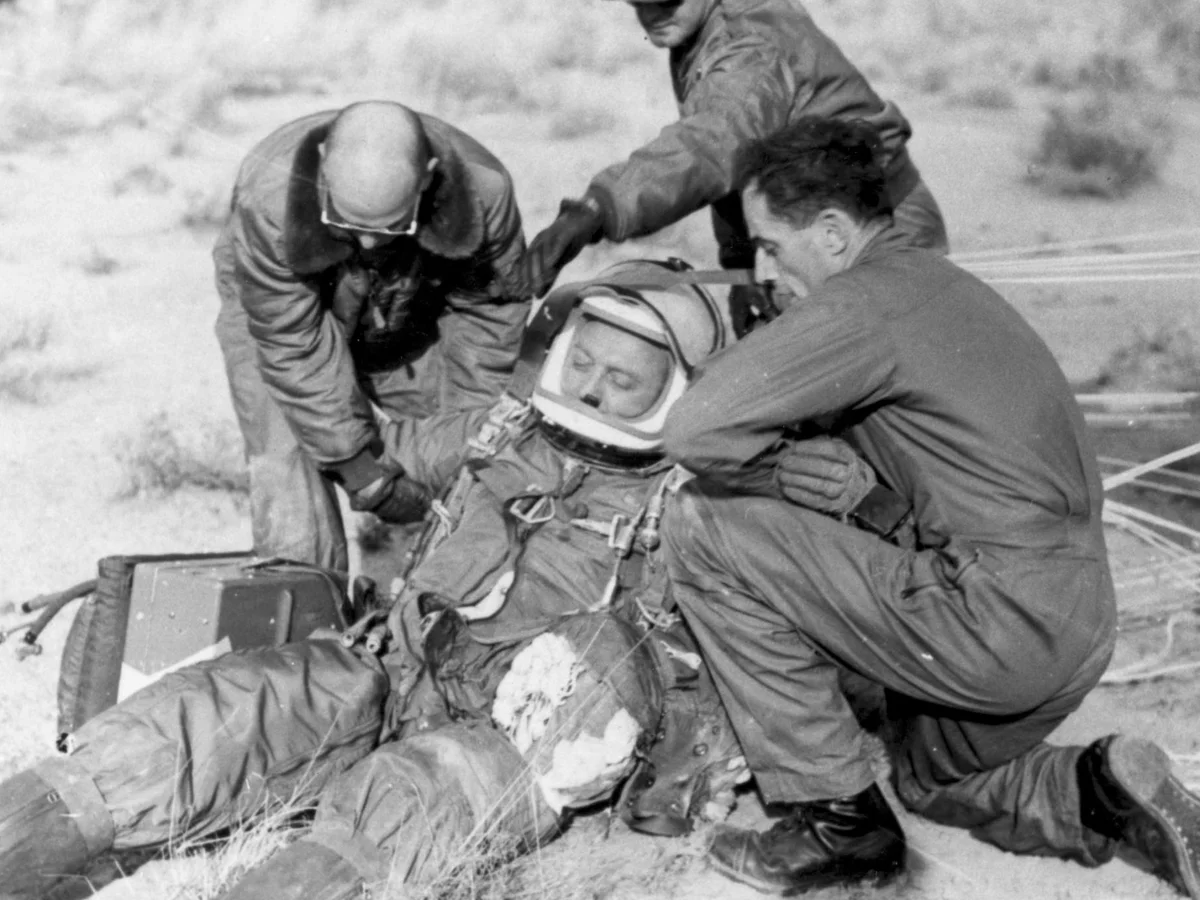
There was no airplane, mountain, or tower beneath his feet: only a capsule above him, a parachute at his back, and more than 19 miles of air between his body and the ground.