
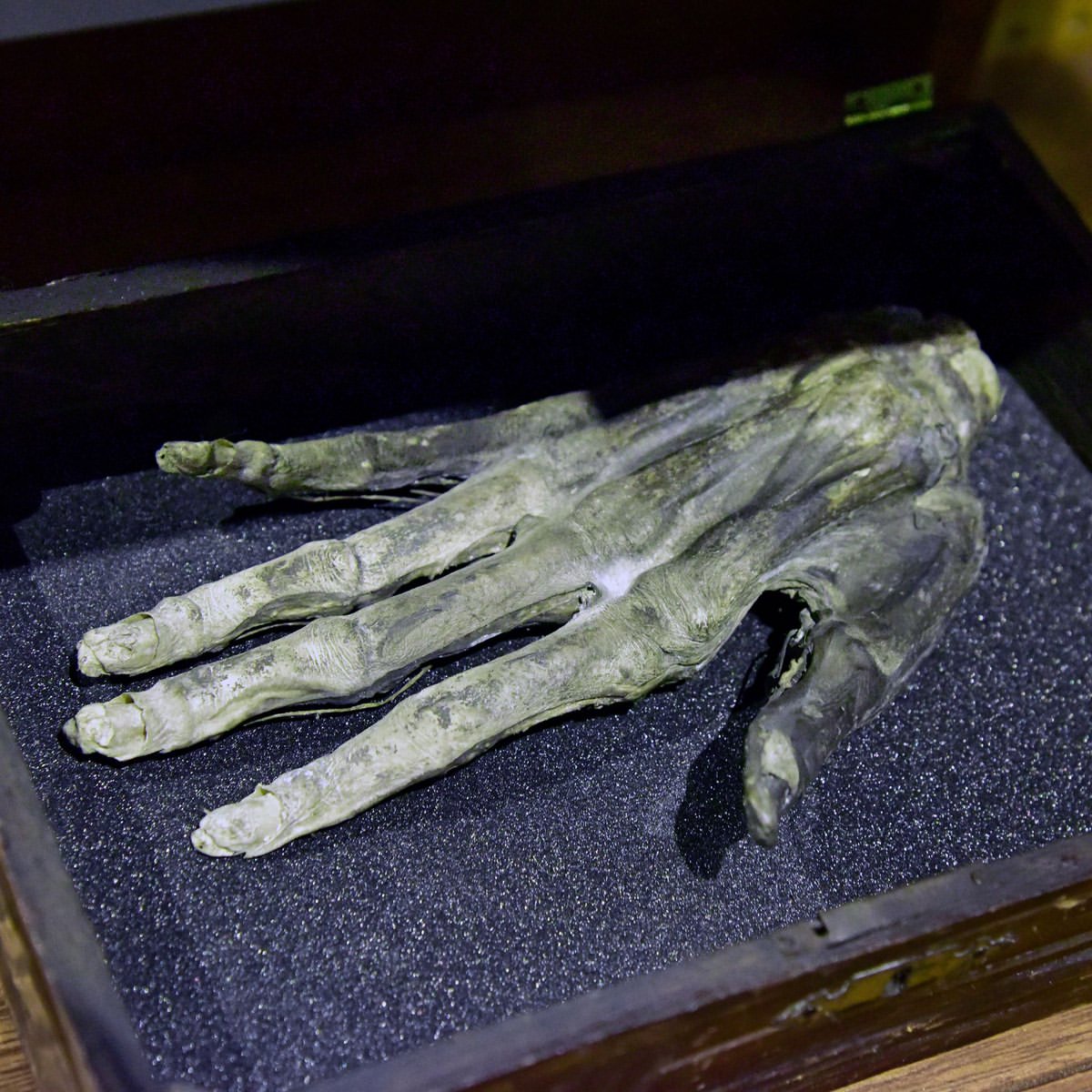
At the beginning of the 20th century, during renovation work on an old farmhouse in Yorkshire, England, something far more unsettling than an antique appeared: a mummified human hand that had been hidden inside a wall.
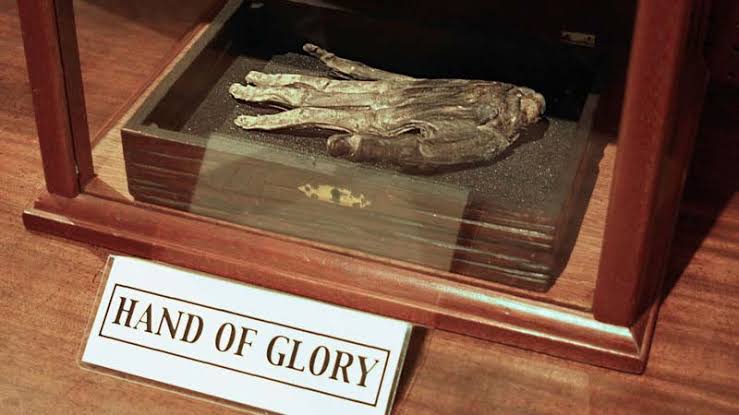
The item was later linked to the “Hand of Glory”, an ancient European belief associated with magic and thieves. According to folklore, it was the hand of a man executed by hanging, which was preserved and used as a magical object.
One version of the legend said that the hand could become a macabre candlestick. A candle was made from the dead man’s fat and placed on the hand. Its light supposedly put the inhabitants of a house to sleep or left them motionless, allowing thieves to enter and steal without being discovered.
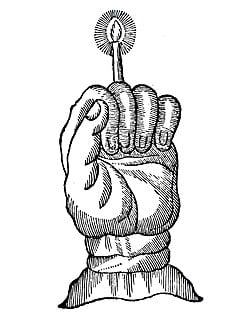
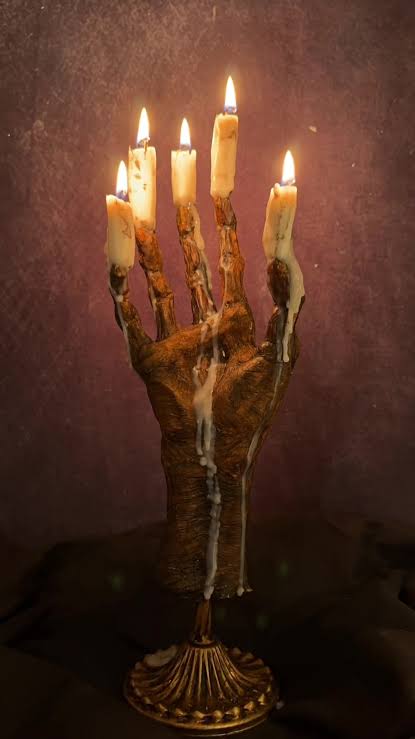
The story becomes even stranger: some versions claimed that each finger could function as a candle. If one of them failed to light, it meant that someone inside the house was still awake. And water would not put out the flame: tradition said that milk had to be used.
The hand found in Castleton was given to the Whitby Museum in 1935, where it is still kept. The museum states that it is the only known surviving example and that it has been identified as a possible “Hand of Glory”.
But there is an important difference between the legend and what we actually know: it has not been proven that the hand belonged to an executed man or that it was ever used by thieves. Its identification as a Hand of Glory comes from the tradition associated with this type of object.
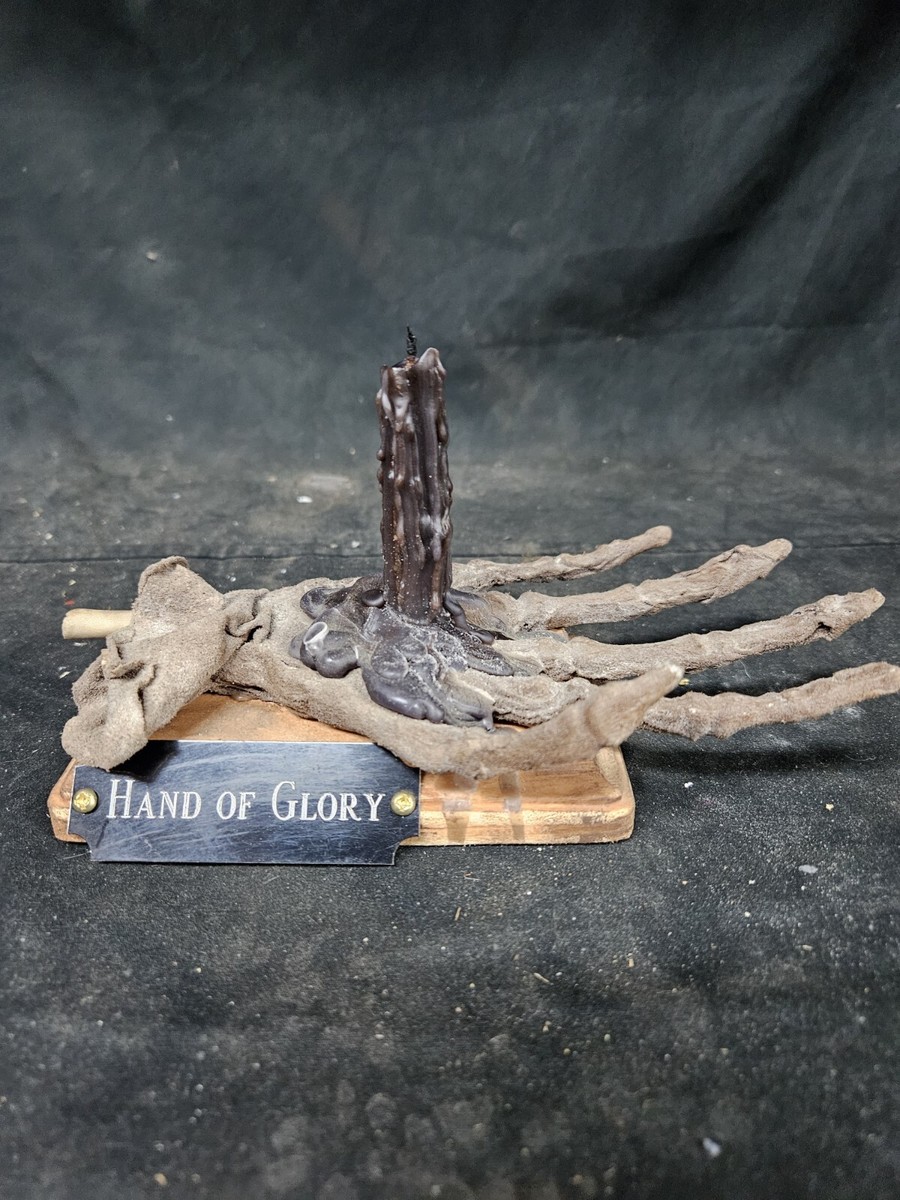
What still exists today is the hand: a mummified human object, hidden for years inside the wall of an English house and now displayed in a museum. 🖐️🕯️