
After returning to the United Kingdom from a trip to Argentina, a woman began to notice two small lesions on her scalp. At first, they looked like simple cysts, and there was little reason to suspect that anything was living inside them. But over the next three weeks, they began to grow, ooze a clear fluid, and cause intermittent stabbing pains.
Seven weeks after returning from her trip, the lesions measured about 2 centimeters in diameter. Each had a small hole in the center, and the woman could feel movement beneath the skin of her head. Upon examining her, doctors discovered that the openings were not a feature of a cyst: they were the breathing holes used by two botfly larvae.
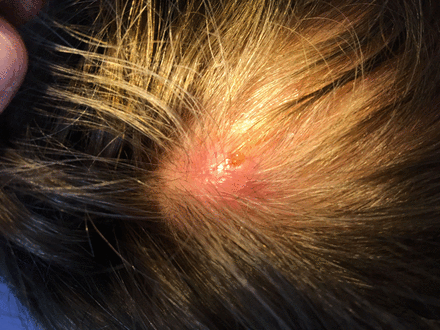
The diagnosis was myiasis caused by Dermatobia hominis, known as the human botfly. The woman had traveled in Argentina and recalled being bitten by mosquitoes several times. This detail was important because these flies have a particular way of reaching their hosts: they lay their eggs on blood-feeding insects, such as mosquitoes, and when these bite a person, the larvae can enter the skin.
The doctors decided to remove them by covering the openings with petroleum jelly, with the aim of preventing the larvae from breathing and making them emerge to the surface. One of them could be removed this way. The second, however, had died inside the scalp and had to be removed in a minor surgical procedure.
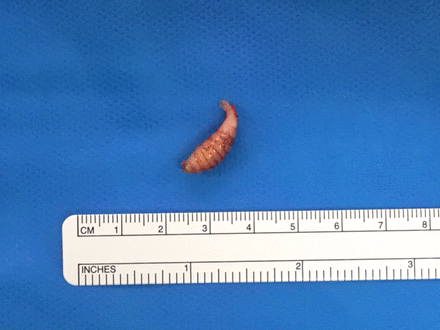
The larvae of Dermatobia hominis can remain under the skin for several weeks before emerging to continue their life cycle in the soil. In this case, the patient ended up with two of them in her head, something the authors described as unusual.
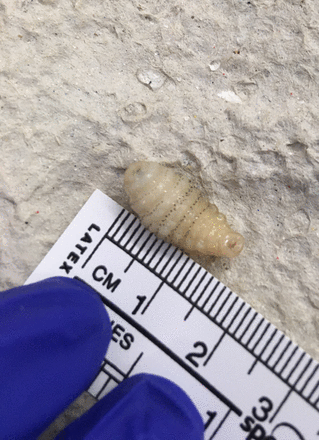
The case was published on May 27, 2019, in BMJ Case Reports under the title “Getting under your skin: botfly myiasis”.