
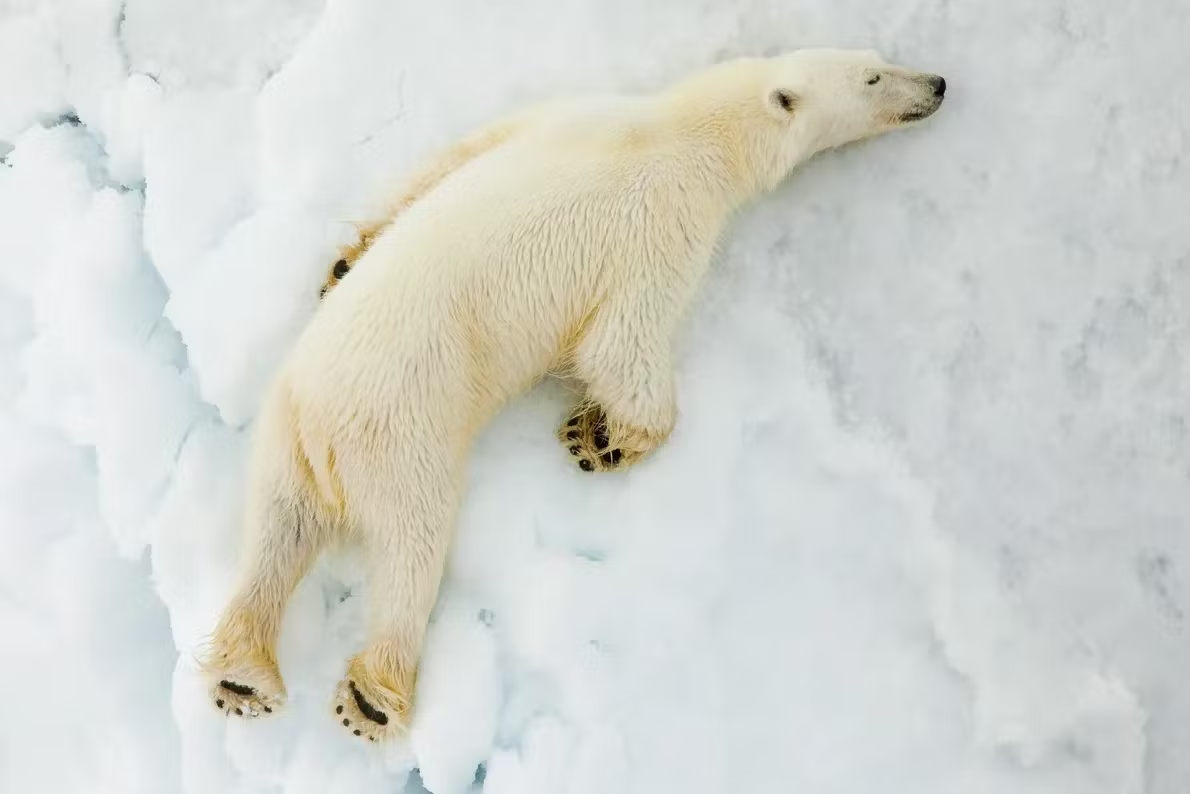
We have all seen them in photos, documentaries, and the logos of environmental organizations: the polar bear, white as Arctic snow. The problem is that this white does not exist. Not a single hair on its body contains white pigment.
What the polar bear actually has is a coat made up of hollow, completely transparent hairs. When sunlight hits them, it scatters in all directions and creates the visual effect that you and anyone else interpret as white — or sometimes yellowish. Beneath that optical illusion, the skin is black, loaded with melanin, and its function is to absorb solar heat as efficiently as possible. Above that skin, a layer of fat can reach 10 centimeters in thickness. That whole system works together to keep it alive in temperatures that drop below -45 °C.
The white camouflage, which is not white, allows it to approach seals without being detected. And the coat, which looks like pure polar aesthetics, is actually a suit of thermal engineering. Nature rarely solves two problems with a single solution so elegantly. 🐻❄️