
Before making the first incision on a human nose, many surgeons specializing in rhinoplasty spend hours practicing on chicken skin and tissue. It is not an improvised experiment or a curious anecdote: it is a well-established surgical training method recognized in modern medicine.
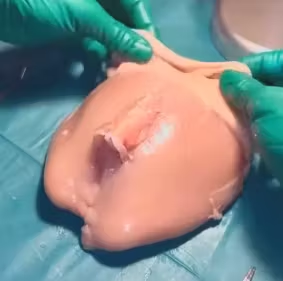
Rhinoplasty demands an extreme level of precision. The nose concentrates three different structures in a minimal space: skin, cartilage, and soft tissue. A millimetric error can alter both the patient’s appearance and respiratory function. That is why, before facing that real scenario, surgeons need a tissue that closely replicates the mechanical properties of human tissue: resistance, elasticity, response to suturing. Chicken meets those conditions with surprising fidelity.
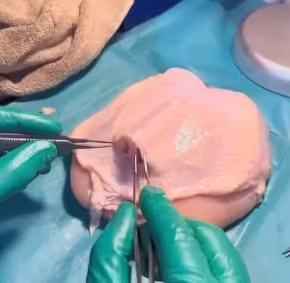
During these practice sessions, professionals work on incisions, manipulate tissues, and refine fine suturing techniques in a controlled environment where mistakes have no consequences for any patient. What looks like a butcher’s cut becomes the most accessible and effective simulator for developing the skill required by one of the most delicate surgeries in medicine.