
A single man at a sperm bank in Denmark left a genetic footprint across Europe.
Between 2008 and 2015, his sperm samples were sent to clinics in different countries to conceive at least 67 children in eight countries: Belgium, France, Germany, Spain, Sweden, the United Kingdom, Greece, and Denmark.
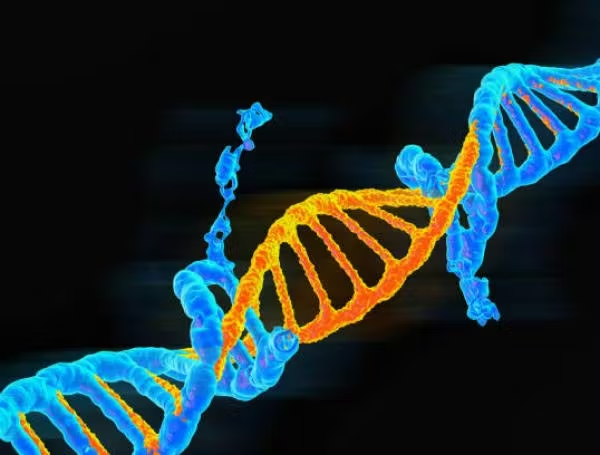
No one knew that some of his sperm carried a mutation in the TP53 gene, linked to Li-Fraumeni syndrome, a rare inherited condition that considerably increases the risk of developing different types of cancer, often at an early age. The donor himself was healthy, and the mutation was present in only some of his reproductive cells, which made it extremely difficult to detect.
It all began to come to light when families of children conceived with the same donor reported cases of cancer. Biologist Edwige Kasper, from Rouen University Hospital, investigated the pattern and found that, among the first 67 children studied, 23 had inherited the mutation and 10 had already developed cancer, including brain tumors, blood cancers, and sarcomas.
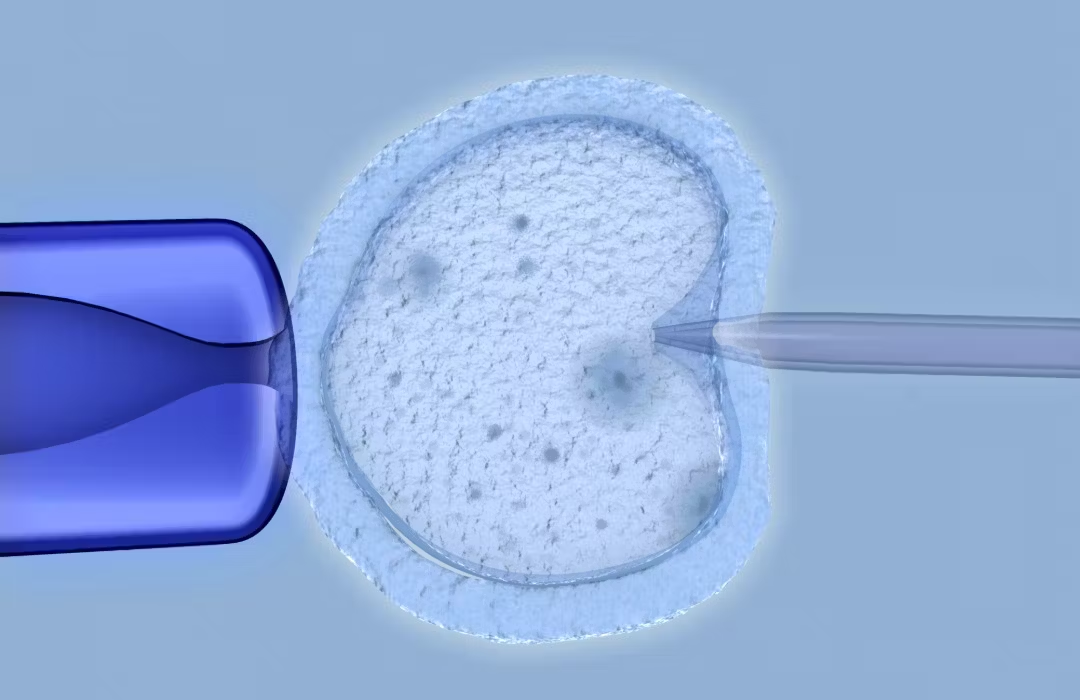
But the story was much bigger than initially thought. Subsequent investigations traced the same donor’s samples to 67 clinics in 14 European countries and determined that they had likely been used to conceive at least 197 children.
And we are no longer talking solely about a “genetic risk”. The investigation coordinated by the EBU confirmed that some of the children conceived with this donor died. For those who inherited the mutation, the finding may also mean undergoing medical checkups throughout their lives.
The case has now sparked a much broader discussion: how many children should be allowed to be conceived using sperm from the same donor? The European Sperm Bank has called for international limits to prevent a situation like this from reaching such a scale again.