Rachael Rapraeger had no plan. She had a pile of work that kept growing.
She was a radiology technician at Perry Hospital in Georgia. Between January 2009 and April 2010, prosecutors say, she fell behind. Every mammogram was supposed to be reviewed by a radiologist. She found a shortcut: entering in the system that the result was negative, without anyone having looked at the image.
She did it for about 1.289 patients.
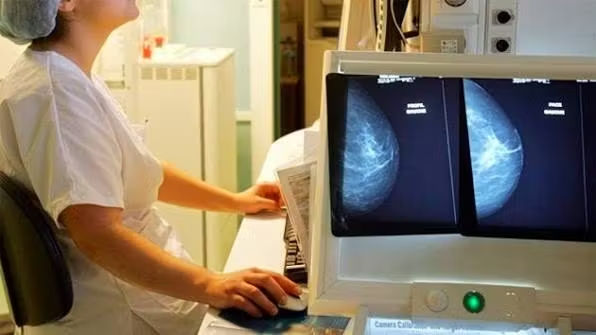
For a woman, a negative result is a relief. It means going home, getting on with the week, and not thinking about it anymore. No one asks for a second opinion when they’re told they’re healthy.
According to prosecutors, ten of those women did have breast cancer. Two died. The media disagree on whether both deaths were due to the disease, and that uncertainty remains unresolved.
The deception came to light because one patient, with her negative result in hand, sought a second opinion at another hospital. There, they found her cancer. That account comes from a single source.
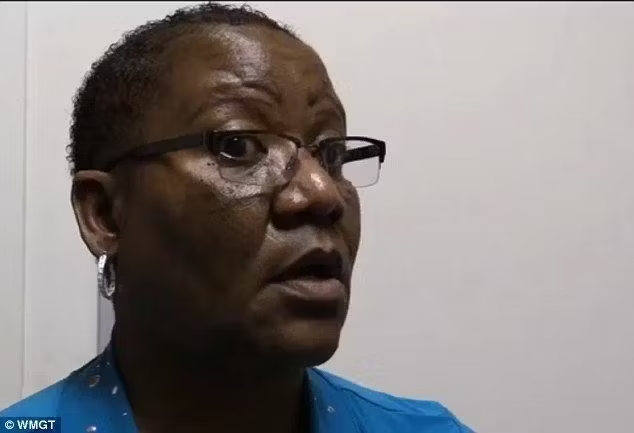
In April 2014, Rapraeger pleaded guilty to ten counts of reckless conduct and one count of computer forgery. Her lawyer said she was overwhelmed and wanted to catch up. According to him, she did not do it for money.
Judge Katherine Lumsden told her: “You played Russian roulette with the lives of nearly a thousand women in this community.”
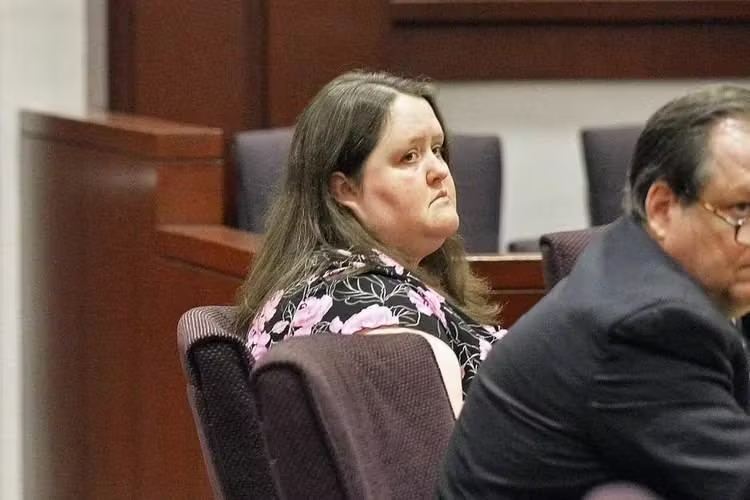
The sentence: up to six months in a detention center, ten years of probation, a fine of 12.500 dollars, and never working in health care again.
A shortcut fits in one line of computer code. The cost cannot fit anywhere.