
Her name was Faten Ben Amar El Azizi.
Let us repeat it, because in the coming hours the world will speak of “a migrant” and not of her: Faten Ben Amar El Azizi, 20 years old, footballer for Moghreb Atlético of Tánger.
She previously wore the shirt of Moghreb de Tetuán, where she had already made her mark despite her young age. In the words of her own colleagues, she was one of the promising talents of Moroccan women’s football. She had training sessions, she had a locker room, she had teammates waiting for her on Monday.
She died trying to cross into Ceuta.
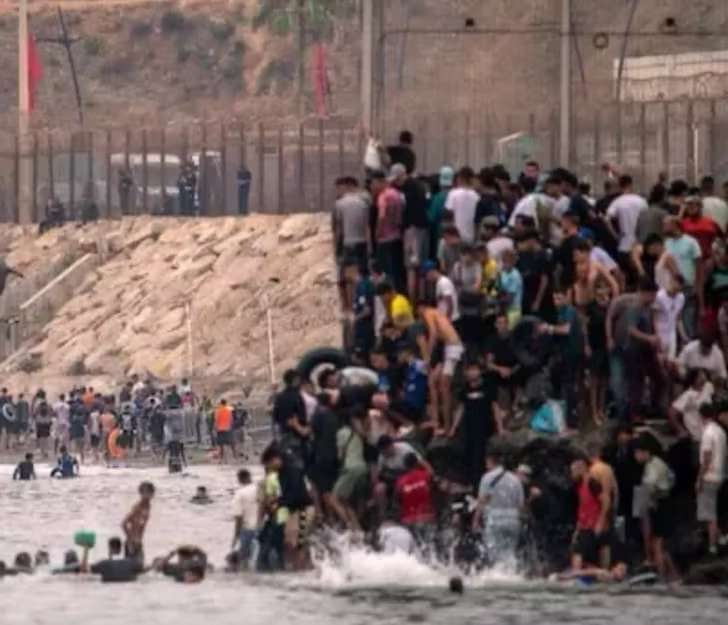
That is all we know. And that is what hurts: that is all we will know. There is no minute of silence in a packed stadium, no front page, no headlines on the major networks. A footballer dies and the world barely blinks, because she died on the wrong side of the map.
The Moroccan Professional Players Association praised “her great ethics and high sporting spirit”. Her club went into mourning. In Tánger, a handful of young women with worn-out boots understood something none of them would want to understand: that talent is not always enough, and that sometimes the opponent is not on the pitch, but at a fence.
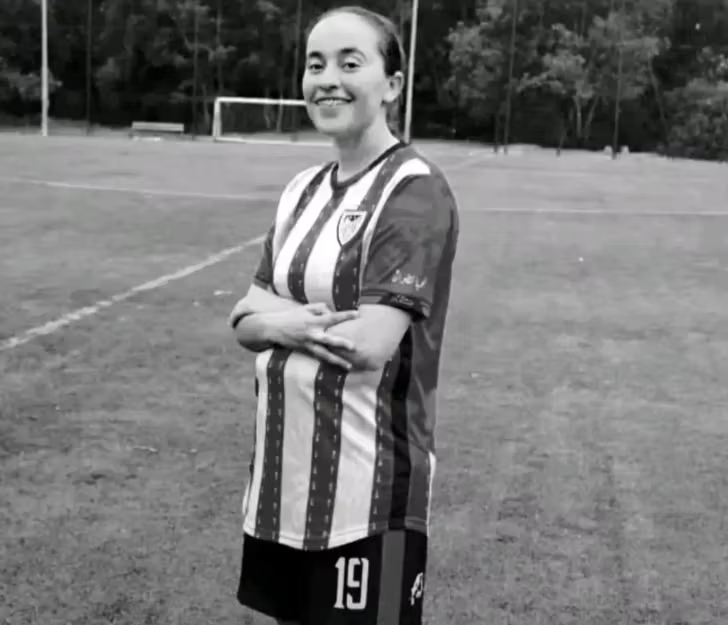
Let us ask ourselves the uncomfortable question. How many Fatens are right now training on a dusty field, dreaming of something that is only a few kilometres away and a world apart? How many stories like this happen without anyone telling them?
We do not know what drove her. It is not for us to assume. But we do know what we lost: a young player, loved at her club, with her whole life ahead of her.
May her full name at least be read here, in this corner of the internet.
Faten Ben Amar El Azizi. Footballer. Rest in peace. 