
Nilofar Ayoubi was just 4 years old when a stranger hit her in the street for not wearing a veil. After that, her father made an extreme decision: he cut her hair and told her mother to dress her like a boy. It was not a game or a prank, it was the only way he found so that she could move around more freely under the first Taliban regime.
From then on, Nilofar came to be seen by the rest of the world as a boy. In Afghanistan there is even a name for this practice: bacha posh, which means something like “dressed like a boy”. Some families resort to it so their daughters can access freedoms that are often denied to them simply because they were born female.

She lived like this for almost ten years. She could accompany her father to the market, play in the street, ride a bicycle, and practice sports such as judo and karate. Meanwhile, her sisters had to conform to much more restrictive rules. For Nilofar, the difference was impossible to ignore: it was enough to change clothes for the world to treat her differently.
But the situation could not last forever. When adolescence arrived and she began to menstruate, she had to present herself as a woman again. From one day to the next she lost freedoms she had considered normal during much of her childhood, an experience she would later describe as profoundly difficult.
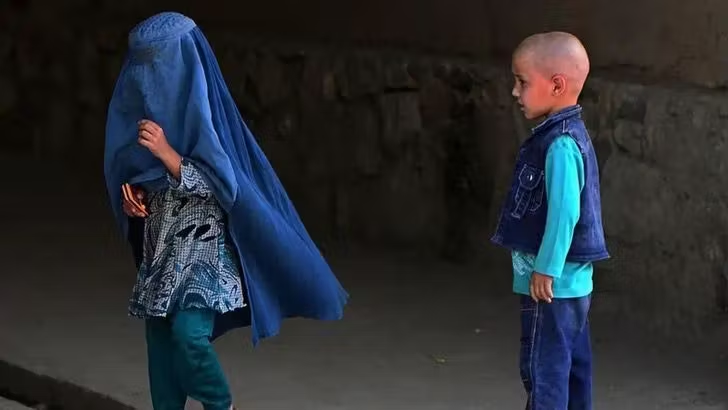
Over the years she managed to make her way as a businesswoman and created job opportunities for other Afghan women. However, after the Taliban returned to power in 2021, she had to leave the country for security reasons. Today she lives in Poland and often reflects on that stage of her life. She says that having grown up as a boy was a blessing and a curse at the same time: it showed her inequalities from the inside, but it also gave her the strength to become the woman she is today.