
“It is good for neither humans nor animals”.
In 1931, psychologist Winthrop Niles Kellogg and his wife, Luella, brought Gua, a 10-month-old chimpanzee, into their home to raise her alongside their son Donald, who was barely 7 months old. They wanted to observe how much a human environment could influence the animal’s development.
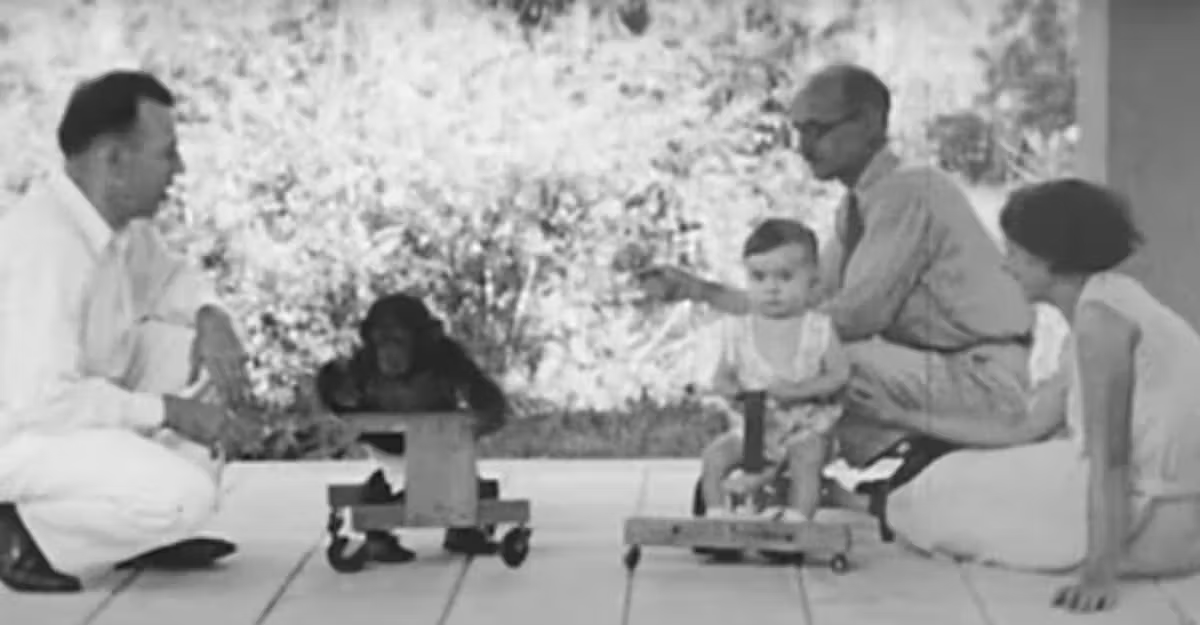
But as the months passed, something unexpected happened: it was Donald who began imitating Gua. The boy started grunting, biting, and crawling like her, a situation that eventually worried his parents.
The experiment lasted just nine months. When they noticed that Donald was incorporating more and more of the chimpanzee’s behaviors, they decided to end it.
Gua showed progress in some physical skills, but fell behind Donald when he began to develop language. Shortly after the study ended, the chimpanzee died.
Winthrop Kellogg documented everything in the book The Ape and the Child, and decades later, the case is still remembered as one of those experiments that would raise enormous ethical concerns today.
They wanted to discover how much a chimpanzee could learn from a child, but ended up seeing how much a child could learn from her.