
The Moon you see every night isn’t gray. It’s an atmospheric illusion.
Marcella Giulia Pace, a primary school teacher in Cortina d’Ampezzo, Italy, often goes out at night to photograph the Moon, conjunctions, and atmospheric phenomena. But it’s not just about pressing the button. Many of them are preceded by a study of the position of the celestial bodies, so she uses software and knowledge of astronomy, geography, and meteorology.
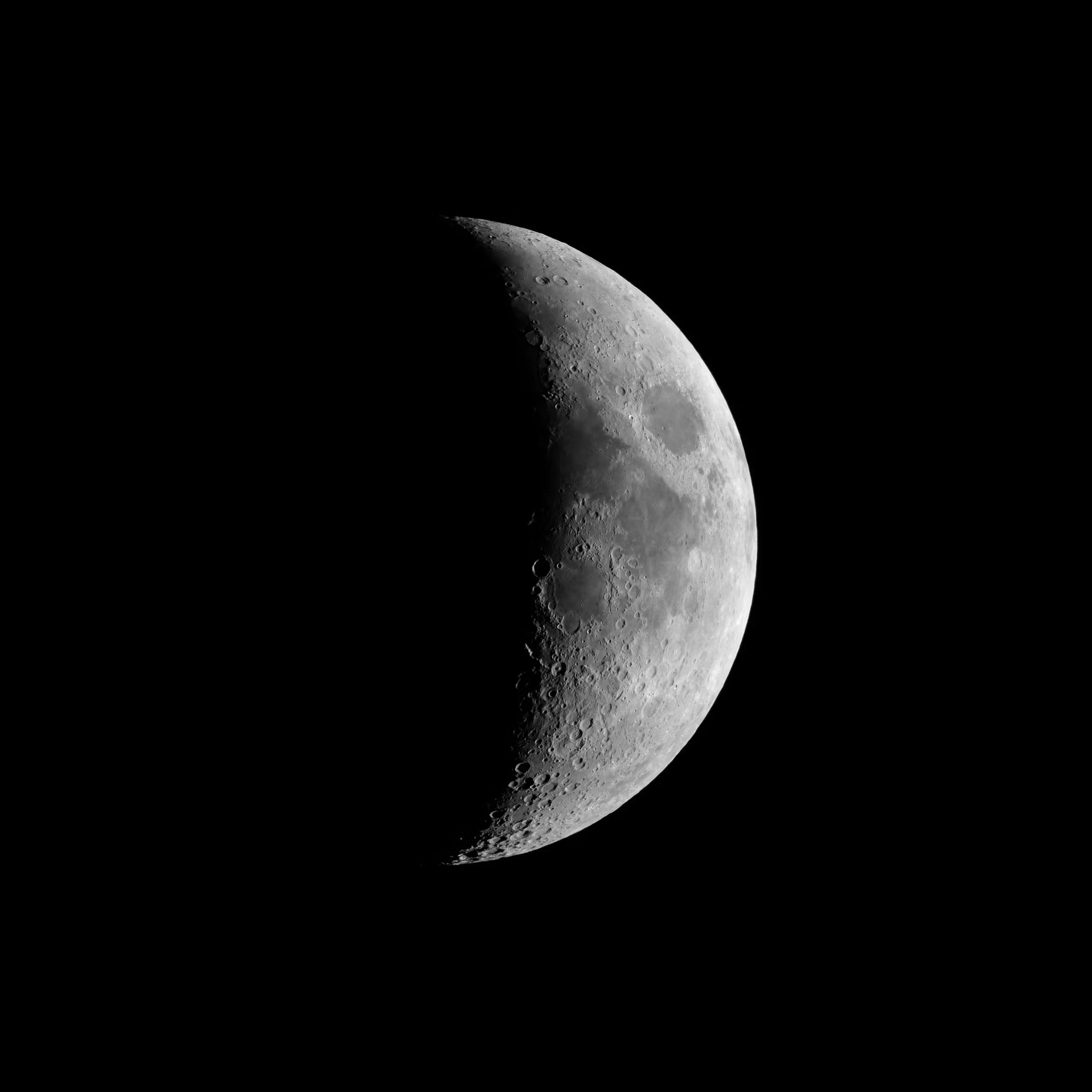
That was how she spent a decade photographing full moons from different points across the country.
Marcella said she could spend hours waiting, even skipping a meal or taking a break to find interesting conditions in the sky.
During the 2020 lockdown, she had time to review ten years of archives and chose the 48 most colorful images: red, orange, golden, gray, and even a striking purple moon. And although the illuminated surface of our satellite is naturally brownish gray, much of the spectacle occurs when its light passes through our atmosphere. Air molecules scatter blue light more easily than red or orange light, while dust, water droplets, and even wildfire smoke can further alter the color that reaches our eyes. During a total lunar eclipse, the Earth’s shadow also comes into play, and it can tint the Moon red.
Pace’s work did not go unnoticed: NASA featured her composition as Astronomy Picture of the Day in November 2020, and National Geographic eventually devoted a feature to it. Her spiral arrangement, with 48 moons arranged like the petals of an impossible flower, demonstrates something few people stop to consider: the Moon may always be the same, but our atmosphere never lets us see it exactly the same way.