Tomasz Komenda was 46 years old when he died in Poland in February 2024. Before that date, he had already experienced another death: that of 18 whole years, stolen by a court that got it wrong.

In 1996, on New Year’s Eve, a 15-year-old girl named Małgorzata Kwiatkowska was murdered in the village of Miłoszyce. The police needed a culprit. They found Komenda.
On November 14, 2003, he was sentenced to 15 years in prison. A year later, the sentence was increased to 25. He began serving it convinced of something no one wanted to hear: that he was innocent.
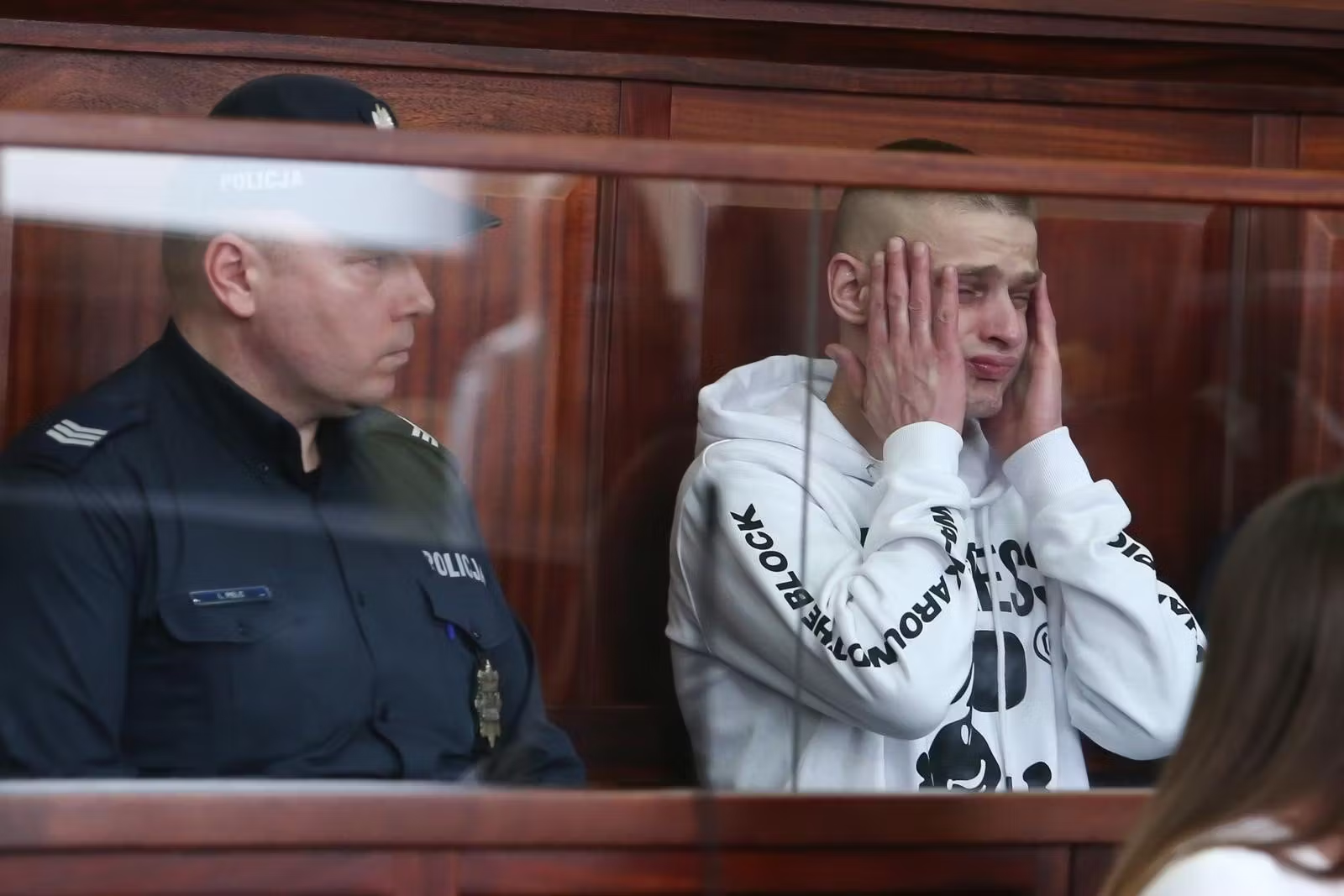
Fourteen years passed. Then fifteen. The victim’s family, dissatisfied with the closed case, insisted that it be reopened. On March 15, 2018, Komenda was released on parole. Two months later, on May 16, Poland’s Supreme Court overturned his entire conviction. New DNA evidence pointed to the real perpetrators: Ireneusz Matuszak and Norbert Basiura, each sentenced to 25 years in 2020. The Polish state paid Komenda 12,8 million zlotys, about 2,9 million euros. The highest compensation ever awarded in the country for a judicial error. With that money, he tried to build something resembling a life. It lasted six years. In February 2024, he died of cancer, as his lawyer, Professor Zbigniew Ćwiąkalski, confirmed to the PAP news agency. He won the most important lawsuit of his life. He lost, forever, the years in which he could have enjoyed it.