
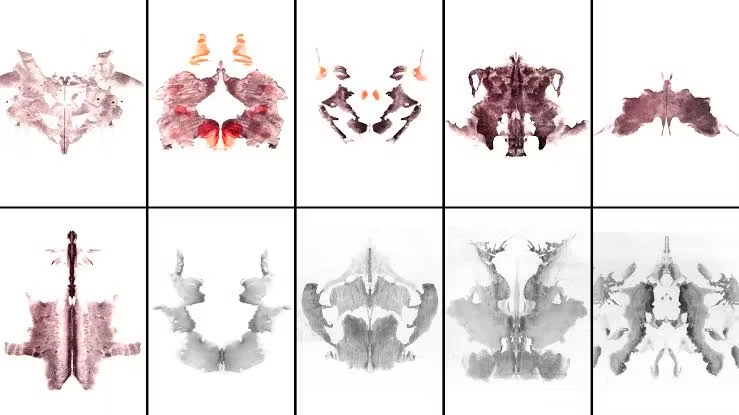
Ten symmetrical inkblots on white paper have spent more than a century as one of psychology’s most recognizable instruments. But what almost no one knows is that the Swiss psychiatrist Hermann Rorschach did not design them to explore your inner world: he published them in 1921 with a much more specific purpose, to diagnose schizophrenia.
Today the test is used in clinical, forensic, and specialized selection contexts under the premise that, since there are no correct answers, each person projects their own emotional world onto the blots. The problem is that modern science does not fully support that role. Recent studies question its effectiveness for evaluating personality or predicting behavior, and experts agree that using it as the only diagnostic tool is a mistake.
What films, series, and books built for decades around these images—that aura of total, almost magical revelation about who you are—does not correspond to what the test can rigorously demonstrate. A century-old instrument, famous all over the world and, according to current evidence, considerably less powerful than you were led to believe.