
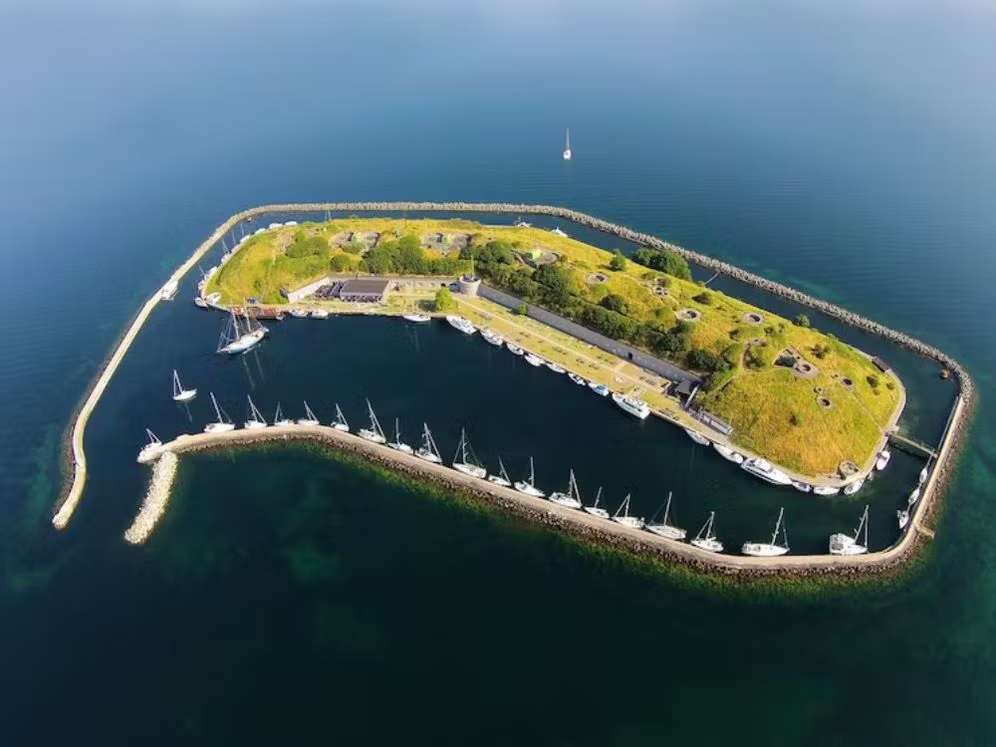
In the Öresund Strait, about 9 kilometers from the port of Copenhagen, there is an island that did not appear on any map before 1910. Denmark built it from scratch, with approximately 2 million tons of rock, concrete, and sand, to house 550 soldiers and protect the capital with heavy artillery. The problem—or the irony—is that Denmark remained neutral during World War I, so Flakfortet never fired a single shot.
What came next turned the fortress into something more interesting than any battle. During World War II, its tunnels and access points served as an escape point for Danish Jews fleeing to Sweden. In 1968 the army abandoned it. And in 2001, a Swedish company acquired it for the equivalent of about 400,000 dollars. Today, after decades of transformation, Flakfortet has a restaurant, accommodations, conference rooms, a marina, a helipad, and its own desalination plant. It receives up to 50,000 visitors per season.
It is now on the market for 11.8 million dollars. But whoever buys it will not be able to close it off from the world: Danish law requires the new owner to keep it open to the public, and any renovation requires authorization from the country’s cultural heritage agency. It was already put up for sale in 2015 without finding a buyer. The open question is what kind of owner is willing to pay eleven million for something that, technically, will still belong to everyone.