
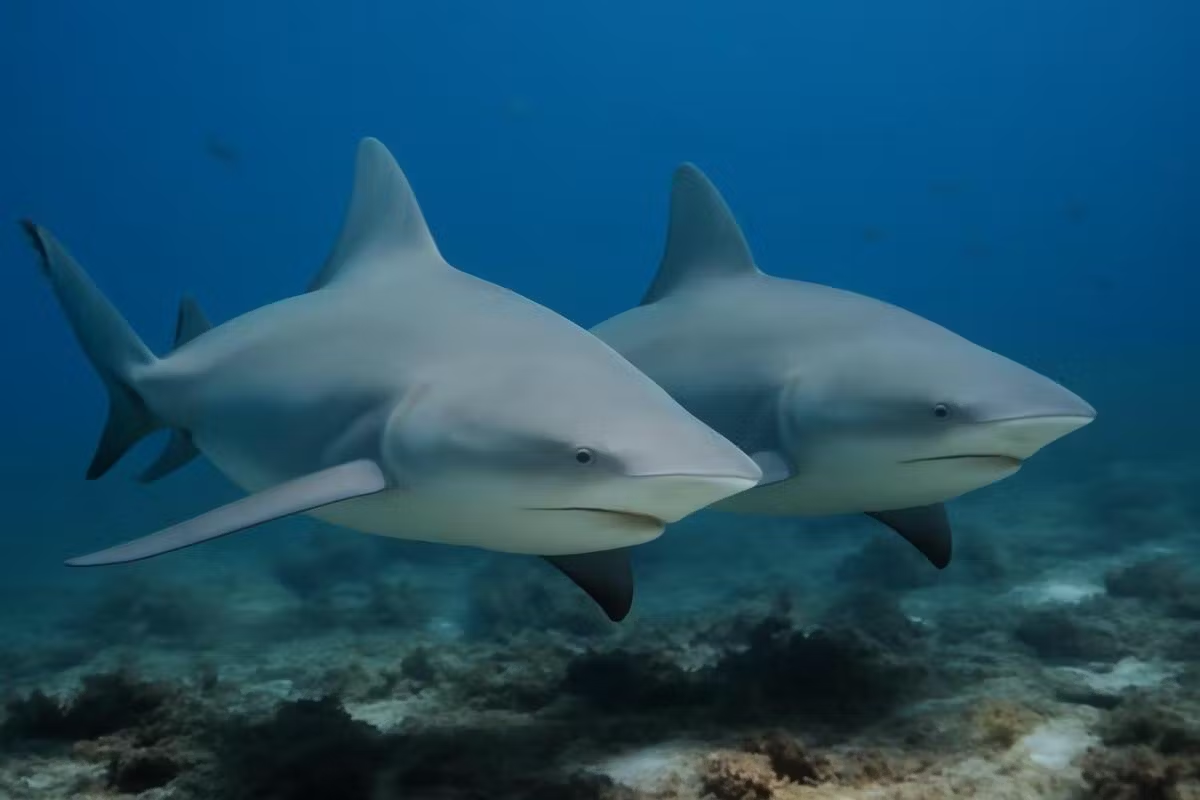
The bull shark can measure 3.5 meters, weigh 200 kilos, and ranks among the ocean’s most feared predators. It also, apparently, carefully chooses its social circle.
A team from the universities of Exeter and Lancaster, together with the Fiji Shark Lab, spent six years monitoring 184 bull sharks in the Shark Reef Marine Reserve, off the island of Viti Levu, in Fiji. They identified them one by one by their scars and body markings and recorded which individuals each shark associated with. The results, published in the journal Animal Behaviour in March 2026, showed something no one expected: these animals do not group together at random. They have active preferences, choose whom to be with, and deliberately avoid others. Males tend to have broader social networks, but both they and the females prefer to associate with other females. Younger individuals hardly visit the reserve because they are vulnerable to adults; older ones, by contrast, become more solitary because they no longer need the group’s protection.
Does this mean sharks have friends? Researcher Juerg Brunnschweiler warns that speaking of “friendship” would be too much anthropomorphizing, and that external variables such as tourism or artificial feeding could influence the observed patterns. But the lead author, Natasha D. Marosi, of the University of Exeter, is clear: there are real social preferences. The next time you see a bull shark, it may be looking for someone in particular. 🦈