
Callie is no ordinary dog. In Great Horwood, England, she spends her days sniffing jars of urine, looking for something no human eye can see.
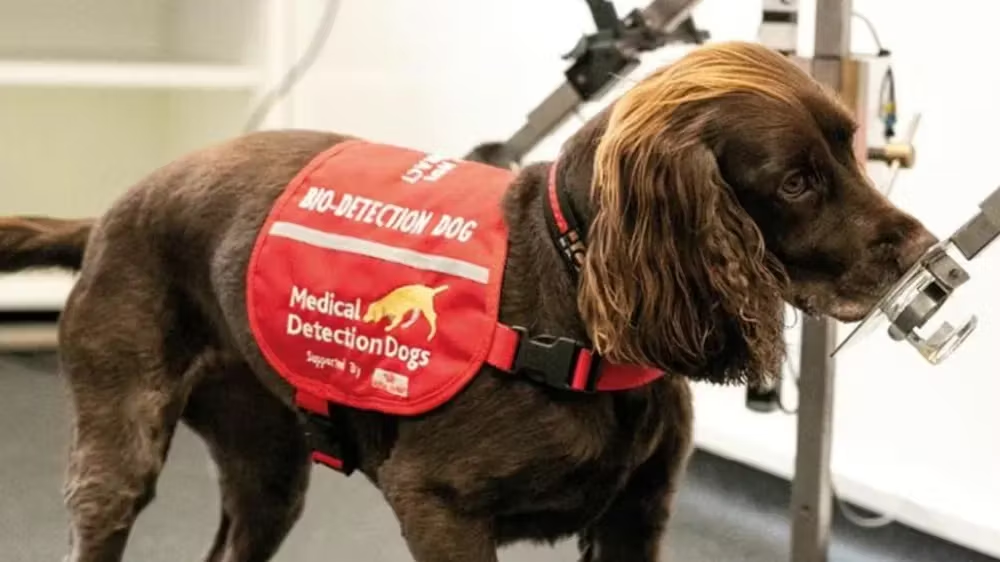
When a cell becomes cancerous, it changes its metabolism and releases volatile organic compounds that the body expels through urination. They are chemical traces invisible to us, but not to a nose with hundreds of millions of olfactory receptors. That is where Callie comes in: trained by Medical Detection Dogs alongside the Open University, she distinguishes in blind tests the urine of patients with colorectal cancer from that of healthy people.
When she finds a positive sample, she signals by tapping the ground with her paws. No one expects Callie to replace a doctor. Her real value lies in what she reveals: if her sense of smell can isolate the molecular pattern of the disease, scientists could use it as a map to design an early, non-invasive and accessible diagnostic test before the tumor is visible.